



























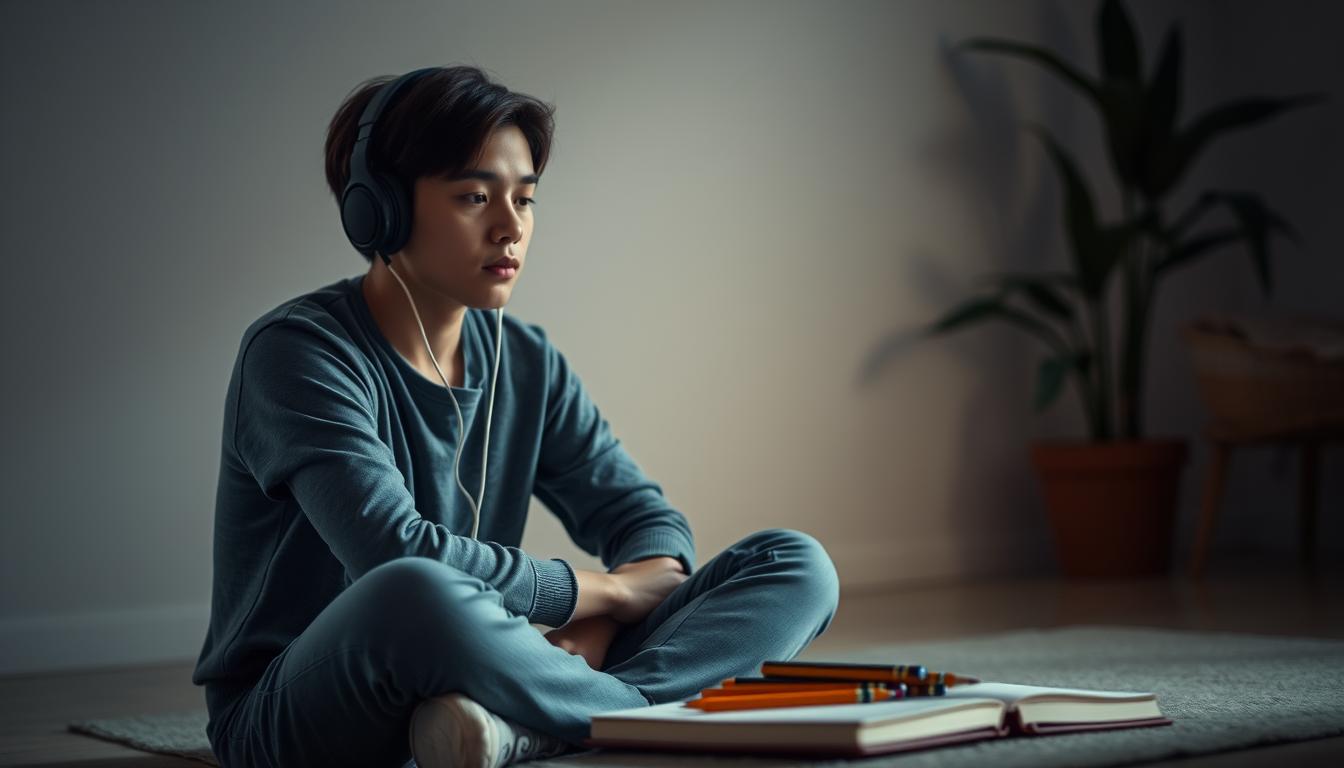
At King Street Church’s Fresh Expressions Journey, artists found that creativity starts with listening. It’s not just about hearing others, but also tuning into our own inner voice. Finding your creative voice is more about listening than speaking loudly.
Active listening helps us find stories to tell, whether through art, words, or music. This process is key to unlocking our creativity.
Visual artists in the Journey say that silence and observation spark their ideas. They pay attention to everyday moments and community rhythms. This helps them turn insights into art.
Creative expression grows when we learn to hear what’s around us and what’s inside us. It’s a journey of discovery and self-expression.
Understanding Creative Voice
Your creative voice is how you share your ideas through art, writing, or design. It’s influenced by your personal experiences and the world around you. Ancient religious communities used murals and music to mix individual creativity with shared beliefs. Today, urban artists paint murals that show local culture, blending personal creative expression with community identity.
Every person has a unique perspective shaped by their background and environment. The Harlem Renaissance is a great example. Artists like Aaron Douglas combined African American heritage with modern art. Their work shows how teamwork boosts individual creativity.
Even today, design collectives like Guerrilla Girls use teamwork to make their messages stronger. This proves that community input makes personal expression richer.
“Your voice grows louder when you listen to others,” says Dr. Lena Torres, a cultural studies researcher. “Communal projects help creators see their ideas in a broader context.”
Think about what inspires you, like stories, traditions, or daily routines. These things form the base of your unique perspective. By working with others, whether in local art groups or online forums, you see how your voice fits into bigger conversations. This mix of self and community is where creative expression truly starts.
The Importance of Listening
Active listening is more than just hearing. It unlocks new possibilities. Francesca Gino’s research shows teams that listen well break through in collaboration. By paying attention to both words and body language, you discover new views.

Groups like the Fresh Expressions Journey show listening builds trust. They turn simple talks into sources of creativity. Gino says, “Listening is the first step to innovation.”
“To create, you must first make space to hear.”
Good listening makes silence a powerful tool. It’s not just waiting to speak but diving deep into what others say. This way of thinking changes how artists and innovators work. Next time you brainstorm, pause to really listen. You might find ideas you never thought of.
Uncovering Your Unique Perspective
Your unique perspective is hidden in plain sight. It’s in the details of your life. Think about moments that shaped you today. What traditions, challenges, or passions are deeply personal to you? These are the seeds of personal insight that others won’t have.
“The stories you’ve lived are the brushstrokes of your creative identity.”
Look at your heritage, relationships, and daily routines. A grandparent’s recipe, a childhood hobby, or a lesson from a past failure can reveal clues. Artists like Maya Angelou and Lin-Manuel Miranda used their backgrounds to create groundbreaking work. Ask yourself: What parts of my history feel distinctly “mine”?
Journaling or talking to loved ones can uncover hidden connections. Growing up bilingual or celebrating specific traditions adds layers to your unique perspective. These elements are the foundation of authentic and original art.
See your personal insight as a powerful tool. When you share work rooted in your truth, you offer something unique. Creativity grows when you stop comparing and start exploring what makes your viewpoint special.
Techniques for Active Listening
Active listening is a skill that connects understanding and creativity. Artists and innovators use it to turn conversations into creative techniques. Start by asking open-ended questions to find hidden stories.
In Chicago’s public art initiative, muralists interviewed residents. They turned their histories into murals. This way, shared experiences became visual masterpieces.

Mindful observation is about noticing details others miss. A sculptor might walk city streets, noticing weathered walls or laughter in parks. Later, they shape these impressions into abstract forms.
Theater groups also practice empathetic dialogue. They role-play different perspectives to deepen character development. These practices turn observations into fresh ideas.
Try these steps: Pause distractions, focus fully on others, and let their words spark new angles. Active listening isn’t passive—it’s a tool to connect with others while nurturing your creative voice. The next breakthrough might come from a conversation, a walk, or a shared story. Start listening differently today.
The Role of Feedback in Finding Your Voice
Feedback acts as a mirror, showing your creative strength. Seeking it doesn’t show weakness—it’s a step toward self-discovery. Constructive feedback from peers, mentors, or online groups shapes your artistic path. It shows what works and what needs tweaking, leading you to be true to yourself.
“Feedback is the breakfast of champions.” — Ken Blanchard
Mentorship programs like NaNoWriMo’s writing workshops refine ideas through honest critiques. Others’ views help you see what you might have missed. This clarity helps you find your authentic voice. Sites like Behance or Skillshare offer diverse views, turning criticism into creative fuel.
Every feedback loop is a chance to grow. A study by the National Writing Project found that 75% of participants improved their storytelling after peer reviews. View feedback as a tool, not a final judgment. It’s not about agreeing with every comment—it’s about understanding how others see your work. Over time, this sharpens your unique voice, making self-discovery a continuous journey.
Listen, adapt, and keep creating. Your voice grows with every interaction, blending outside views with your inner vision. Let feedback guide you on your path.
Experimenting with Different Mediums
Trying new ways to express yourself can unlock hidden talents. You might enjoy painting, writing, digital art, or even performance. Exploring different mediums helps you find what truly resonates with you.
Mixing creative techniques across formats can lead to new insights. For example, combining poetry with visuals or using apps to edit photos can open up fresh perspectives.
Artists often discover new things when they try something different. A sculptor might try coding, or a writer could experiment with video editing. These changes can lead to innovation and new ideas.
Community art projects, like digital collaborations or public murals, show the power of shared creativity. They fuel growth and inspire others.
Remember, experimentation isn’t about being perfect. It’s about exploring and learning. Trying something new might feel awkward at first, but it’s through these attempts that unique voices emerge.
Don’t be afraid to fail. Every attempt, even if it doesn’t work out, offers valuable insights. By embracing different mediums, you’ll discover strengths you never knew you had and refine your artistic identity.
Overcoming Self-Doubt
Every creative journey has moments when self-doubt seems louder than inspiration. Recognizing this is the first step to overcoming self-doubt. Many artists and writers say their breakthroughs came when they ignored their inner critics. They focused on making progress, not achieving perfection.
“Doubt is a teacher, not an end.” — A truth echoed by countless creators who turned hesitation into fuel for growth.
Start small: write one sentence a day, sketch freely, or share work with trusted peers. Each action builds resilience against fear. Personal growth grows with consistent, mindful practice. Keep track of your wins—like finishing a project or getting positive feedback. This shows you can do it.
Being around supportive communities helps a lot. Places like overcoming self-doubt workshops or online groups offer tools to change negative thoughts. Celebrate every step forward, even if it’s not obvious. Each step makes you more confident in your creativity.
Creating a Supportive Community
A supportive community fuels creativity by giving encouragement and shared goals. Join groups where members uplift each other to turn ideas into reality. Look for places where feedback is kind and teamwork is valued.
Whether online or in person, these spaces help you grow without fear of judgment.

King Street Church’s arts programs show how faith communities build creative networks. Their workshops and exhibitions blend spirituality with art, proving that shared values strengthen innovation. Local co-working spaces or online forums focused on creativity provide platforms for mutual growth.
Engage with others who value your voice. Attend meetups, join social groups, or start small gatherings. A strong creative network isn’t just about sharing skills—it’s about believing in each other’s dreams.
When you connect with like-minded people, your unique perspective finds its place in a larger story.
Take the first step: reach out to a local group, comment on an artist’s work, or invite someone to collaborate. Every interaction strengthens both your voice and the community around you.
The Journey of Self-Discovery
Every creative journey starts with self-discovery. To truly express yourself, you must first know your values and passions. This journey involves quiet reflection and living fully.
Whether through journaling, meditation, or connecting with others, finding yourself sparks creativity.
“The path to creativity is a mirror reflecting who you are—and who you’re becoming.”
Self-discovery is not just one moment but a lifelong journey. It encourages you to be curious and let go of what you think you should be. By trying new things and sharing your work, you discover what truly speaks to you.
This creative journey is a conversation between your inner self and the world. It’s a constant exchange of ideas and growth.
As you grow, your voice will change. Every step, no matter how small, adds to your story. The aim is not to be perfect but to keep moving forward. Keep listening, creating, and learning, and your path will reveal its purpose.
Setting the Stage for Creativity
Every artist knows that creative expression needs a space to grow. Whether it’s a clutter-free desk or a quiet corner, your environment shapes how ideas flow. Think of it like a stage: lighting, colors, and even smells can spark new creative techniques. Start small—clear a spot where you can focus. Add items that inspire, like art supplies or plants.

Churches like NYC’s Church of the Holy Cross use open spaces for collaborative art projects. Their approach shows how shared environments fuel creativity. Artist studios often mix natural light with tools at hand, making creation feel effortless. Try rearranging your workspace. A study in Current Directions in Psychological Science found that organized spaces boost focus by 30%.
“A messy room doesn’t mean a messy mind,” says muralist Elena Torres. “It’s about having space to play without limits.”
Set mental routines too. Block time each day for brainstorming. Turn off distractions—silence the phone, light a candle, or play soft music. Mindfulness practices like deep breathing can quiet self-doubt. Pair this with tools like sketchbooks or digital apps to capture ideas instantly. Small steps build a mindset ready to create.
Look around. What changes can turn your corner into a sanctuary for ideas? Start today—your next big project might begin with rearranging a shelf or hanging a motivational quote. The stage is set; now step onto it.
Maintaining Consistency in Expression
Consistency in creativity makes a big impact. Artists who do well have one thing in common: they practice every day. Writing 200 words a day or sketching in the morning helps build discipline.
Tools like habit trackers or creative journals keep these routines going, even when life gets busy.
“The path to mastery is paved with showing up, not just talent,” said painter and educator Betty Edwards. Her workshops focus on structured practice over natural talent. Many creators do “creative sprints,” dedicating time each week to stay focused.
Being part of art communities or online platforms like Behance boosts motivation. Sharing your work with others turns accountability into support. It’s not about being perfect—it’s about making progress every day.
Even 15 minutes a day can lead to big breakthroughs over time.
Personal growth happens when habits match your goals. A dancer might do pliés every day; a writer revises drafts weekly. These actions improve skills and confidence. Celebrate your achievements to stay motivated.
Every step forward is important. Consistency in creativity means getting back to work after a break. Embrace small victories. Over time, this habit becomes second nature, driving both your art and personal growth.
Encouraging Personal Growth Through Creativity
Your creative journey is a path to personal growth. Every time you draw, write, or create, you discover new parts of yourself. This self-discovery begins when you take risks and share your ideas.
Even small steps, like trying a new medium or joining a class, can unlock hidden strengths. Feedback from others shapes both your art and your mindset. When you listen to critiques or celebrate wins with peers, you build resilience and clarity.
Over time, this back-and-forth between creation and reflection becomes a habit. It fuels your development. Your creative expression isn’t just about the final product. It’s about how it changes how you see the world.
Growth happens when you keep learning and adapting. Set aside time to reflect on what inspires you. Journaling, workshops, or even casual chats with fellow creators can spark new perspectives.
Stay open to change, and let your voice evolve. Creativity becomes a lifelong companion, guiding you toward becoming your best self.