



























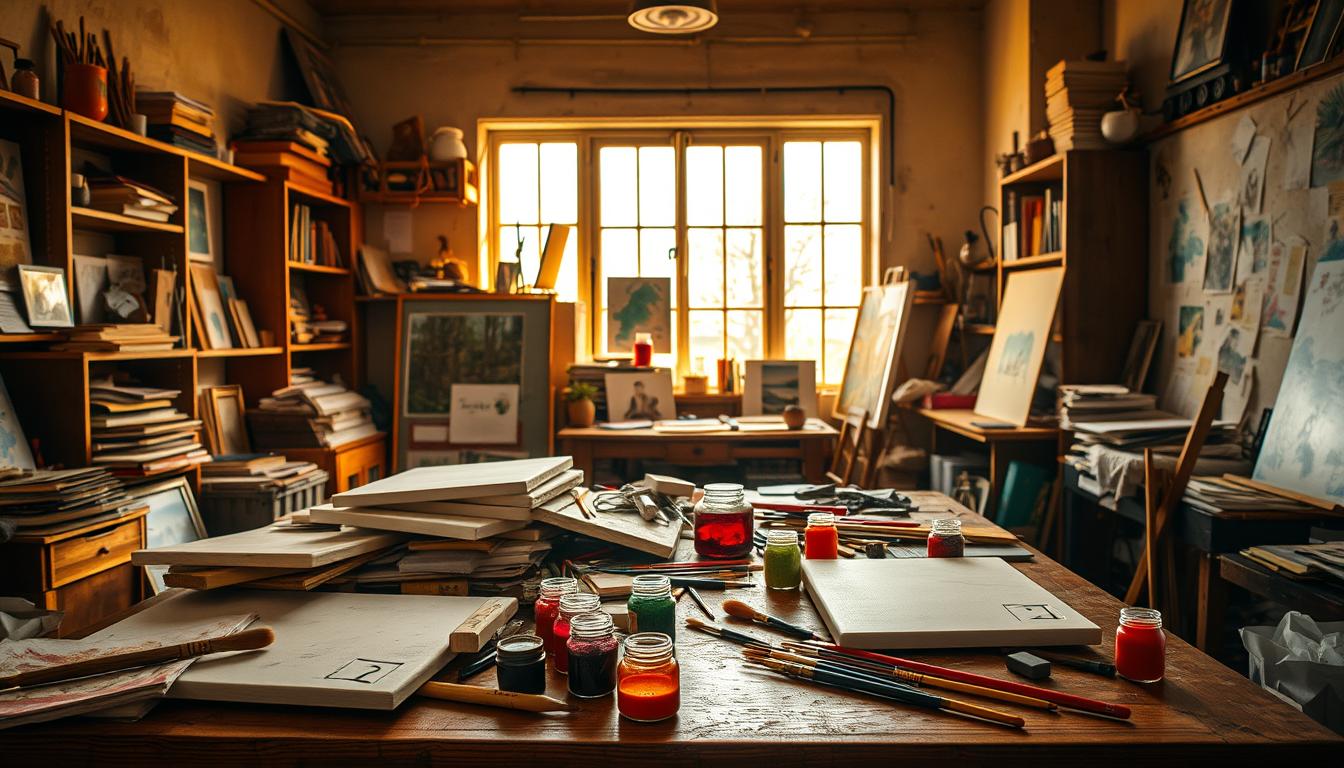
Unfinished projects are more than just half-done ideas. They have hidden possibilities waiting to be discovered. Disney’s Dreamlight Valley lets players explore these unfinished stories, finding inspiration in the gaps.
Creative freedom allows our minds to wander freely. Instead of seeing unfinished work as a failure, it becomes a new beginning. Many artists left their works unfinished, inviting others to imagine their own endings. This approach shifts our focus from the need to finish to the joy of exploring new ideas.
Understanding the Concept of Unfinished Projects
Unfinished projects are not dead ends. They are pauses in a creative process. Think of medieval monks copying manuscripts. They included notes for later edits, showing creativity grows with progress, not just completion.
Modern games like Disney’s Dreamlight Valley also embrace this idea. They let players leave quests open to revisit later. This is similar to Pope Benedict’s teachings on European cultural evolution, where traditions evolve through continuous reinterpretation.
Creators often overlook how incomplete ideas spark innovation. The creative process is a loop of inspiration and reflection. Renaissance artists left sketches for others to refine, which became blueprints for future masterpieces.
Today, digital artists share WIP (work-in-progress) art online. They invite fans to fuel their next steps. This shows the value of every stage in the creative journey.
Seeing unfinished work as a bridge between ideas changes our perspective. It shows that valuing every stage honors the journey itself. This is a lesson as old as art itself.
The Emotional Connection to Creativity
Every brushstroke, every line of a poem, and every unfinished sketch holds a piece of the creator’s heart. Creativity isn’t just about the end result—it’s the raw emotions woven into the process that make art resonate. When we embrace imperfection, we let our vulnerabilities shine, turning flaws into stories others can relate to.

“Great art is never finished, only abandoned.” — Attributed to Leonardo da Vinci
Think of Michelangelo’s sketches: rough, unpolished, yet brimming with intention. These drafts reveal his doubts and triumphs. Vincent van Gogh’s letters show his struggles, making his art feel intimately human. Emotions like doubt or longing aren’t weaknesses—they’re proof of authenticity.
When we accept that imperfection is part of creation, we invite deeper connections with our work and others.
Artists across cultures have leaned into this truth. Japanese wabi-sabi philosophy celebrates cracks and asymmetry, seeing beauty in transience. Modern creators share drafts online, inviting audiences into their messy journeys. This openness isn’t a flaw; it’s a bridge between creator and viewer.
By letting go of the pressure to “finish perfectly,” we honor the raw, human side of creativity. After all, it’s the emotional honesty in unfinished work that often lingers longest in our hearts.
The Artistic Perspective on Incompletion
Artists see incompletion as a way to express themselves. Think of Michelangelo’s sketches or Da Vinci’s studies. These unfinished works spark our imagination, making us part of the story.
In games like Disney Dreamlight Valley, unfinished projects are puzzles to solve. Players fill in the gaps, just like Renaissance artists did. Botticelli’s sketches and Michelangelo’s “Slaves” sculptures show raw creativity through their unfinished state.
Historians and critics say incompletion is a choice, not a flaw. Michelangelo’s “David” sketch, for example, shows movement and possibility. This approach values the idea over the finished product.
These works start a conversation between the artist and the viewer. A half-carved statue or an unfinished game level invites us to complete the story. This mix of what’s created and what’s imagined is where art truly shines.
Learning from What’s Left Behind
Unfinished aesthetics often hide valuable lessons. Disney Dreamlight Valley’s storytelling leaves gaps for players to fill. These gaps spark creativity more than perfect endings.
Artisans in medieval Europe reused ancient fragments. They turned broken statues into new artworks. Their process shows how imperfection fuels innovation.
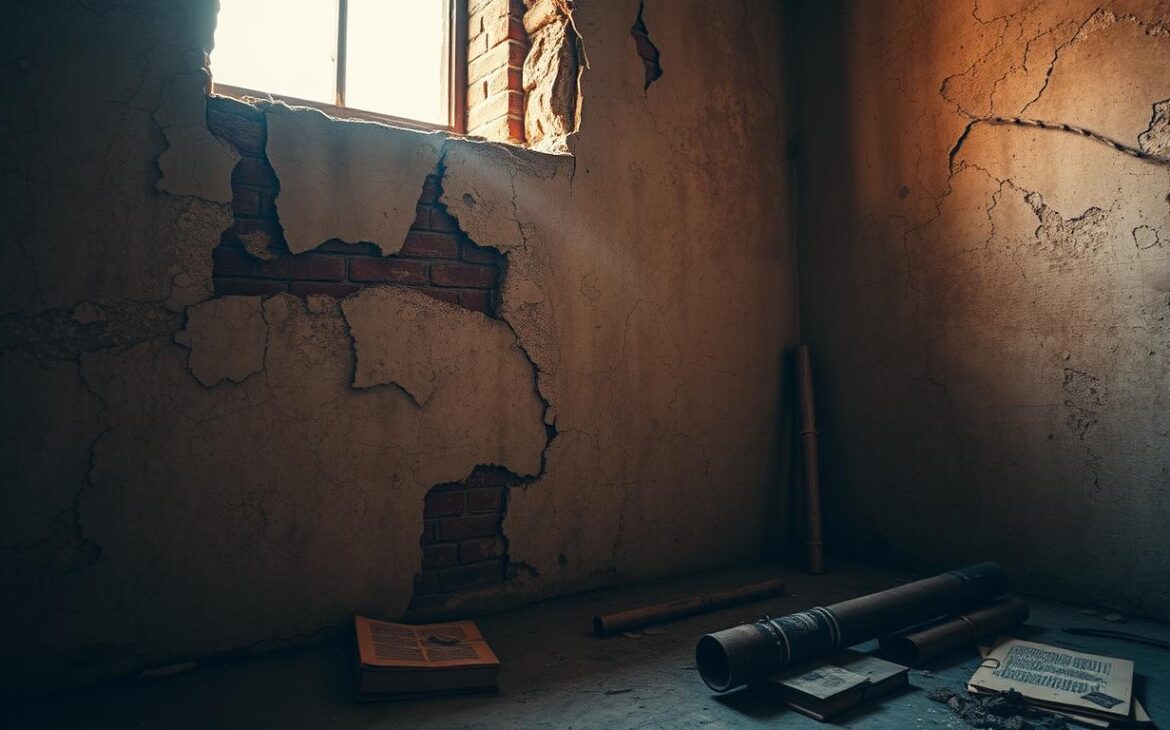
Historical artifacts like Rome’s Colosseum or half-carved sculptures show cultural adaptability. Their cracks and missing pieces tell stories of resilience. “What remains is a conversation between past and present,” say archaeologists studying Renaissance修复残缺的雕塑.
Such relics prove that beauty thrives in incompleteness.
Embracing unfinished aesthetics means valuing the journey over the destination. A pottery class might show cracked bowls alongside finished ones. This teaches students that mistakes shape growth.
Museums now display sketches from famous artists’ drafts. They show how drafts evolve into masterpieces.
The Role of Unfinished Projects in Personal Growth
Unfinished projects are not failures; they are stepping stones. Every sketch left untouched, every draft revised but unpublished, holds lessons. These gaps in completion teach patience and adaptability, key to personal growth.
Think of inventors like Leonardo da Vinci, whose notebooks were full of ideas never fully realized. His sketches of flying machines and anatomical studies, though incomplete, shaped his understanding of science and art. Growth thrives in these spaces between attempts.
“Art is never finished, only abandoned.” — Leonardo da Vinci
When we set aside a project, we don’t stop learning. Each pause reveals new angles, forcing us to confront doubts and refine goals. Monks in medieval times copied texts by hand, often leaving manuscripts incomplete. Yet those fragments became templates for future scribes.
Their work shows how personal growth happens through persistent effort, not just end results. Every unfinished piece teaches us to value progress over perfection.
Embracing incomplete work builds resilience. It’s okay to stop, reflect, and try again. Each attempt sharpens focus and clarifies purpose. Growth isn’t a straight line—it’s a cycle of starting, pausing, and restarting. Let unfinished projects remind you that mastery comes from the journey, not just the destination.
The Productivity Debate: Completion vs. Exploration
Should every project have a clear endpoint, or does creativity thrive in the unknown? This debate pits structured completion against open-ended exploration. History shows innovation often arises from the latter. Take Thomas Edison’s 1,000 failed lightbulb prototypes—they weren’t “failures,” but steps toward a breakthrough.
Modern tech giants like Apple and Google embrace this mindset. Apple’s iPhone design evolved through years of prototypes, not rushed finishes. Google’s “20% time” policy let engineers explore side projects, birthing products like Gmail. These examples prove innovation isn’t confined to finished work—it blooms in the process.
“Genius is one percent inspiration and ninety-nine percent perspiration.” — Thomas Edison
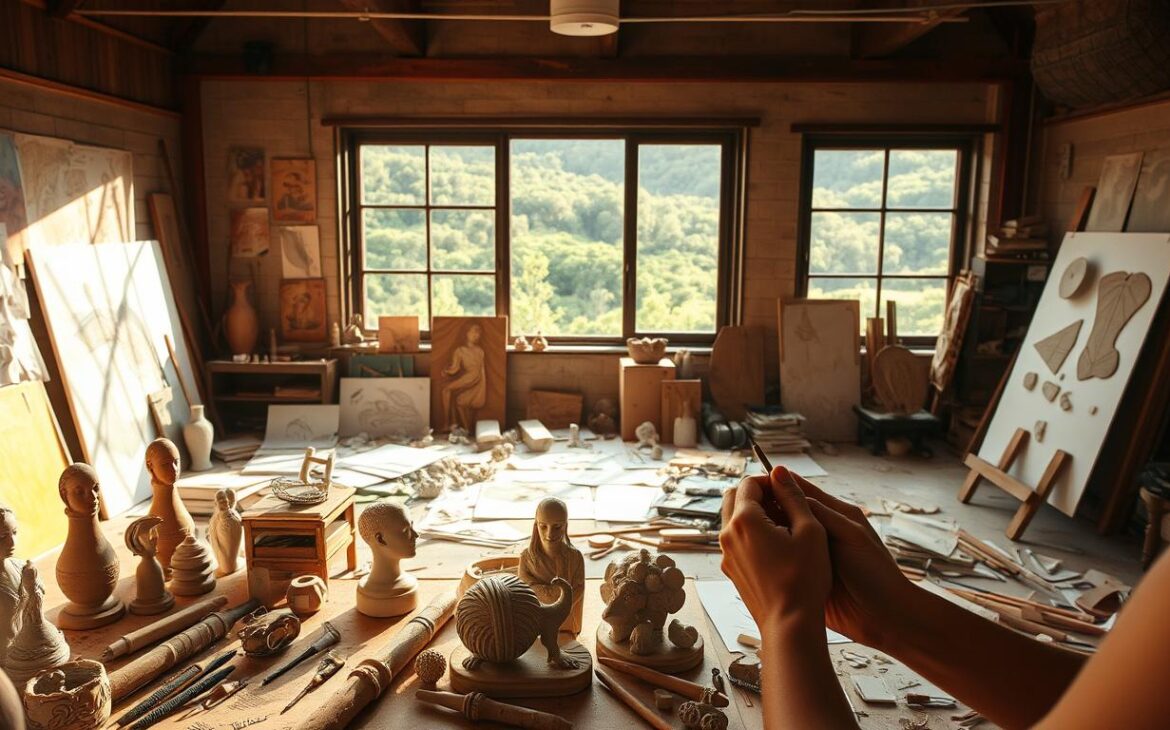
Productivity trends often push for speed and closure, but innovation requires room to wander. Letting projects breathe allows new ideas to surface. Think of Picasso revising paintings endlessly—he prioritized vision over deadlines. Your next big idea might live in that half-finished sketch or brainstorming note.
Choose curiosity over closure. Explore, iterate, and let your work evolve. The world’s most transformative ideas didn’t arrive fully formed—they grew from relentless exploration.
The Cultural Significance of Unfinished Work
Unfinished projects are more than just abandoned efforts. They are key parts of humanity’s cultural legacy. From ancient clay tablets to modern digital drafts, these works shape how societies remember and reimagine their history. A cracked sculpture or a half-painted canvas might seem incomplete, yet they tell stories no finished masterpiece can.
Historical examples show this power. Medieval monks left behind sketchy drafts and incomplete manuscripts. These now reveal how monastic communities prioritized knowledge. Pope Benedict noted in a 2010 lecture that these fragments offer “a map of human curiosity,” showing how cultures evolve through trial and error. Even today, museums display unfinished drafts by artists like Leonardo da Vinci, proving that imperfection fuels innovation.
The Sagrada Família in Barcelona is a building that has been under construction for over a century. Its evolving design reflects changing architectural styles, becoming a living symbol of perseverance. Incomplete symphonies or abandoned novels let future generations reinterpret their meaning, ensuring they stay relevant across eras. This adaptability strengthens our cultural legacy by leaving room for new voices to contribute.
These works remind us that creativity is a shared journey. A cultural legacy isn’t built solely on perfection but on the collective effort to keep asking, “What comes next?”
Re-evaluating Our Definition of Success
Success is often linked to finishing what we start. But what if the creative journey itself is more valuable than the end result? Leonardo da Vinci’s sketches, left unfinished, are full of ideas that changed art history. His work shows that innovation grows in exploration, not just in completion.

Today’s creators face the same challenge. A 2023 study by the MIT Media Lab found that 70% of designers and writers say their most impactful projects are those that are evolving. Like open-source software projects, creativity is a living process that keeps adapting and growing.
Author Haruki Murakami once said, “I’m a man who writes while listening to his own voice.” His novels often take years to refine, showing that lasting impact comes from patience, not rushing. The creative journey is a path where every step teaches us to be resilient.
Adopting this view changes how we see success. We should celebrate drafts, prototypes, and half-formed ideas. They show our curiosity in action. The next time you’re unsure about sharing your work-in-progress, remember: your process is the story others can learn from.
Strategies for Embracing Unfinished Projects
Starting with small actions can turn unfinished ideas into opportunities. Set aside weekly “thinking time” for brainstorming without stress. View each project as a living draft, like Disney’s Dreamlight Valley game design, which evolves over time.
See constraints as creative tools. Artists like Michelangelo left sketches unfinished to show their full range. Ask yourself: What’s one tiny step I can take today? It’s the small steps that lead to incompletion beauty.
“Limitations are the artist’s best companion.”
Keep a “work-in-progress” folder for half-finished ideas. Share your journey online, through a blog or social media. Celebrate each small step—it adds depth to your creative path.
Think of “unfinished” as a mindset. The Mona Lisa’s mystery has captivated people for centuries. Your projects can do the same. Sometimes, the beauty is in the unfinished parts.
Final Thoughts: The Legacy of Unfinished Projects
Creative reflection turns unfinished projects into bridges between past and future. Think of how artists like Leonardo da Vinci left sketches that inspired centuries of innovation. Your half-finished poem or digital art can spark the same curiosity. These works aren’t abandoned—they’re invitations to keep questioning and growing.
Disney Dreamlight Valley’s interactive tales and ancient manuscripts like the Codex Leicester show that value lies in the journey, not just the end. Letting creativity breathe in unfinished forms lets others add their voice. A sculpture left uncarved becomes a canvas for new perspectives. Share your drafts, share your process—this is where legacy begins.
Embrace the space between start and finish. Every incomplete project holds the power to evolve. Keep creating, exploring, and leaving room for the next idea to grow. Your creative reflection today might inspire tomorrow’s masterpiece. The story isn’t over—it’s always expanding.