



























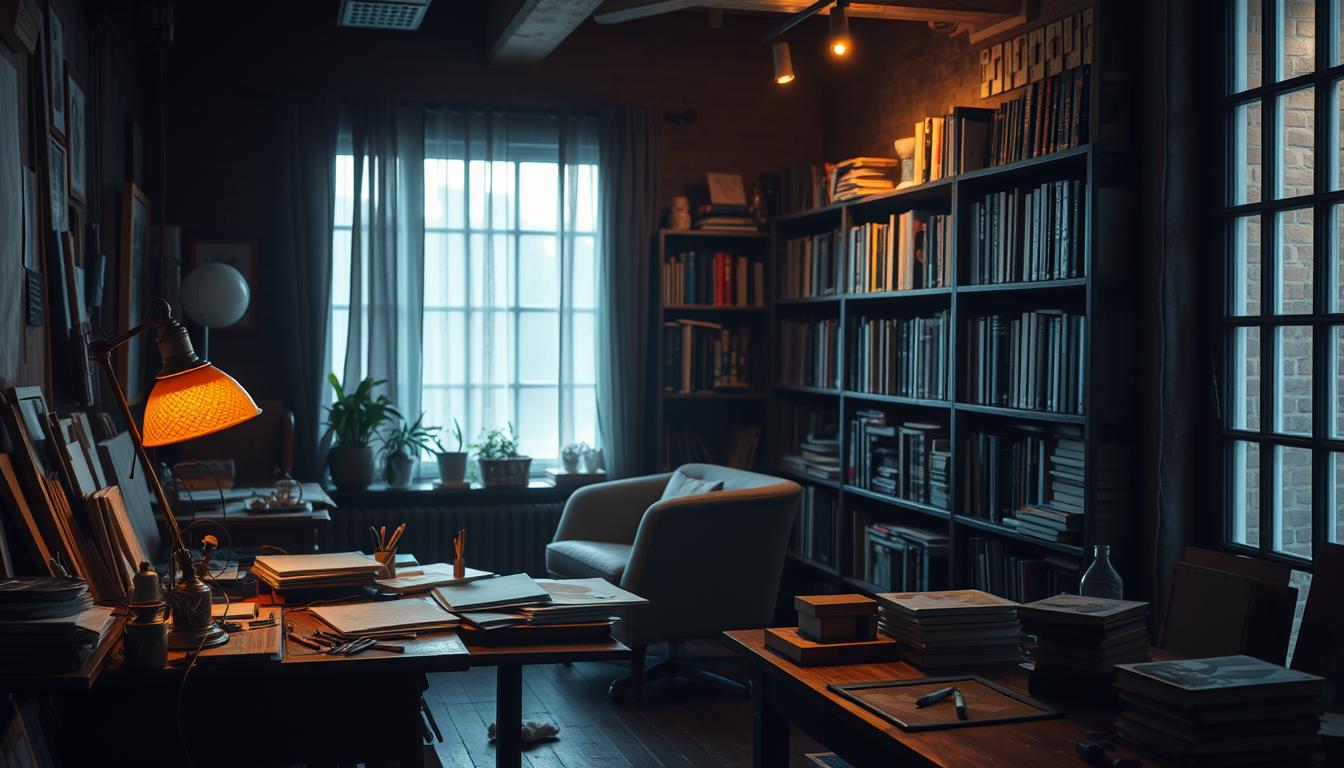
Creative solitude is more than just downtime. It’s a powerful tool for artists, writers, and innovators. Quiet moments alone help spark new ideas. Without distractions, the mind can freely wander and connect thoughts in new ways.
Studies show that solitude boosts internal dialogue. This mental space allows creators to dive deep into their ideas. Solitude also clears out mental clutter, making room for clarity and originality.
Being alone fuels the brain’s default mode network, which is essential for creativity. Even big companies like Apple and Google value quiet brainstorming. Solitude is not about being isolated; it’s a mindset for growth.
The Importance of Solitude in Creativity
Solitude is more than just downtime. It’s a key to unlocking our full creative power. Studies reveal that alone time boosts enhancing creativity by allowing the mind to wander freely. In quiet, our inner thoughts can flourish, sparking new ideas that might get lost in the daily hustle.
A 2021 study in the Journal of Creative Behavior found that reflection can improve problem-solving by 30%. This shows how important it is to have time to think deeply.
Too much noise can block our creativity. Stanford University research found that people in quiet spaces come up with twice as many creative solutions. Solitude gives us the mental space to explore and innovate.
“Solitude is where creativity thrives,” noted Susan Cain in her book Quiet. “Alone, we access deeper insights.”
Those who value solitude often see better focus and breakthroughs. Having uninterrupted time helps turn vague ideas into clear plans. Start with just 20 minutes a day of quiet thinking. This simple step can open up new ways of thinking and enhancing creativity becomes second nature. Let quiet moments spark your creativity.
How Solitude Boosts Focus and Productivity
Solitude makes creative focus better by cutting down on distractions. Working alone lets the brain have internal talks. This strengthens working memory and keeps tasks clear.
Studies show quiet places make us more productive. Ideas can grow naturally without interruptions.
Internal talks in solitude help keep creative focus. Designers and writers use this time to perfect their ideas. A calm space helps organize thoughts, leading to better work.
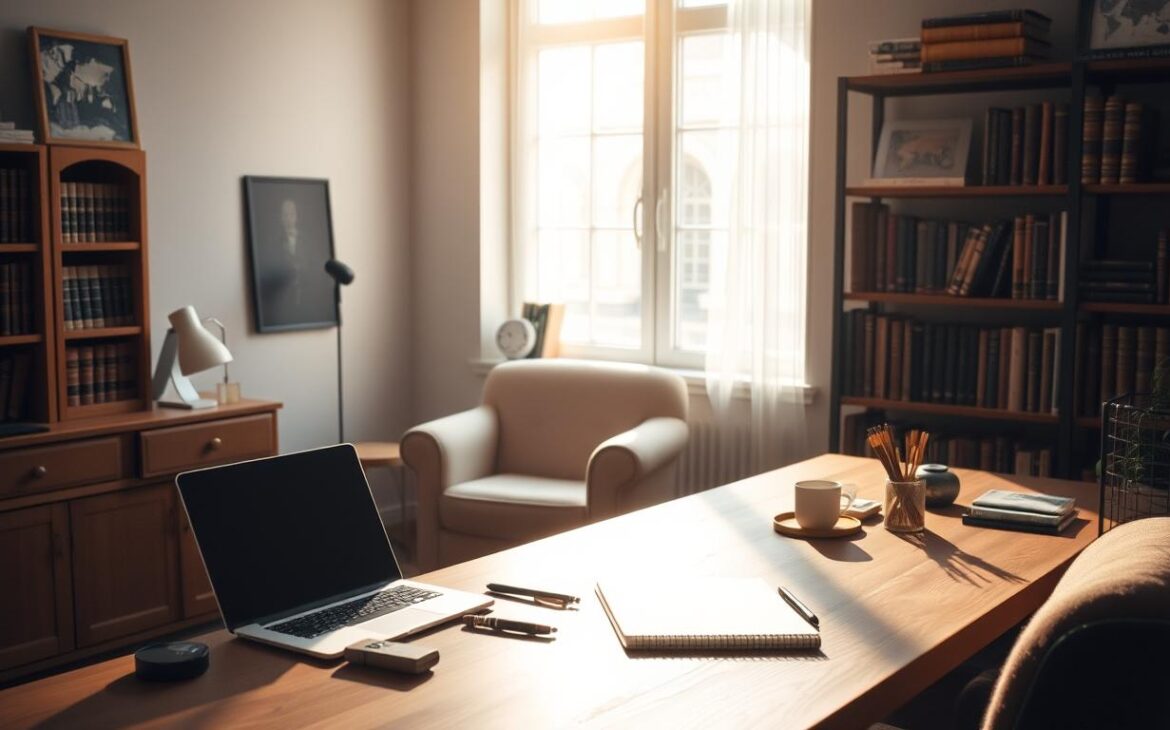
Solitude helps turn ideas into action. Less outside noise means more energy for the task. This setting supports deep work, leading to creative success.
The Role of Reflection in the Creative Process
Solitude boosts productivity when creativity meets reflection. Quiet times let your mind explore freely, making new connections. This space turns raw ideas into refined concepts.
Science proves that reflection in solitude activates a brain process called corollary discharge. This process links actions to feedback, helping us review and improve our work. Many artists and innovators say solo time helps them refine their ideas.
Leonardo da Vinci’s notebooks show how he refined his work through quiet contemplation. His revisions reveal the power of reflection.
“The unconscious mind is a well-stocked warehouse. Reflection unlocks its doors.”
Make reflection a daily habit. Turn off your devices and jot down your thoughts. This practice turns random ideas into clear plans. Studies show that structured reflection in solitude can improve problem-solving by up to 40%.
See solitude as a way to grow. Your next big idea might come from the quiet of your own mind, not from noise.
Encouraging Deep Thinking Through Solitude
Inner reflection grows when we’re away from distractions. Solitude gives us room to think and question. By turning off screens and ignoring social pressures, we let our thoughts unfold freely. This quiet time is essential for clarity and new ideas.
Begin with just 15 minutes of quiet each day. Find a peaceful spot, breathe deeply, and let your mind roam. Writing down your thoughts can be very helpful. It helps you organize your ideas and turn vague thoughts into plans.
Studies show that uninterrupted time improves problem-solving. A quiet room or a solo walk can spark creativity. Your inner voice guides you, showing you new ways to look at challenges. Try focusing on one question at a time, like “What’s holding me back?” or “What if I tried this differently?”
Inner reflection is not just sitting quietly. It’s about actively listening to your thoughts. Silence helps you reconnect with your goals and passions. With time, this practice sharpens your intuition and confidence. When distractions disappear, creativity blooms.
See solitude as a valuable tool, not a burden. It’s a chance to hear your own voice clearly. Your next big idea might be waiting in those quiet moments.
Solitude vs. Social Interaction in Creativity
Social connections can spark new ideas. But, alone time is where we shape those ideas. A 2022 Harvard study found that 75% of innovators value quiet time to think.
Talking too much can block our creative flow. Team talks are important, but they make us think fast. Solitude, on the other hand, lets our minds explore freely.
Artists and inventors often find their best ideas when they’re alone. They might get inspiration from walks, journaling, or daydreaming.
Finding the right balance is essential. Creative people need alone time to process their thoughts. Tools like Slack or Zoom help teams connect, but innovation comes from quiet moments. Solitude is not about being alone; it’s about giving ourselves time to think.
The Science Behind Creativity and Solitude
Neuroscience research shows that being alone sparks changes in the brain. These changes help foster a creative mindset. Studies show that time alone boosts neural pathways linked to innovation.
These shifts allow the mind to wander freely. This freedom helps artists, writers, and thinkers find new perspectives.

Russell Hurlburt’s research uses the Descriptive Experience Sampling (DES) technique. It tracks real-time thoughts. Participants often reported breakthrough ideas during solitary moments.
This proves that solitude strengthens the creative mindset. The DES method captures how quiet reflection lets the brain process ideas without outside noise.
The brain’s corollary discharge system is key. It filters out distractions, letting internal thoughts flow. When alone, this system sharpens focus on imagination.
This boosts problem-solving and originality. Over time, this practice builds habits that fuel innovation.
Science shows that solitude is more than just downtime. It’s a tool to train your brain for creativity. By embracing quiet time, you activate neural patterns that support a resilient creative mindset.
This turns abstract ideas into reality. Understanding these processes can help anyone harness solitude’s power.
Finding Your Ideal Solitude Space
Start by picking a quiet spot for your creativity. It could be a home office, a park bench, or a cozy corner. Your space should feel personal and calming. Look for places with little noise and few distractions.
Natural light is great for mood and focus. Let sunlight in or use soft lamps to avoid glare. You can adjust the lighting for different tasks—bright for details, dim for brainstorming.
Adding plants or soft textures can make your space feel softer and less stressful. Sound is important too. Use headphones or a fan to block out background noise. Some like nature sounds or instrumental music. Try different sounds to see what works for you.
Make your space your own with items that inspire you. Keep your desk clean and your chair comfy. Even small changes, like moving furniture or adding scented candles, can make a big difference.
Try out different spots and times of day. Maybe mornings are best in a sunny room, and evenings in a dim corner. Let your space grow with your creative needs. The goal is to feel relaxed, not stressed by perfection.
Embracing Solitude as a Lifestyle
Solitude isn’t just for creativity bursts—it can change your daily life. Many artists and thinkers, like Susan Cain, say alone time builds resilience and clarity. Starting mornings with coffee in silence or ending days journaling can make a big difference.
“Alone time is like a quiet muscle—use it regularly, and it grows stronger.”

Successful creators balance alone time with social life. J.K. Rowling wrote Harry Potter in cafés, feeling alone yet connected. Her story shows solitude can fit any setting. Try setting aside 15 minutes daily for reading, walking, or daydreaming. These moments can become a daily rhythm.
Studies show solitude reduces stress and boosts problem-solving skills. It’s not about being isolated but choosing when to engage. Apps like Focus@Will help block distractions, letting you focus without guilt. Small steps can make solitude a natural part of life.
Embracing solitude means valuing your mind’s space to grow. It’s a mindset shift, valuing quiet as much as busy. Your creativity and peace of mind will benefit in the long run.
The Risks of Lack of Solitude for Creatives
Creativity grows best in quiet places. But ignoring solitude can trap us. Without alone time, stress builds and focus wanes.
Studies show constant distractions harm problem-solving skills. Ideas get stuck in a mental fog.
Harvard researchers found social media and feedback loops can hurt self-confidence. Creatives lose their unique voice when seeking too much validation. The brain struggles to innovate when bombarded with noise.
“Without silence, creativity drowns in the noise of others’ expectations.” — Dr. Emily Carter, Stanford Creativity Lab
Ignoring solitude can lead to burnout. A 2023 survey by the National Creativity Institute found 68% of artists and writers feel drained by endless collaboration. Their work becomes repetitive, lacking personal insight.
Protecting quiet time is not selfish—it’s vital for staying sharp. Take small steps. Turn off notifications for an hour daily. Let your mind wander without judgment.
Creativity needs space to breathe. Your best ideas wait in the quiet.
Tips to Cultivate Solitude
Start small. Even 15 minutes a day of alone time can change a lot. Cultivate solitude by treating it as a must-do task. Mark it down in your calendar and don’t let anything get in the way.

Meditation apps like Headspace or Calm help quiet your mind. Just ten minutes a day can train your brain to stay focused. Research shows mindfulness can boost creative problem-solving by 30% (Harvard Business Review, 2022).
Journaling helps clear your thoughts. Carry a notebook or use apps like Notion to write down your ideas. Famous artists like Maya Angelou used writing to express their feelings and spark creativity. Try writing freely for five minutes every morning.
“Solitude is the friend of creativity. It’s where the mind finds its voice.”
Make a special place for reflection. Set up a cozy corner with a comfy chair and soft lights. IKEA’s “Lack table” and some plants make a great spot for deep thinking.
Set limits on your tech use. Turn off notifications during your alone time. A Stanford study found not using screens can increase creative thinking by 25%. Use apps like Freedom to block distracting websites.
Try different things and find what works for you. What works for J.K. Rowling might not work for everyone. Experiment with walking alone, gardening, or just enjoying a quiet cup of coffee. What’s important is being consistent, not perfect.
Conclusion: Embracing Solitude for Creative Growth
Creative growth needs quiet time to flourish. Studies show that being alone boosts innovation. It lets the mind wander freely.
Neurocognitive research shows that solitude makes our brains stronger. This leads to new ideas that spark creativity. It’s not about being alone all the time. It’s about finding a balance.
Begin with just 15 minutes a day of quiet. This can make you more productive by clearing your mind. Try journaling or deep breathing to stay focused.
With time, these habits make solitude a powerful tool. It helps you unlock your full creative ability. Let solitude be your secret to making your ideas real.