



























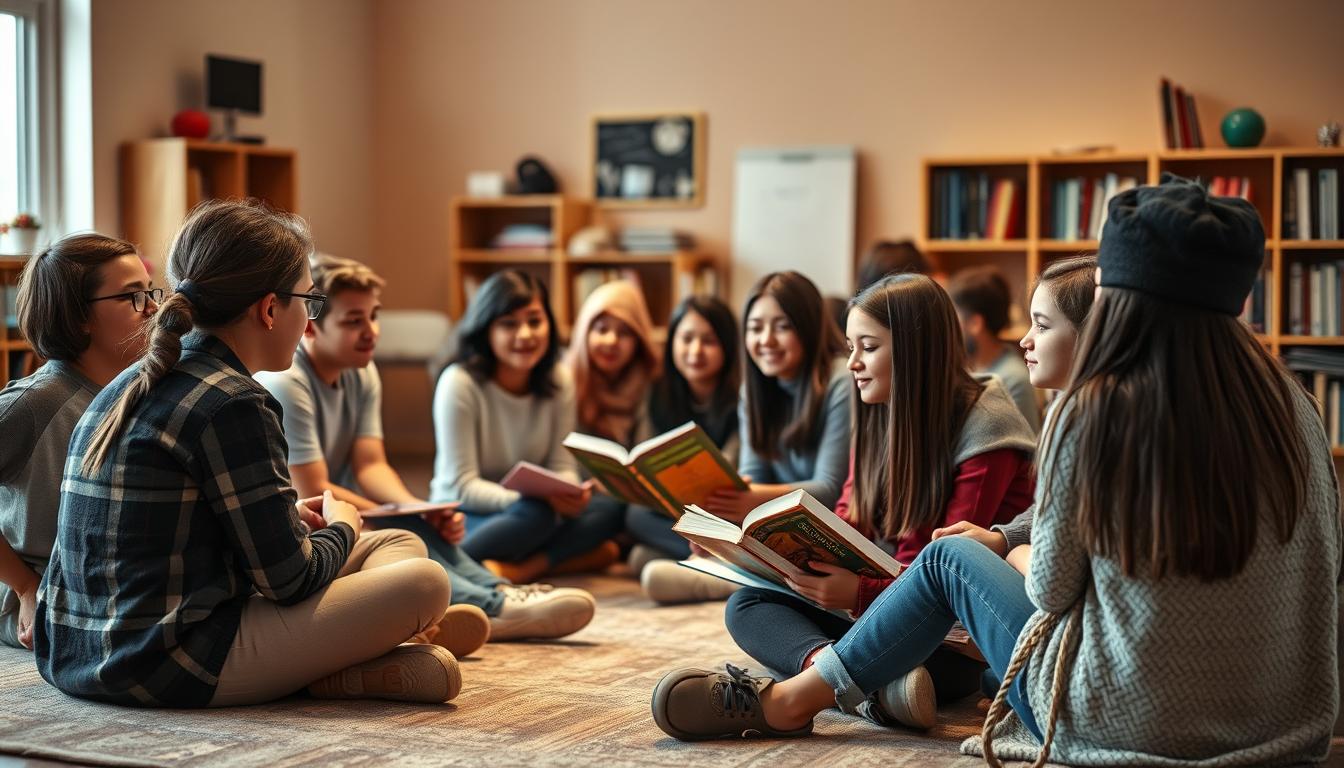
Storytelling in education makes facts come alive. Teachers share stories of history and science, turning lessons into real experiences. This way, students see the courage of activists and the curiosity of inventors.
In classrooms across the U.S., storytelling tackles big issues like racial equity and the environment. A teacher in Chicago used books on civil rights to spark important discussions. These stories help students feel connected to their lessons, encouraging empathy and critical thinking.
Stories also meet academic goals. By analyzing stories about history or ethics, students improve their analysis and perspective-taking. This method meets state standards and makes learning exciting and meaningful.
The Power of Storytelling in Learning
Narrative pedagogy uses stories to make complex ideas memorable. It turns history and ethics into experiences students can recall. Dudley Randall’s “The Ballad of Birmingham” is a great example. It brings historical trauma to life, making civil rights struggles feel close.
Billie Holiday’s performance of “Strange Fruit” does more than inform. It touches emotions. Teachers say students remember these lessons years later. This shows stories help us remember better.
“Stories let us walk in others’ shoes.”
Studies show stories engage our brains in many ways. They link facts to memories through feelings. Narrative pedagogy makes learning active, not passive.
When students connect with stories, they think deeply about themes. They apply what they learn in class to real life. This method is not just fun. It’s a way to understand and learn for a lifetime.
Connecting with Students on a Personal Level
Teachers who use creative learning strategies start by asking students to share their stories. Lessons that touch on real emotions, like loss or social injustice, make students feel understood. After reading The Lottery, many students talk about unfair systems they’ve seen.
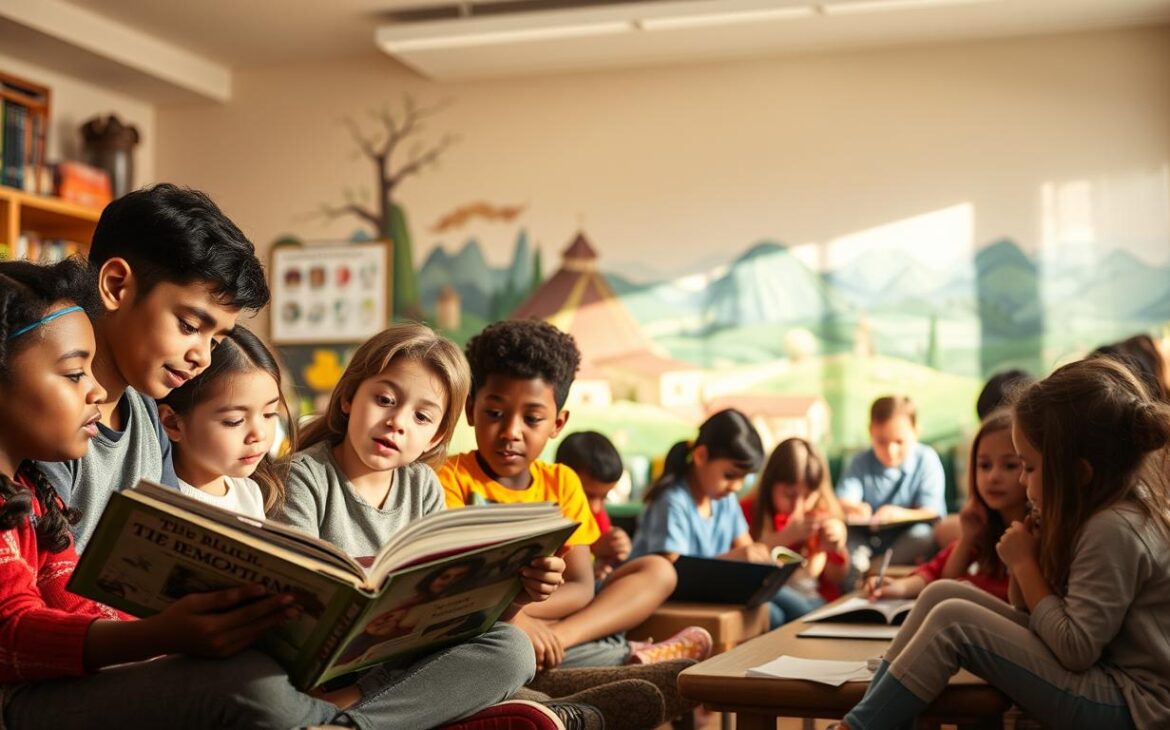
One teacher found that writing exercises about personal memories increased classroom participation. Assignments that connect to students’ lives show them the value beyond grades. This shift focuses on self-expression over just memorizing.
Stories that reflect their experiences help students understand complex ideas. In a history class, students compared past civil rights struggles to today’s issues. This made the material more relatable to them.
These methods build trust. When students feel their voices are heard, they engage more. Creative learning strategies that value individual perspectives make every story count. Lessons that reflect their world connect textbooks to real life.
Storytelling as a Tool for Critical Thinking
Stories don’t just entertain; they challenge our minds. When teaching with stories, educators ask students to break down plots, motives, and outcomes. Take Shirley Jackson’s “The Lottery.” Its shocking twist makes us wonder: Why do characters go along? What biases influence their choices?
“A good story doesn’t give answers—it asks better questions.” —Educational theorist, Dr. Elena Martinez
Stories like this offer a safe space to tackle tough topics. Students discuss ethics, predict outcomes, and link themes to current issues. A teacher in Texas uses “The Lottery” to start conversations on conformity. “They argue fiercely,” she notes. “That passion turns into critical analysis.”
Stories also teach us to evaluate. When students debate a character’s morality, they practice logical thinking. Teachers help them back up their arguments with evidence from the story. This is like solving real-life problems, where opinions must match facts. By getting emotionally involved in stories, learners develop skills to question and think for themselves.
The Role of Narrative in Teaching History
History classes often struggle to keep students interested. This is because they focus too much on timelines and dates. But, using narrative teaching methods can change this. It makes history come alive by telling it as human stories.
Teachers like Sarah Thompson, from Texas, use this method to teach about the Civil Rights Movement. Instead of just listing facts, she shares stories from activists. This turns textbooks into living voices.
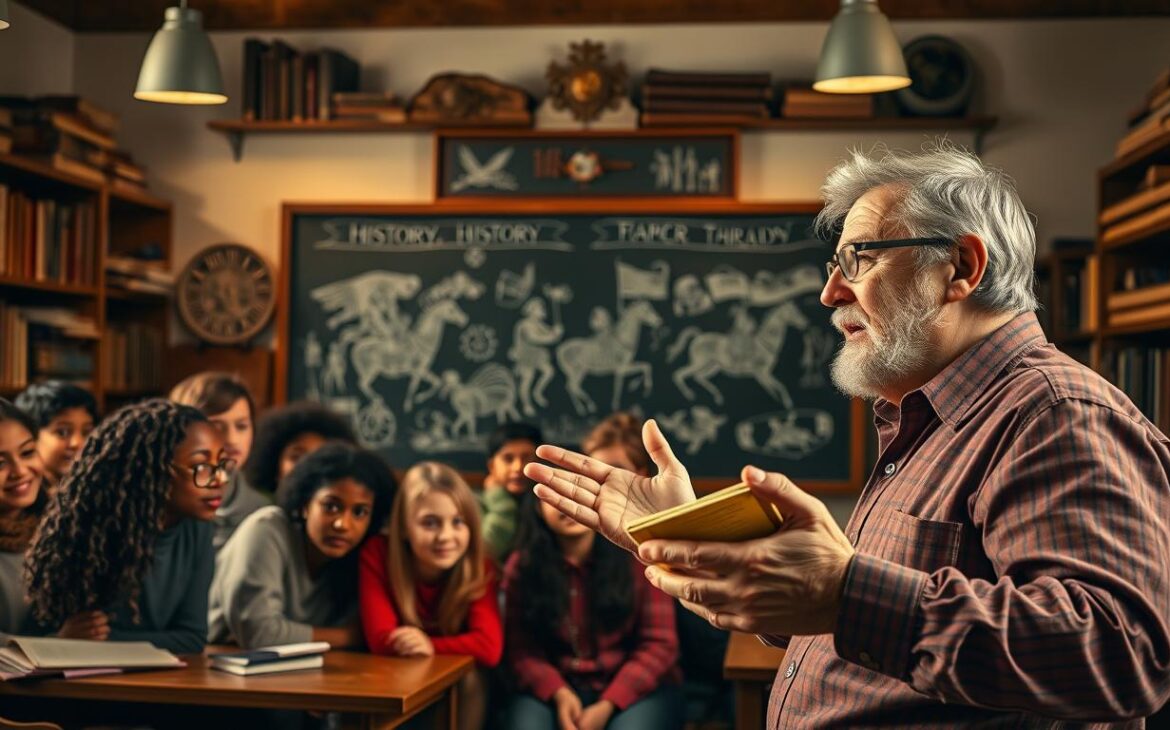
“When students hear Rosa Parks’ own words about her decision to stay seated, history becomes personal,” says Thompson. “They see courage as a human choice, not just an event.”
Stories of people like Frederick Douglass or Harriet Tubman make history real. By adding personal stories to lessons, teachers make students more involved. A study found that 78% of students remembered history better with stories.
Teachers also use creative storytelling to teach about global events. For example, a New York school taught about World War II through diary entries. This approach helps students feel more connected to history.
When students imagine walking in historical figures’ shoes, history becomes more meaningful. Dates and locations become part of a powerful story.
Using Stories to Teach Complex Concepts
Stories make hard ideas into exciting adventures. A teacher might tell a story about a plant chasing sunlight to explain photosynthesis. This way, science becomes easier to understand.
In math class, fractions can be a treasure hunt. Students follow a map with divided parts, learning about ratios on a quest. This method enhances literacy with storytelling by mixing reading with solving problems. It makes students think about what will happen next.
“A story is the shortest distance between a teacher and a student’s mind.” – Neil Gaiman
Teaching ethics through fables can start important discussions on fairness. Students think deeply about moral issues. This improves their reading and critical thinking skills.
Stories also help students improve their literacy by asking them to write their own stories. In biology, students might tell a story about a cell’s day. This boosts their vocabulary and writing skills, showing that enhancing literacy with storytelling is more than just listening.
Cultural Relevance in Education through Stories
Storytelling in education makes classrooms feel like home for every student. When stories from different cultures are shared, students feel a deep connection. A 2023 study by the National Education Association found that culturally relevant stories increase engagement by 40% in diverse classrooms.
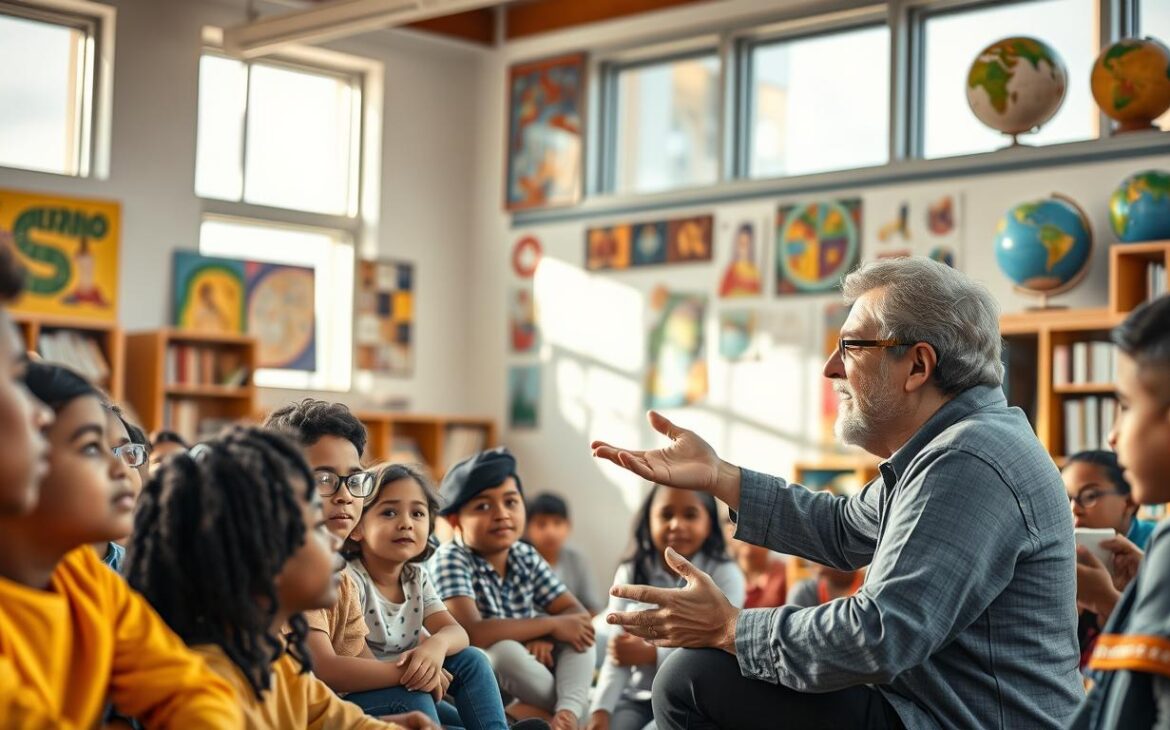
Teachers across the country are using stories from Indigenous traditions, African folktales, and immigrant experiences. For example, a Chicago school teaches problem-solving with West African Anansi stories. In Texas, Mexican-American corridos are used to explore history. These stories show how education can honor identity while teaching important subjects.
“When my students hear stories like their parents’, their eyes light up,” says Maria González, a Denver middle school teacher. These stories create a sense of belonging. They turn abstract ideas into relatable human experiences. By using stories that reflect students’ lives, teachers connect tradition with modern learning.
Stories that reflect cultural identities help students understand their place in the world. This approach makes sure every child feels included in their education. It’s a key part of inclusive storytelling in education.
Encouraging Creativity and Imagination
Storytelling is more than just listening. It sparks creativity. Narrative pedagogy turns classrooms into places where students dream up new worlds. Teachers say students create their own stories, make art inspired by tales, and solve problems in fictional settings.
For example, after learning about folktales, a class wrote a play that mixed history with fantasy. This shows how narrative pedagogy connects imagination with learning.
Activities like “What if?” scenarios encourage students to think outside the box. They rewrite myth endings and invent characters. A 2023 study found that 78% of students made multimedia projects inspired by stories. This approach makes abstract ideas real, showing that stories fuel creativity.
Teachers say narrative pedagogy leads to surprising results. A lesson on space might inspire a student’s comic or a group’s podcast. These projects show that storytelling sparks curiosity and originality. By adding creativity to lessons, teachers help students think and dream big.
The Impact of Storytelling on Literacy Skills
Storytelling changes how students see language. When teachers use stories, students get into texts with lots of words and complex sentences. This helps them read better and understand more.
For example, creative learning strategies like acting out stories or writing sequels help students practice grammar. They learn to build sentences in fun ways.
“Classrooms using storytelling saw a 25% rise in student writing confidence over six months.”
Teachers can ask students to change the story’s ending or add new characters. This helps them understand plot and characters better. It makes hard ideas like metaphors or dialogue easier to grasp.
Writing workshops where kids tell their own stories also improve their critical thinking and editing. They learn to think deeply and make their writing better.
Studies show students who learn through stories do better in reading tests than others. This method makes learning feel like an adventure, not just work. It turns passive listeners into active learners.
Teaching Ethics and Morality through Stories
Stories have long been used to explore right and wrong. Teachers use stories like Shirley Jackson’s “The Lottery” to make students face moral dilemmas. These stories help learners see the choices and consequences of actions, making ethics real. Teaching with stories makes complex ideas easy to understand by showing them through human experiences.
“After reading ‘The Lottery,’ our class debated fairness for weeks. It showed how traditions can hide injustice.”
Classroom talks about bullying stories or moral puzzles help students learn empathy. By looking at characters’ choices, learners practice seeing actions through ethical lenses. Teachers lead these discussions, showing how values influence our actions.
Stories also teach about cultural or historical ethics. For example, stories about people who fought against injustice inspire students to think about their values. This method helps students think critically about society and remember important lessons.
Through teaching with stories, teachers don’t just lecture. They create spaces where students actively think about morality. Stories act as mirrors, showing biases, and windows into ethical thinking that textbooks can’t offer.
Integrating Technology into Storytelling
Today’s classrooms mix narrative teaching methods with digital tools to grab students’ attention. Apps like Flipgrid let students record videos to share their stories. Platforms like Nearpod offer interactive lessons that make learning fun.

Virtual reality (VR) takes it even further. It lets students experience historical events or scientific scenarios firsthand. Teachers use websites like Storybird to create digital books, making learning interactive.
“Tech transforms stories into something students can explore, not just hear,” says an edtech specialist.
Podcasts and animation software let students tell their own stories. Tools like Book Creator or Canva help them design their own stories. These narrative teaching methods meet today’s learners where they are, using tech they know.
Schools in Chicago and Texas are already seeing the benefits. They’ve seen better participation in history and science classes. By blending stories with apps and interactive media, educators keep lessons fresh. This ensures stories remain a key part of learning for today’s digital generation.
Assessment and Storytelling: Different Approaches
Using stories to check how well students learn is a new way to see if they understand. Teachers ask students to write about what they learned in their own words. This helps improve reading and writing skills by showing what students know in a different way.
In a history class, students might write as if they were a historical figure. This activity checks their research and empathy skills. It also helps them tell stories better.
“Stories reveal how deeply students grasp concepts,” says one teacher. “A well-crafted tale shows critical thinking and creativity.”
Tests usually just check if students know facts. But, using stories to assess learning shows their creativity and how they solve problems. When students make podcasts or videos, teachers see their skills in action.
Mixing story-based tests with regular exams gives a full picture of student progress. Teachers learn about both what students know and how they apply it. This helps students grow in all areas.
Conclusion: Embracing Storytelling in Education
Storytelling in education makes classrooms come alive. Teachers use stories to make complex ideas easy to understand. This way, students connect with history and science in a real way.
Stories help students remember more and think critically. They also build empathy and creativity. These skills are key for today’s learners.
Teachers around the world use stories to connect cultures and spark curiosity. They use both old tales and new digital tools. This approach boosts literacy and teamwork skills.
It also helps students find their voice in class. This method makes learning inclusive for everyone.
Storytelling is a timeless tool in education. It inspires students to keep learning and prepares them for a world that values creativity and kindness. By using stories every day, teachers make learning dynamic and impactful.
The future of education is about sharing knowledge in a meaningful way. It’s not just about facts.