



























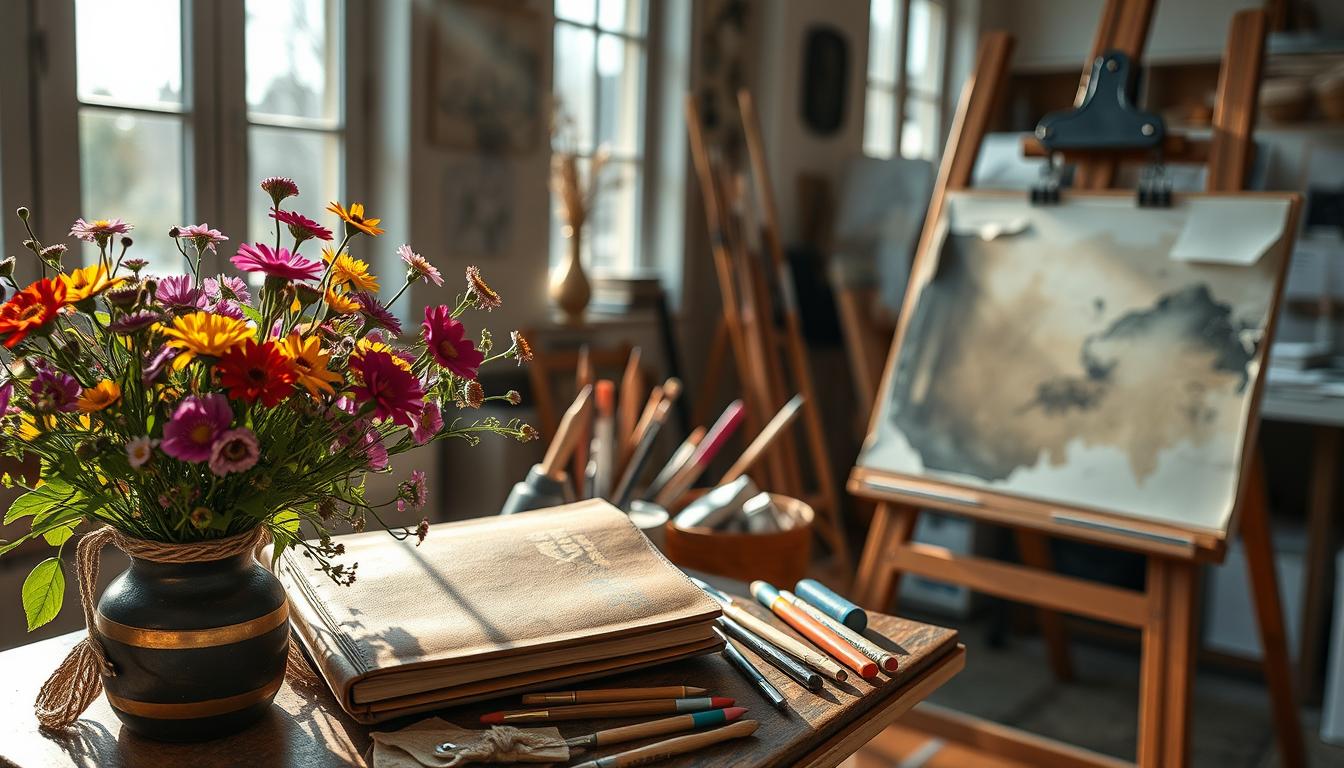
What if the ordinary moments of daily life held hidden beauty? Everyday art invites us to see the extraordinary in the simple. A coffee cup, a sunset, or a walk home—all become canvases for creativity.
TSLL’s philosophy teaches how small moments can feel luxurious through mindful observation. Recent releases like Everyday Elegance and Art in the Ordinary show how artists transform routines into meaningful art.
Everyday art isn’t just about objects—it’s a mindset. Framing a backyard scene or capturing morning light turns the mundane into a masterpiece. This shift in perspective boosts creativity and joy in everyday life.
Introduction to the Mundane in Art
A coffee cup, a crumpled receipt, or a cracked sidewalk—these everyday objects often go unnoticed. Yet, they are the heart of mundane magic in art. Artists show us that the ordinary can be full of wonder. A faded postcard, a tangled wire—each has stories waiting to be found.
Projects like A Year of Beautiful Words and Glow Up! help us see things differently. They turn discarded items into art, showing beauty in simplicity. Andy Warhol’s Campbell’s Soup Cans made everyday items symbols of culture, starting big conversations about art in our lives.
“To see a World in a Grain of Sand” — William Blake
Blake’s words are a reminder. His verse tells us that small details tell big stories. When we slow down, even the most mundane items can spark creativity. A chipped mug or a weathered door holds mundane magic, inviting us to see things anew. Art teaches us to find inspiration in what we often overlook.
Historical Context of Everyday Objects in Art
Artists have always used everyday items to share stories about life. From ancient pottery to Renaissance paintings, these objects symbolized culture and feelings. Over time, art transformation moved from big themes to the everyday.
In the Dutch Golden Age, paintings showed off wealth and hinted at life’s shortness. A wilting flower or spilled wine in a Vermeer or Kalf’s work meant more. These small details showed the beauty in simplicity.
By the 19th century, Realism artists like Gustave Courbet focused on workers and their tools. His 1849 painting The Stone Breakers made simple work a strong statement. Art transformation here meant valuing the unseen.
Modernists like Marcel Duchamp went even further. His 1917 Fountain—a signed urinal—questioned what art is. This art transformation made viewers think about what’s worth admiring.
These moments across history show how everyday objects reflect society. Each era’s approach shows how creativity turns the mundane into lasting commentary.
Techniques for Elevating the Everyday
Make the ordinary into cultural art with mindful creativity. Artists and designers use simple methods to highlight everyday objects. Start by focusing on composition: arrange items like books or vases to create balance. Minimal setups draw attention to shape and texture, making the ordinary stand out.
Color and contrast amplify impact. Pair muted tones with bold accents to emphasize details—a red apple on a white tablecloth pops visually. Cultural art often draws from traditions, like using geometric patterns inspired by Moroccan tiles or Japanese brushwork in DIY projects. These elements add storytelling depth to home décor.
DIY blogs like Design Milk show how to frame fabric scraps or repurpose tools into art. Lighting plays a role too: side-lighting casts shadows that transform a coffee cup into a subject. Mixing cultural motifs with modern styles creates unique pieces that reflect personal or global heritage.
Experiment with layering textures—rough stone beside smooth glass—to evoke emotion. Cultural art thrives on combining the familiar with the symbolic. A bowl of fruit becomes art when styled with textiles from a specific region or paired with handmade pottery. Let curiosity guide you—small changes reveal big beauty.
The Impact of Cultural Context
Cultural traditions shape how everyday objects become masterpieces in modern art. A coffee cup in Paris might symbolize café culture. In Kyoto, it could reflect Zen simplicity. These differences show how culture shapes artistic meaning.
Yayoi Kusama’s polka dots blend her Japanese heritage with global modern art trends. They transform simple patterns into universal symbols. Diego Rivera’s murals celebrated Mexico’s rural life, turning humble tools into historical records. Culture doesn’t just inspire art; it redefines what viewers see.
Community projects like Chicago’s public murals mix local stories with global styles. A street artist in Harlem might paint a fire escape as both a functional object and a symbol of urban resilience. These works prove that context turns ordinary into extraordinary.
“Culture is the lens through which we view even the smallest detail.”
From Korean tea ceremonies depicted in galleries to Brazilian favela landscapes, modern art thrives when rooted in cultural soil. It’s not just about the object—it’s the story behind it.
Everyday Scenes in Modern Art
Modern artists see the world in a new light. They use artistic techniques to make the ordinary extraordinary. A coffee stain or a sunset is transformed into a work of art.
Projects like the “Elevated Everyday Monthly Book Club” show how artists mix different art forms. They use photography, sculpture, and digital art to create something new.
A crumpled receipt can become a 3D sculpture, or a sidewalk crack a digital painting.
Modern artists play with light, color, and size to show us beauty we never saw before. They use street art, virtual reality, or social media to change our view of the everyday.
By exploring these methods, we can find magic in the mundane.
The Magic of Minimalism
Minimalist art turns simple things into deep statements by removing the extra. It shows beauty in the simple by focusing on shape, color, and space. Just like how a clean room or a single flower can catch our eye.

Artists like Agnes Martin and Donald Judd showed the power of minimalist art. Their work often has clean lines and one color, making us see textures and empty space. Judd said, “Simplicity is about subtraction,” a thought that goes beyond art.
“Less is more.” – Ludwig Mies van der Rohe
In our daily lives, minimalism sparks creativity. Cleaning up a desk or decorating a blank wall is like minimalist art. TSLL’s tips on organizing show how clear spaces reflect the beauty of such art.
Minimalism helps us find the beauty in the simple. A simple vase or a single chair becomes a work of art with this view. It makes us see the world in a new way, full of mindful moments.
Case Studies of Artists Who Captured the Mundane
Artists turn everyday moments into stunning works through photography in art. Afton Porter’s “Everyday Light” series makes kitchen tables and laundry piles into serene scenes. “The mundane holds stories waiting to be seen,” Porter said in a podcast.
Their camera captures dust particles in sunbeams, showing beauty in the overlooked.
Andreas Gursky’s “99 Cent II Diptych” arranges fast-food items into perfect shapes. This photography in art piece changes how we see everyday things. By showing dollar-store goods as art, Gursky makes us question value.
Both artists show that skill and perspective can make the ordinary into something meaningful.
“Art begins when you choose to look deeper,” says Porter, capturing raindrops on a windowpane with the same care as a landscape painter.
These examples highlight the importance of patience and purpose in photography in art. Whether it’s through setting up scenes or capturing city life, their work encourages all to find the extraordinary in daily life.
The Influence of Photography
Photography turns simple moments into engaging art by capturing them in time. A spilled coffee cup or a cracked sidewalk become stories through a lens. Photographers like Henri Cartier-Bresson found the perfect moment, making scenes last forever.
Today, smartphones make photography easy for everyone. Close-up shots or black-and-white filters show the beauty in everyday things. Street photography turns city chaos into beautiful pictures that make us see things differently.
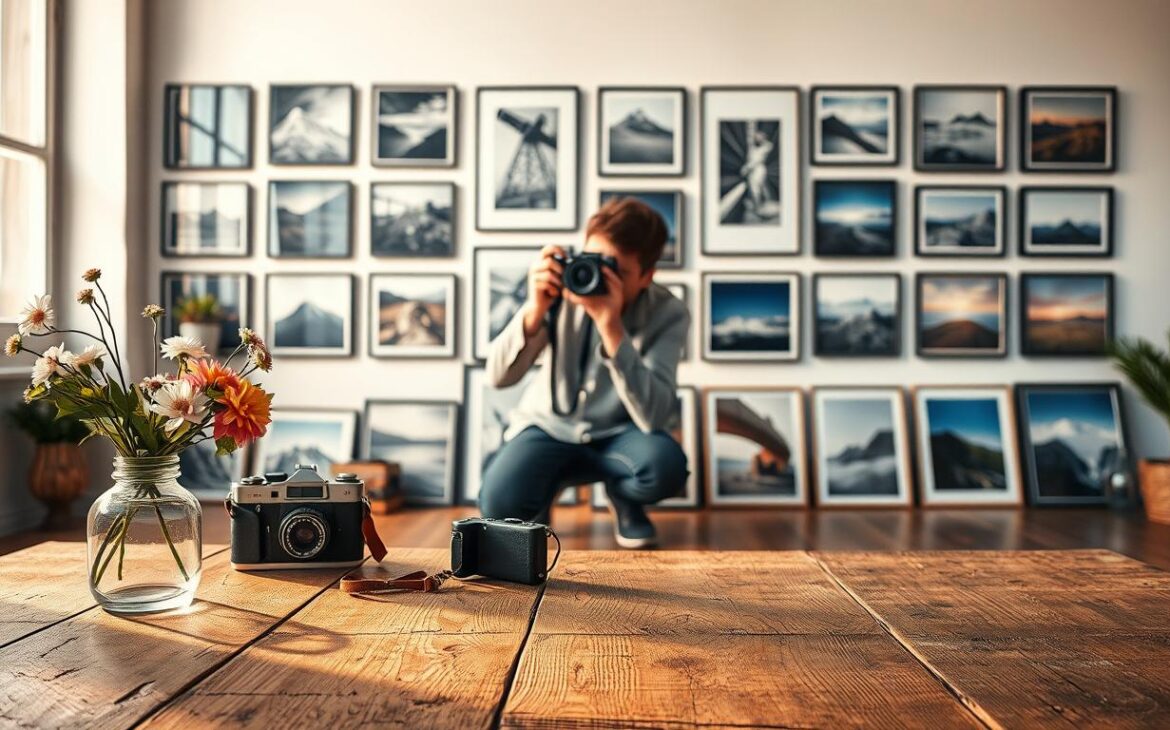
Photography also affects other art forms. Painters learn from photos about space and light. Digital artists use photo tricks in their work. The Museum of Modern Art’s “Everyday Elegance” shows how simple photos can change how we see things.
Anyone can join in this creative journey. Try different angles, shadows, or light to find beauty in the ordinary. Photography makes engaging art accessible to all, letting everyone capture their own unique view of the world.
Engaging the Audience with the Mundane
The role of artist today is more than just making art. It’s about connecting with people. Artists use social media and online workshops to draw viewers into their world. Instagram live sessions or YouTube tutorials show them sketching a coffee cup or painting a sunset.
These moments make art something everyone can enjoy. They turn onlookers into active participants.
Online platforms like Skillshare offer classes on everyday photography. People share their work, building a community. Artists act as mentors, helping others see beauty in the mundane.
A quick Instagram search for #FoundArt shows thousands of posts. Each one is a piece of shared creativity.
Public installations, like the “City Mosaic” project in Chicago, let people add to a growing wall. Artists become curators, turning sidewalks into art spaces. Live Q&A sessions on Twitter Spaces let fans ask questions, making the artist more relatable.
Every post, workshop, or mural connects the ordinary to the extraordinary. The role of artist is to inspire others to see the world in a new way, together.
The Role of the Artist
Artists make the ordinary into something amazing. They turn a simple coffee cup or a street corner into a creative everyday masterpiece. They use their stories and skills to make us see the world in new ways.
Coaches at TSLL teach how artists mix their personal stories with big ideas. This inspires others to see things differently.
“The mundane is a canvas waiting for light,” said a guest on a recent art podcast. This mindset fuels artists to highlight hidden beauty in daily life.
Think about how a painter sees rain puddles as mirrors of the sky. Or how a sculptor turns old objects into new ones. These choices make us think about what’s valuable and how we see things.
In beauty and business coaching, clients learn to find inspiration in everyday tasks. They see the beauty in routine.
Artists don’t just make art; they inspire us to find creativity in everyday moments. Their work connects people, showing us the beauty in the overlooked. New artists are encouraged to see every object, gesture, or space as full of possibility. By sharing their visions, they help change our culture, making the creative everyday a source of connection and innovation.
Conclusion: Finding Magic in the Mundane
Everyday moments are full of hidden beauty. Artists like Andy Warhol and Edward Hopper show us this. They turn simple things into something special.
They use techniques like minimalism and bold composition. This shows us that magic is in how we see things, not in grandeur.
magical art is all about curiosity. A simple coffee cup or a crowded street can tell a story. By noticing details, we can find inspiration in our daily lives.
Photography, painting, or sketching can make our world a canvas. The artists we’ve talked about show us that creativity is everywhere. It’s not just for galleries.
Look for magic in the small and familiar things. Share your unique view of the world through your art. Whether it’s inspired by Yayoi Kusama or Hiroshi Sugimoto, there’s no wrong way to see it.
Keep your eyes open and let the ordinary inspire you. The world is full of magical art. Start creating your own today.