

























Every voice has a story to tell. This story can be shared through writing, music, or art. Creativity shows us who we really are.
Think of a songwriter crafting a melody or a poet perfecting their lines. These moments are about finding ourselves. Creativity lets us express our true selves, turning doubts into words.
When we share our truth, we connect with others. This connection builds a creative community. Here, being real is what brings us together.
Do you remember your first creative moment? That’s a clue to your voice. It’s about being genuine, not perfect. Every creation is a way to claim your space in the world.
The Power of Creativity in Building Community
Your self-expression journey begins with small steps. Try journaling, drawing, or making a playlist. These actions turn personal thoughts into something everyone can understand. They show that our experiences are not alone.
When people feel heard, communities grow. Studies show that art programs in neighborhoods build stronger bonds. Sharing a poem or hosting a craft workshop is more than self-expression. It’s an invitation for others to join in.
“Art is a set of zeros and ones, but creativity is the algorithm,” Toni Morrison once said. This shows how our individual efforts create something bigger together.
Being creative breaks down barriers. Whether it’s painting a mural, starting a blog, or baking with neighbors, it connects us. Every step in your self-expression journey leaves a mark for others to follow. It reminds us we’re part of something bigger than ourselves.
How Creativity Can Foster Connections
Creativity is more than just expressing ourselves—it connects us to others. When we create, we share parts of ourselves, inviting others to see the world as we do. Through art, music, or writing, we break down barriers, turning loneliness into conversation.
Stories of finding one’s authentic voice discovery show how being open sparks connections. A poet might share a heartfelt poem online and find someone saying, “I felt that too.” This moment turns a solo act into a shared experience. Creative projects start conversations, not just show off skills.
Artists and writers find communities by sharing their unique views. When we create honestly, others see parts of their own stories. A painter’s bold colors, a musician’s words, or a dancer’s moves can reflect unspoken feelings. These moments build empathy, turning viewers into supporters.
Even small acts, like journaling or doodling, can open doors. Putting thoughts into words makes them relatable. Finding our authentic voice isn’t just for ourselves—it’s how we signal to the world, “This is me.” And when others hear that, connections grow naturally.
Unlocking Your Unique Voice
Your voice isn’t something you find—it’s something you uncover. Authentic storytelling for belonging starts when you embrace the parts of yourself you’ve been taught to hide. Creativity becomes the mirror reflecting who you truly are, not who the world expects you to be.
“Be yourself; everyone else is already taken.” — Oscar Wilde
Musicians rewrite melodies until they sound like their heartbeats. Writers delete drafts until their words match their soul’s rhythm. Every adjustment brings you closer to the voice that belongs uniquely to you. Storytelling for belonging thrives when you stop editing yourself mid-sentence and let raw emotion guide the pen or piano keys.
Imagine a poet who hides their verses for years. Then one night, they read aloud—not the polished lines they practiced, but the messy, unedited lines that tremble with real fear and hope. The room falls silent. That’s the moment belonging begins. Your voice isn’t competition—it’s a bridge.
Experiment with art forms until one clicks. A painter might discover their voice through brushstrokes. A dancer through movement. What matters is choosing mediums that let you say, “This is me.” When you share those truths, others hear echoes of their own journeys. That’s how storytelling for belonging turns self-expression into shared connection.
Start small. Journal entries. A single song lyric. Every authentic note you add to the world’s chorus helps others recognize their own. Your voice isn’t a mystery to solve—it’s a light to kindle. Let it shine.
The Impact of Storytelling on Belonging
Stories connect us. When we share our stories, we shape how others see us and ourselves. This act of storytelling is key to creative identity formation. It turns our personal experiences into something we all understand.
Imagine a painter using colors to show their struggles or a poet weaving verses from their dreams. Each story adds to the mosaic of human connection.
Organizations like StoryCorps record real voices to save individual histories. Their work shows how sharing stories makes people feel seen. When you tell your story, you invite others to see parts of their own lives in your words.
This mutual recognition builds belonging. As author Brené Brown says, “Vulnerability is the birthplace of belonging,” and storytelling is how we practice that courage.
“Your story isn’t just yours—it’s a thread in the world’s tapestry.”
Artists like Lin-Manuel Miranda turned his heritage into Hamilton, sparking conversations about identity. Memoirists like Ta-Nehisi Coates connect readers to histories they might never have seen. These creators show that storytelling is not just passive; it’s about building bridges.
When you share your story, you help with both your creative identity formation and our understanding of humanity. Start small: write a letter, sketch a memory, or record a voice note. Every story you tell is a step toward being fully known—and that’s where belonging begins.
Creativity as a Form of Self-Discovery
Artistic self-discovery starts when you let go of perfection. It’s about embracing the messy process of creating. Every brush stroke, note, or word shows who you are.
Think of a musician rewriting a symphony for years. Each change wasn’t just about better music. It was facing their fear of being judged. “The best art comes from honesty, not polish,” they learned.
Writer’s block is a reflection of yourself. It shows what you’re avoiding. A painter found success by focusing on their heart’s message, not perfection.
Artistic self-discovery isn’t about being talented. It’s about showing up, even when it’s hard. Try creating without judgment for 10 minutes. See where your mind goes. That might be your subconscious speaking.
“The act of making is the act of becoming.” — Artist and educator Betty Edwards
Every creative choice brings you closer to understanding yourself. Whether it’s sculpting or writing, it’s about being true when no one’s watching. That’s where real self-discovery starts.
Building Networks Through Creative Outlets
Creative activities like art, writing, or music connect people. Sharing your work opens doors to communities where creativity thrives. Online forums, local workshops, and projects become places where ideas grow and friendships form.

Safe spaces let people connect over shared passions. A painter might find a mentor in a gallery group. A writer could collaborate on a book in a poetry circle.
These interactions turn hobbies into pathways for mutual growth. Studies show that such networks offer emotional support and career opportunities. They prove that expressive creativity benefits go beyond personal expression.
Platforms like Behance or DeviantArt let artists showcase their work and network globally. Local theater groups or coding clubs create face-to-face bonds. Each project is a chance to learn from others, gaining feedback and inspiration.
Mentorship naturally arises when people with different skill levels share goals. This way, everyone grows together.
Expressive creativity benefits also include access to diverse perspectives. A musician jamming with strangers online might discover new genres. A designer joining a sustainability collective could tackle challenges with a team.
These connections fuel innovation and belonging. They turn solitary pursuits into communal journeys.
Overcoming Isolation Through Creative Expression
Creative expression is more than a hobby—it’s a lifeline. When loneliness feels overwhelming, writing, painting, or dancing can turn silence into shared stories. Every brushstroke or word written becomes a step toward personal narrative empowerment. It turns isolation into connection.
Start small: sketch a scene from your day, or jot down thoughts in a journal. These acts of creation are not just self-care—they’re declarations of your presence. Sharing these stories online or in local groups builds bridges. A 2023 study by the National Endowment for the Arts found that 75% of participants felt less alone after joining creative communities.
“Your voice isn’t a burden—it’s a light others need to see,” says Dr. Elena Torres, creativity therapist. “Even small acts of sharing rewrite the story of isolation.”
Art breaks walls. Whether through poetry or pottery, creating reminds us we’re not invisible. Let your work be a mirror reflecting your truth. That’s personal narrative empowerment: turning quiet struggles into shared language. When you create, you’re not just making art—you’re saying, “I exist, and my voice matters.”
Inspiring Others with Your Creativity
Your creativity is more than just a hobby. It’s a voice as creative tool to uplift others. When you share your story, art, or ideas, you light a path for those who are lost. Amanda Gorman’s poem at the 2021 presidential inauguration is a great example. Her words sparked global unity, showing how one person’s courage can inspire many.
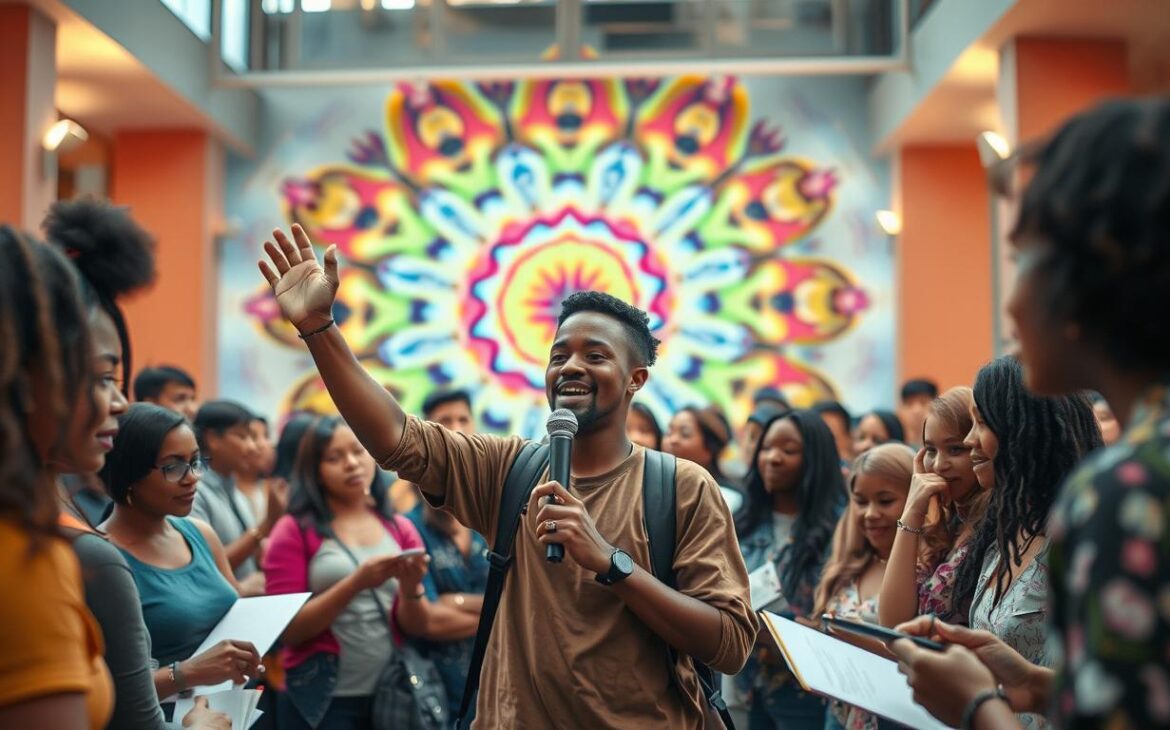
Studies show that 62% of people feel motivated to create after seeing others speak up. A mural in Chicago, painted by teens, turned a wall into a symbol of hope. Each brushstroke was a voice as creative tool for residents to reconnect. Your journey is not alone—it’s a ripple effect. When you share your work, even small acts like a blog post or a song, you encourage others to speak up too.
Start where you are. Write, draw, or sing your truth. Every shared piece of creativity is a stepping stone for someone else. Your voice is not just yours—it’s a bridge to brighter futures.
The Role of Mentorship in Creative Growth
Mentorship is more than just advice. It’s a bridge between experience and your dreams. Finding someone who believes in you can turn fear into action. A sculptor once said their mentor’s feedback turned their rough drafts into masterpieces.
That same courage to express starts with guidance from those who’ve been there before.
“A mentor’s role isn’t to fix you—it’s to remind you of the fire you already hold.”
Artists in music or design often say their mentors were their first fans. These relationships teach you to handle criticism with grace. A study by the National Guild for Community Arts Education found 78% of creatives say mentors boosted their confidence.
When a painter was too scared to share their work, their mentor told them, “Your voice matters.” That courage led to their first exhibition.
Mentors also learn from their mentees. This two-way street fuels innovation. Platforms like CreativeMornings connect new creators with industry leaders, showing mentorship is a mutual exchange. It’s a cycle where courage flows both ways.
Whether you’re looking for advice or ready to share your wisdom, mentorship turns doubt into dialogue. Your next step? Reach out. Offer help. Let someone else’s courage to express inspire yours.
Creating Safe Spaces for Creative Exploration
Safe spaces let people share ideas without fear of judgment. These places are key for growing creativity, found in art studios, online forums, and workshops. Mentorship is important here, as experienced guides make newcomers feel at home.
Platforms like Skillshare and Behance are great for this. They let mentors share tips and encourage trying new things.
When spaces value respect and curiosity, people feel safe to take risks. A painter might use bold colors, or a writer might write raw poetry. This is because they know they have support.
Mentorship often begins with small acts. Like listening, giving feedback without criticism, and celebrating the effort, not just the outcome.
Creating these spaces takes teamwork. Communities grow when artists, educators, and online groups work together. Schools like The Art Institute of Chicago have mentorship programs for teens.
Online groups on Reddit or Facebook also help by valuing different voices.
Every contribution counts. By sharing your story or supporting others, you help create spaces where creativity thrives. Embracing mentorship and kindness turns spaces into places where everyone’s voice is heard. The world needs your unique view—so speak up, listen well, and keep creating.