




























Creative connection happens when we share what matters most to us. Whether through a painting, a poem, or a song, every creation carries a piece of who we are. This personal touch helps others see the world through our eyes, building bridges between people.
Think about stories like Shakespeare’s plays—they’ve been reimagined countless times, yet each version feels new. That’s because creators add their own experiences. Your art isn’t just yours; it’s an invitation for others to relate, reflect, and respond. Try sharing your work—it might surprise you how it touches someone else.
The Power of Personal Storytelling
Personal stories are like fingerprints—each one creative storytelling reveals a unique perspective. When people share their experiences, they make universal themes personal. A family secret, a childhood memory, or a cultural tradition—these details shape stories in ways no one else can.
Take the memoir The Glass Castle. Jeannette Walls turns hardship into a story that touches many. Her creative storytelling mixes raw honesty with universal struggles, making the story unforgettable. Even when two writers write about the same topic, like immigration or loss, their cultural backgrounds and emotions make the story unique.
These stories don’t just entertain. They let listeners see the world through another’s eyes. By sharing their truth, storytellers connect people. Every detail, from a faded photo to a repeated family phrase, adds layers to our human experience.
Creativity as a Universal Language
Universal creativity bridges divides, turning emotions into shared experiences. A painting, a melody, or a poem can speak to people across borders. Imagine a song without lyrics—its rhythm stirs joy or sorrow.
Visual art uses color and shape to tell stories without words. This is universal creativity at work, connecting minds through feeling over language.
“Music expresses that which cannot be put into words and that which cannot remain silent.” — Victor Hugo
Even personal stories become bridges. Writers like Maya Angelou wove their unique life experiences into narratives that resonate globally. Her words about resilience and identity in I Know Why the Caged Bird Sings are understood in every language.
Creativity lets us see our shared humanity in others’ art, no matter the origin. Through universal creativity, a painter’s brushstroke or a dancer’s move becomes a common tongue. It turns differences into bridges, not walls.
Building Empathy Through Creativity
Creative empathy grows when art shows us our shared feelings. Every painting, story, or song lets us see things from another’s view. This way, personal stories become bridges between people’s hearts.
Art shows more than just skill—it shows the artist’s inner world. When people react strongly to art, it’s often because it touches their own feelings. By sharing their work, artists let others see their own emotions, building understanding.
“Empathy begins when we dare to say, ‘Me too.’”
Sharing raw emotions through art makes us listen more deeply. A poem about loss or a song about hope can break down barriers. As we engage, we become part of a dialogue where creative empathy turns differences into connections. This way, communities become places of compassion, not judgment.
Creative empathy is not just sitting back and watching. It’s about stepping into discomfort and using art to heal. When we create with openness, we help build a world where empathy grows with every stroke, lyric, and word.
The Role of Collaboration in Creation
Collaborative creativity is more than just sharing ideas. It’s about combining unique voices to create something greater. When writers, artists, or musicians team up, their different styles lead to new discoveries. A designer from one culture and a writer from another can create stories that no one could imagine alone.
“The magic happens when minds align, yet they also clash in the best ways.”
Working together, teams can turn their differences into strengths. Projects like murals or tech startups benefit from diverse opinions. Platforms like Behance or DeviantArt show how teamwork leads to global trends. These spaces highlight the power of respect and open dialogue in boosting individual talents.

Collaborative creativity also brings communities closer. When people share their skills, they build trust and a shared goal. For example, a nonprofit’s art program pairs street artists with students to create murals. These projects show that working together doesn’t just make art—it connects people.
Finding Community Through Creative Outlets
Creative communities are like lifelines for shared passions. They range from local art groups to online poetry clubs. These places help people belong and improve their skills.
A painting class or writing workshop is more than learning. It’s where friendships blossom. People bond over shared interests and creative brainstorming.
Stories connect us. In a creative community, they open new views and affirm our identities. Author Rudine Sims Bishop said, “Windows show us what could be; mirrors affirm who we are.”
In these groups, everyone’s background is a strength, not a weakness. A sculptor might learn from a metalsmith’s cultural designs, making their work richer.
Online spaces like DeviantArt or local craft guilds make it simple to join. These places are for sharing and getting support. Feedback is constructive, helping everyone grow.
When a writer gets a supportive note, it’s more than advice. It’s a connection forming. This is the essence of a creative community.
Belonging starts with picking up a pen or joining a class. Every shared project and supportive word builds respect. This is the heart of any creative community.
How Creating Sparks Conversations
Every creative work has a story to tell, but its true power lies in the creative conversations it ignites. Whether it’s a painting, a poem, or a song, these pieces become starting points for dialogue. When artists share their work, they invite others to reflect, question, and connect.
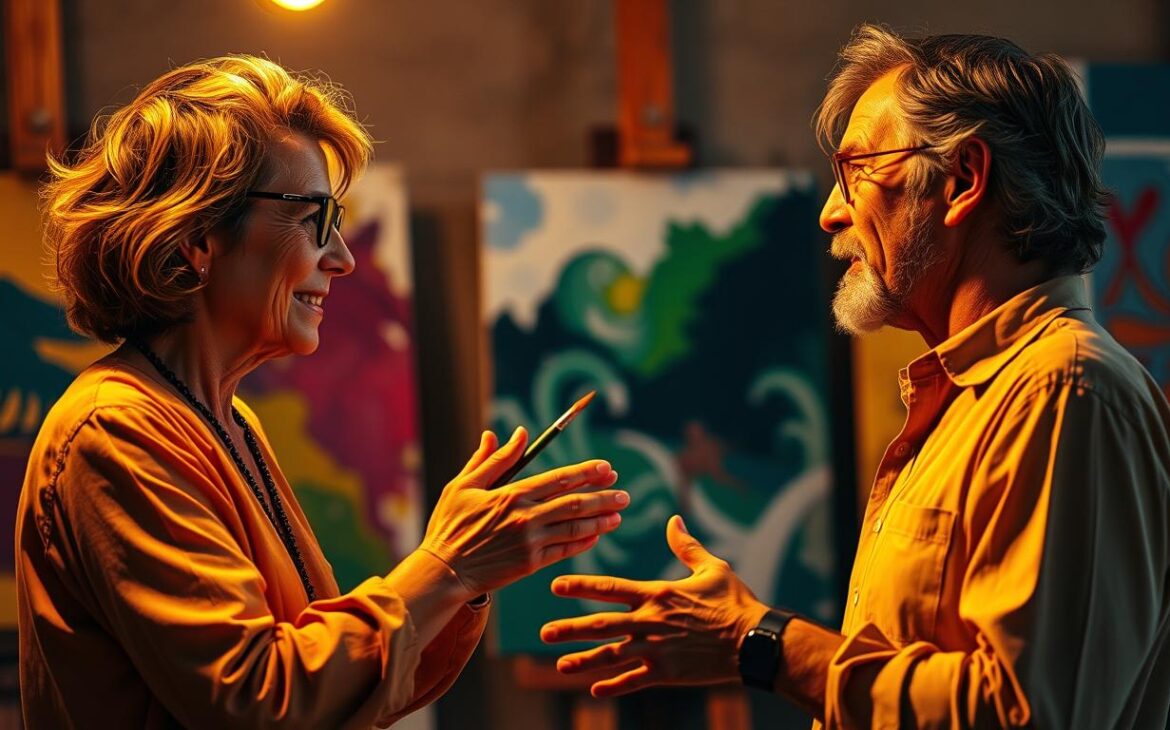
Think about a mural in a city square. Its bold colors and symbols don’t just decorate a wall—they spark debates about identity or community values. Online, a poem posted on Instagram might inspire followers to share their own experiences in the comments. These creative conversations turn art into a bridge between people with different backgrounds.
A photographer’s series on climate change, for instance, might prompt followers to discuss environmental policies. This blends personal and global perspectives.
“Art is the lie that enables us to realize the truth.” —Pablo Picasso
Through creative conversations, disagreements become opportunities to learn. A novelist’s story about migration could challenge assumptions, while a protest song might unite strangers in shared values. Each piece of art becomes a mirror, reflecting society’s hopes and struggles.
When we create, we don’t just share ideas—we open doors to understanding. The next time you make something, remember: your work could be the beginning of a meaningful dialogue. Let it invite others to listen, respond, and grow together.
The Emotional Benefits of Sharing Your Work
Sharing your creative work is more than just showing off art. It’s a journey to find emotional creative benefits that change how you see yourself. When you share your thoughts, whether through art, writing, or music, you let out emotions you might have kept inside. This can feel like a huge relief, bringing clarity and peace.
Creating and sharing connects you to your deeper self. Feedback, even if it’s hard, helps you grow. It makes you think, adapt, and become stronger. Every comment or reaction is like fuel for your resilience.
Seeing others connect with your work shows that your voice is heard. This validation is a big emotional boost. It makes you feel seen and understood.
Sharing also helps you understand yourself better. Art lets you explore feelings you didn’t know you had. A painting, poem, or song can show you parts of yourself you didn’t realize existed. This self-discovery is a key emotional creative benefit. It’s not just about making art; it’s about understanding yourself.
Yes, being vulnerable can be scary. But the benefits of sharing are worth it. Every piece of feedback, whether it’s positive or critical, helps you grow emotionally. Your work is not just seen; it’s felt. And in that exchange, you learn to embrace your emotions.
Navigating Creative Feedback
Creative feedback is a tool for growth, not a verdict. When others critique your work, their words reveal possibilities you might have missed. Start by separating emotion from the message—breathe, read twice, then decide what resonates.

Feedback is a compass, not a cage. It points directions, but you choose the path.
Ask questions to clarify vague comments. “Can you share examples?” or “How would this change enhance the piece?” turns criticism into actionable steps. Not every suggestion fits your vision—trust your instincts but stay open. A sketch artist might adjust brushstrokes based on feedback, yet keep their signature style.
Use written notes to spot patterns. If three readers mention unclear pacing in your story, revise that section. If one person dislikes your color palette, consider if it aligns with your artistic goals. Balance external input with your unique voice.
Share work in phases. Send a draft to a trusted mentor first, then broader circles. This layers perspectives while protecting your confidence. Platforms like Behance or Wattpad let creators gather feedback without permanent commitments.
Remember: every Picasso, every novelist, refined their craft through feedback. Treat criticism as a mirror—what you see might surprise you, but it’s never the final portrait of your talent.
The Influence of Social Media on Creativity
Platforms like Instagram and Twitter have changed social media creativity into a global talk. Creators share art, writing, and ideas instantly. This turns followers into audiences. A quick post can start trends or connect artists worldwide, showing social media creativity has no limits.
Rapid feedback loops push innovation. A designer might change a sketch based on 100 likes or comments. Blogs and hashtags like #CreateNow turn hobbies into big movements. But, this visibility also brings pressure.
Comparing your work to others’ polished posts can make you doubt yourself. The important thing is to focus on growing, not being perfect.
“Your creativity is a spark—social media is the match that lights it.”
Tools like Instagram Reels or Twitter threads let anyone try new storytelling ways. But, it’s key to balance being real with what the platform wants. See social media creativity as a tool, not a critic. Share boldly, learn from feedback, and stay true to yourself. The digital stage is yours to shape.
Creativity in Times of Crisis
When challenges come, creativity turns struggles into chances for connection. History shows us how art, music, and stories help us deal with tough times. From wartime posters to digital murals in the pandemic, creative works link people facing similar hardships.
“Art is the lie that enables us to realize the truth.”
During the Great Depression, the WPA funded artists to create murals. These murals reminded communities of their shared values. WWII poets like Langston Hughes used verses to express fear and hope. Their work didn’t just show pain—it also offered hope.
Today, lockdowns led to online choirs and virtual gallery tours. This shows creativity can adapt to any time. Studies show making art reduces stress and strengthens bonds. A 2021 study in the Journal of Positive Psychology found 68% of people felt less alone through art projects.
Creating in hard times is more than survival—it’s a way to guide others. Whether through painting, writing, or music, your creativity can be a light for others. Let your voice be part of the story the world needs to hear.
Inspiring Others Through Your Journey
Your inspirational creative journey doesn’t stop with your growth. Every step, big or small, can spark curiosity in others. By sharing your journey, from first sketches to final pieces, you show that creativity is about trying again and again.
Think of a painter who shares their daily work on Instagram. They show both failures and successes. This openness inspires others to keep going. A 2023 study by the Creative Industries Federation found that shared stories can motivate others to start.
“The path you walk alone becomes a highway when others follow it.”
Places like Behance or TikTok help share these stories. A musician’s blog about balancing work and music might inspire someone else. Every part of your creative journey can inspire others to start their own.
Every creator’s story is a spark. When you share yours, you inspire others. This way, creativity becomes a shared language, driving us all forward together.
Conclusion: The Lasting Impact of Creative Bonds
Creative connections help us understand each other better. Sharing stories, art, or ideas builds bridges that last. These bonds grow through teamwork, empathy, and being true to ourselves.
Platforms like Instagram or TikTok make these conversations global. They show how small acts can have a big impact.
Every sketch, song, or post starts a chain reaction. It encourages others to listen, respond, and create. These interactions weave together, forming a tapestry of human connection.
Whether you’re painting, writing, or coding, your work is part of something bigger. It’s a living network of shared experiences.
Remember, creativity is more than the final product. It’s about the conversations, support, and moments of connection. Keep creating. Your voice adds to the ongoing story of human connection. Those lasting creative bonds start with you.