




























Creative thinkers often spot details others overlook. They notice small changes in scenes they see every day. Ever seen a new car model and then spot it everywhere? That’s the Baader-Meinhof phenomenon, as explained on HowStuffWorks.
Studies on inattentional blindness show how even obvious details vanish when our focus narrows. These insights reveal how an innovative mindset starts with seeing the world differently.
Imagine walking past a park bench and noticing not just its shape but the way light hits it at noon. Creative people turn observations into questions. Their brains connect dots others dismiss, sparking ideas hidden in plain sight.
This ability to reframe ordinary moments is key to an innovative mindset. Small details become starting points for big ideas, proving creativity begins with how we look at the world.
The Essence of Creativity
The creative essence is about embracing uncertainty and seeking new things. It’s not just for artists or inventors. Anyone can develop this way of thinking. Creativity is about turning curiosity into action.
Studies show that creativity grows when we ask “what if?” instead of “how is it done?” This mindset turns everyday things into new ideas. The creative essence blooms where logic meets imagination, breaking free from usual thinking.
Psychologists say creativity is a mix of natural curiosity and practice. A child building a block tower in new ways shows this. The creative essence evolves through exploring and thinking deeply. Even small choices, like changing a routine, help grow this mindset.
“Innovation distinguishes between a leader and a follower,” said Steve Jobs. This shows how the creative essence leads to progress by changing the rules.
To start, we need to love asking questions more than finding answers. It’s about building a mental toolset that makes “impossible” seem doable. This base helps shape how we see and create next.
Perception and Observation
Visual perception helps us understand the world around us. But creative minds see more than we do. Think of the “invisible gorilla” test by psychologists Christopher Chabris and Daniel Simons.
People watching basketball often miss a gorilla in a suit. This shows how focused tasks can make us miss obvious things. Creative thinkers, though, learn to see these gaps.
“Creativity is seeing what everyone else sees, but thinking what no one else thinks.”
The frequency illusion makes us notice things we didn’t before. Designers and writers use this skill to find patterns and expressions. Their way of seeing goes beyond just looking with their eyes.
They question the usual and look for contradictions. Artists draw shadows that others ignore. Inventors find flaws that others overlook. Every detail is a clue to solving unseen problems.
Improving visual perception starts with small steps. Writers might journal about their daily sights. Musicians might see rhythms in raindrops. These habits change how our brain handles information.
With time, we become better at spotting opportunities that are right in front of us.
The Role of Curiosity
Curiosity is more than just a fleeting interest. It’s a drive that fuels our quest for discovery. When we ask questions, our brains enter a search mode. This curiosity pushes us to explore, experiment, and find answers.
Studies show that this process activates areas linked to learning. It makes creativity a natural result of our mental search.
Imagine walking into a room and seeing a flickering light. A curious mind doesn’t ignore it. Instead, it wonders: What’s causing that? Could it be a loose wire, a faulty bulb, or something else?
This curiosity turns a simple observation into a puzzle worth solving. The brain’s reward system releases dopamine when answers emerge. This reinforces the cycle of inquiry.
Experts say curiosity strengthens problem-solving skills. A Harvard study found people with higher curiosity scores came up with 30% more unique ideas. Their minds stay open to unexpected connections, turning ordinary details into creative sparks.
For example, an inventor might see a broken gadget as a blueprint for improvement. Creativity thrives when curiosity drives exploration. It’s the spark that turns “What if?” into “What’s next?” By nurturing this mindset, anyone can unlock fresh perspectives.
Proving that curiosity isn’t just a tool—it’s the engine of innovation.
Embracing Mistakes
Creative minds turn “wrong turns” into breakthroughs. When we embrace errors, we open doors to unexpected solutions. Take 3M’s Post-it Notes—born from a failed adhesive experiment. What seemed like a mistake became a billion-dollar invention. This mindset shift isn’t just about persistence; it’s about seeing value in the missteps.
“The only real mistake is the one you don’t learn from.”
Research shows our brains often hide insights in what we dismiss. A 2021 study in Cognitive Psychology found that revisiting errors boosts problem-solving skills. Next time you stumble, ask: What can this teach me? Creative growth lies in those moments. Companies like Google encourage “failing fast” to innovate faster. Their culture of embracing errors drives products like Gmail, which evolved from early misfires.

Viewing mistakes as stepping stones builds resilience. It’s not about avoiding imperfection—it’s about learning to dance with uncertainty. When you reframe errors as part of the process, creativity flows. After all, even artists refine their masterpieces through trial and error. Your next “mistake” might just be the start of something extraordinary.
The Impact of Environment
Your surroundings play a big role in shaping your creativity. The environmental impact of a busy city street or a quiet trail can spark new ideas. A messy desk might make it hard to focus, but a bright studio encourages you to try new things.
Studies show that spaces with natural light can improve problem-solving by 15%. This shows how our surroundings can fuel our creativity.
Social environments also shape our creativity. Working in a team can spark ideas, while being alone can help you think deeply. Social media trends, like TikTok’s fast-paced videos, can also change how we think creatively.
These changes aren’t just random. They actually change how we see the world.
Think about the frequency illusion. Once you learn about something, you start seeing it everywhere. A designer near construction sites might see angles in a new way. This shows how our environment can inspire us.
Museums, coffee shops, and even apps can teach us to adapt and dream. Next time you’re stuck, try changing your surroundings. Move your furniture, go to a park, or join a workshop. Your environment is a partner in creativity. Let it help you come up with your next big idea.
Divergent Thinking
Divergent strategies change how we tackle problems. They go beyond simple, linear thinking by exploring many paths at once. Studies show brainstorming lots of ideas first, then choosing, boosts innovation.
Think of a puzzle with every piece as a new possibility. This is the essence of creative breakthroughs.

Apple’s success comes from divergent strategies. They didn’t just copy others; they made smartphones with touchscreens and simple designs. Tesla also changed the game with electric vehicles using new methods.
These examples show that thinking differently leads to progress.
Research shows that schools and companies that encourage divergent thinking see more creativity. By asking “what if” questions, teams find solutions that were right in front of them. Next time you face a problem, try listing ten wild ideas first. You might just find a game-changing solution.
Emotional Connection to Creativity
Emotional creativity happens when feelings and imagination come together. Joy, sorrow, or wonder each add a unique color to the creative process. Studies show over 70% of artists and innovators find inspiration in their personal feelings.
A painter might turn loneliness into a haunting landscape. A writer might express excitement through a fast-paced story.
“Art is the language of the heart when words fail.” — Frida Kahlo
Positive emotions can spark bold ideas. But even tough feelings can inspire new ideas. Grief might inspire a haunting poem, while anger could lead to a thought-provoking sculpture.
These emotions add depth, making work relatable and real. By embracing all feelings, creators share their inner stories with the world.
Nurturing emotional creativity means valuing all emotions. Whether you’re painting, writing, or designing, let your feelings guide you. This unlocks new perspectives and turns personal experiences into universal stories that others can feel and understand.
Collaboration and Sharing Ideas
Great ideas often grow when minds come together. Collaborative innovation turns individual thoughts into powerful solutions by merging diverse perspectives. Teams spark creativity when they share openly, challenging assumptions and building on each other’s insights.

Groups with varied backgrounds see problems differently. A software developer paired with a designer might solve a user interface issue faster than either could alone. Platforms like Wikipedia or open-source projects like Linux prove that shared knowledge accelerates progress. When teams avoid silos, they break down cognitive biases and discover paths they’d never imagine alone.
“Alone we can do so little; together we can do so much.”
Companies like Tesla embrace collaborative innovation by sharing patents to advance electric vehicles. This openness invites others to improve ideas, creating ripple effects. Even in small groups, brainstorming sessions let people refine concepts through feedback. The key is listening—valuing every voice helps turn raw ideas into actionable breakthroughs.
Sharing isn’t about competition—it’s about trust. When you collaborate, you amplify your impact. Whether in startups or classrooms, pairing creativity with teamwork unlocks the full range of possibilities.
The Influence of Technology
Technology changes creativity every day. Tools like Adobe Photoshop or Canva make editing photos quick. These digital tools open new ways to share ideas.
Social media apps like Instagram and TikTok let creators reach millions. This technological influence changes how we see creativity.
Algorithms on platforms like YouTube suggest content, shaping trends. This creates an illusion of common trends. Ads use this to promote products, showing tech’s impact.
Apps like Spotify or Instagram Reels let users share ideas fast. These tools can inspire but also pressure creators to follow trends.
Creative minds now mix old and new methods. Sketching by hand might combine with digital edits. Virtual reality lets designers test ideas in 3D.
While technological influence offers speed and reach, it also demands learning new skills. Creativity isn’t just about tools—it’s how we use them to connect with others.
Maintaining a Creative Routine
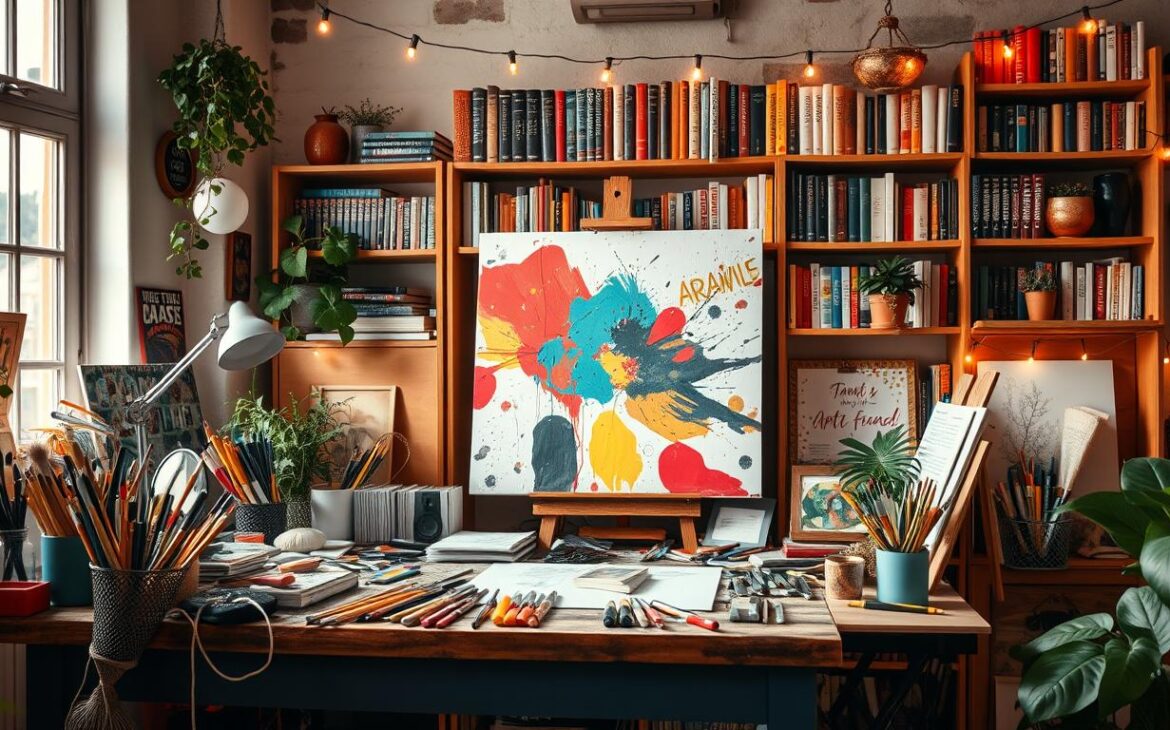
Creative routines help us think outside the box, even when we’re not feeling it. Start by setting aside just one hour each day for brainstorming or sketching. Doing this regularly helps create paths in our minds for new ideas to emerge.
It’s important to set boundaries. Turn off your phone’s notifications while you work. Studies show that distractions, like emails, can break our flow and stop us from coming up with new ideas. Use apps like Focus Keeper to help you stay focused.
“Inspiration exists, but it has to find you working,” said Pablo Picasso. His words remind us that disciplined practice unlocks creativity.
Try new things. Write with a fountain pen or paint with unusual tools. Changing your approach can bring fresh ideas. Artist Austin Kleon suggests mixing old and new ways to create.
Being flexible is key. Sometimes, take a walk instead of sitting at your desk. Scientists say moving around can make our minds more open. Keep a voice memo app handy to jot down ideas as they come to you.
Check in with yourself each week. Write down what worked and what didn’t. Making small changes can turn short-lived ideas into lasting habits. A creative routine is not set in stone; it evolves with your curiosity and resilience.
Real-World Examples of Creative Thinkers
Leonardo da Vinci and Steve Jobs are true creative icons. They mixed curiosity with action. Da Vinci’s flying machine sketches and anatomy studies show how observing details sparks innovation.
His work shows how creative people see connections others miss. Steve Jobs merged tech with design, proving divergent thinking turns problems into opportunities. Modern icons like Elon Musk push limits—reusable rockets or electric cars—showing how environment and tech fuel progress.
J.K. Rowling’s journey from rejection letters to Harry Potter’s global impact mirrors the focus on learning from failure. These innovators remind us creativity isn’t just —it’s built through habits like asking “what if?” or collaborating. Today’s eco-entrepreneurs or AI pioneers follow their paths, using tools and mindset shifts.
Creative icons like these teach that breakthroughs start with small steps: sketching an idea, testing a prototype, or sharing half-formed thoughts. Their stories aren’t just about genius—they’re about persistence and seeing possibilities. Whether in art, science, or business, every creative icon’s path began with a single question.
Let their methods inspire your next project. The world’s next breakthrough could come from someone willing to look differently at the world.