



























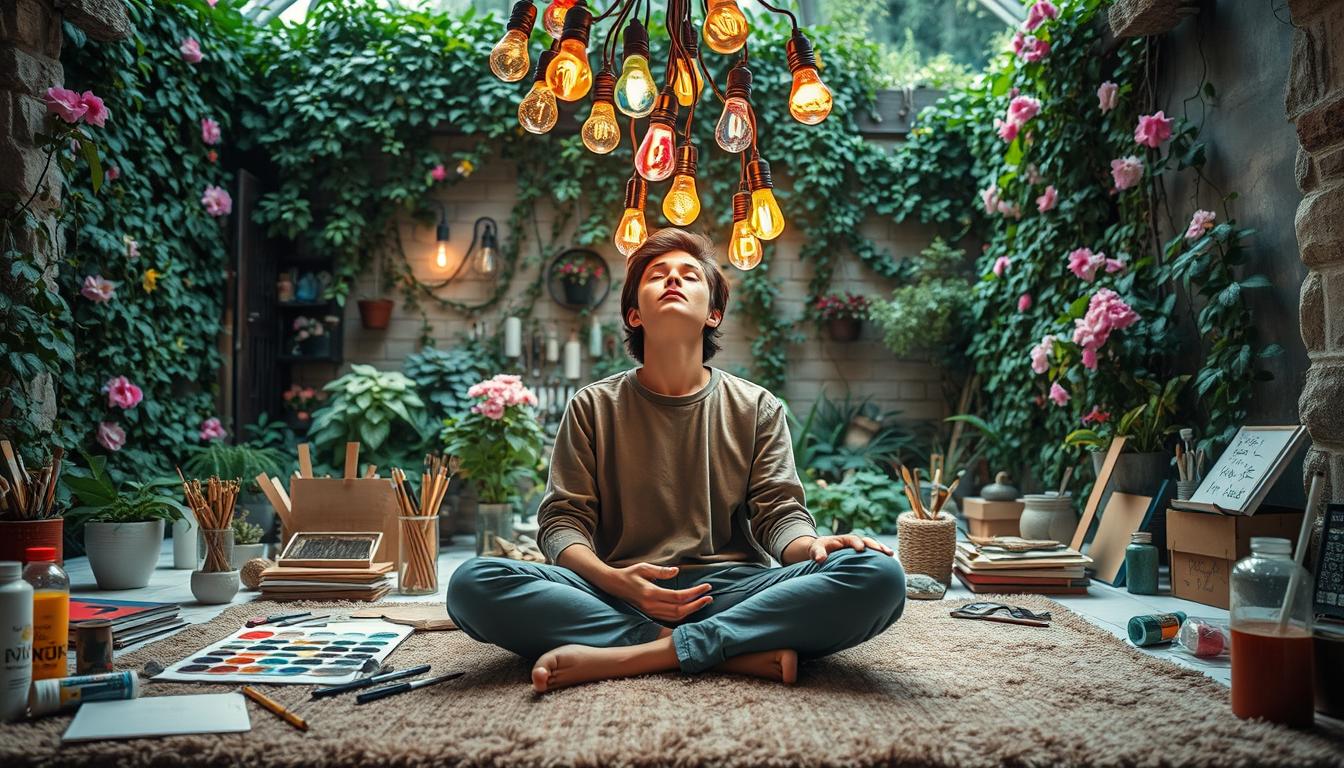
Creative inspiration can fade, but it never truly disappears. Many artists and thinkers, like guest blogger Paula Richie, share stories of rediscovering their spark. They found it through mindfulness and fresh perspectives.
This guide explores practical steps to reconnect with that inner flow. It’s backed by insights from Psych Central and experts like Vicky Ross.
Reigniting creativity isn’t just about art or work—it’s about growth. Studies show that even small shifts in routine or mindset can boost creative inspiration. This leads to clearer ideas and renewed passion.
This article shares tools to help you unlock that creative spark. It doesn’t matter what field you’re in.
Understanding Creative Blocks
Creative blocks are frustrating but common. Stress, fear of judgment, or feeling disconnected from personal values can block inspiration. Imagine staring at a blank page, unsure where to start. This happens when self-doubt or pressure overshadow natural creativity.
Research from Conscious and Carefree shows how negative thoughts trap the mind. Psych Central says blocked creativity often comes from avoiding self-expression. When emotions pile up, they block new ideas. But these moments are chances to rethink your approach.
Starting to overcome creative blocks means recognizing their causes. Stress might quiet your inner voice, but small steps can break the cycle. Journaling, walking, or talking about stuck feelings helps clear your mind. Creativity grows when you process emotions without judgment.
Seeing blocks as temporary shifts your focus from frustration to curiosity. Asking, “What’s holding me back?” turns obstacles into insights. This mindset makes the journey of overcoming creative blocks less about force and more about understanding.
The Importance of Creative Flow
Maintaining a consistent creative process is more than just making art. It’s about keeping your mind clear and joyful. When you’re in flow, your focus is complete, lowering stress and increasing happiness. This state also helps you find solutions and see chances others might miss.
“Creative flow is the space where magic happens. It’s where ideas expand beyond limits.”
Studies show that people in creative flow feel more emotionally stable and make better decisions. Artists and innovators call this feeling “being in the zone.” It’s a time when time seems to disappear and effort feels easy. This feeling is linked to mindfulness, which boosts creativity.
Try adding small creative acts to your day—a sketch, a poem, or even rearranging a room. These small acts keep your mind open to new ideas. Flow strengthens your brain’s connections, making the creative process easier over time. Think of it as brain exercise: regular practice keeps you sharp and prevents burnout.
When you feel stuck, remember: creativity is not a luxury. It’s a way to grow, connect, and find joy in daily tasks. Your mind flourishes when it flows freely.
Daily Habits to Boost Creativity
Small actions can have a big impact. Try creativity exercises every day to keep your mind sharp. Start by journaling—write down ideas as they come. This habit turns fleeting thoughts into real concepts.
Practice gratitude to change your mindset. List three things you’re thankful for each morning. This exercise opens your brain to positive patterns, making room for fresh ideas.
Pair this with mindful breathing: inhale for 4 seconds, hold for 7, exhale for 8. This 4-7-8 method calms stress, freeing space for creativity.
Set aside 10 minutes daily for “idea mapping.” Draw a central topic, then branch out with random associations. This visual exercise trains your brain to link unrelated concepts.
Try it with everyday objects—like a coffee cup—to spark unexpected connections.
Incorporate these routines into your schedule. Consistency turns creativity exercises into second nature. Over time, these practices become tools to tackle creative blocks and fuel innovation.
Your next great idea could start with today’s journal entry or a deep breath.
The Role of Environment in Creativity
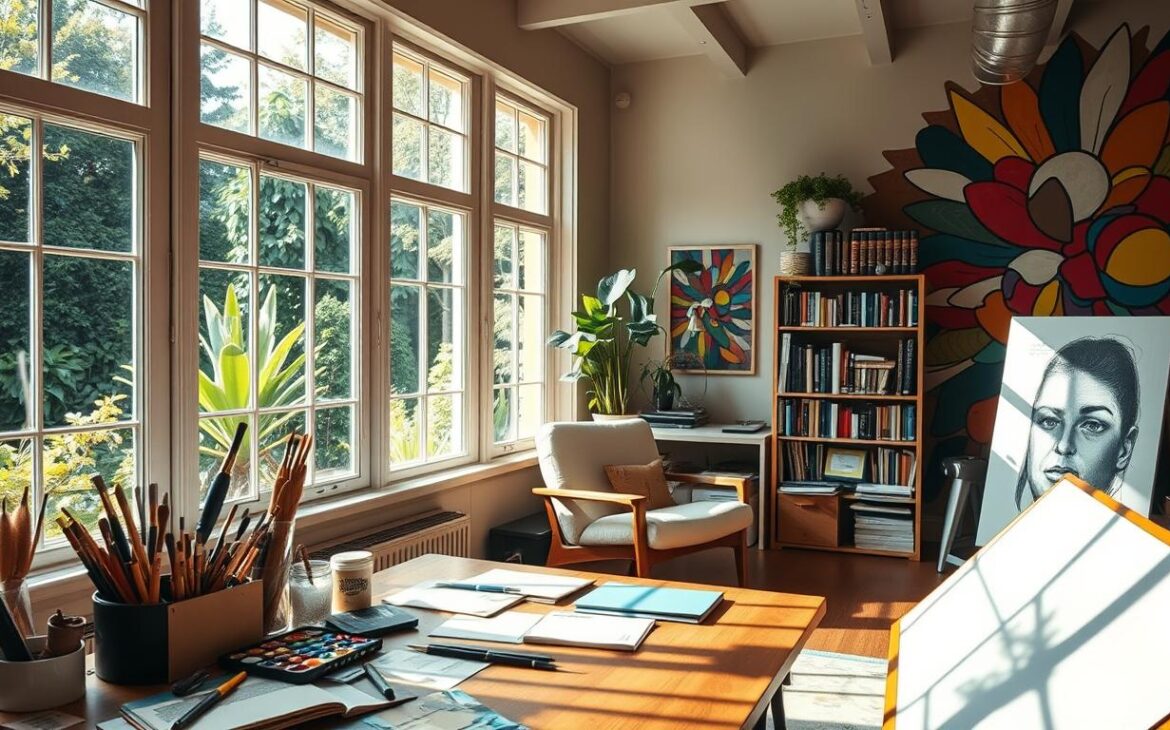
Your surroundings play a big role in sparking ideas. A creative environment helps you focus and get inspired. Cluttered spaces can make you feel drained, while well-designed areas can spark new ideas.
Nature has a big impact too. Studies show that being outdoors, like in forests or by beaches, can clear your mind. As Psych Central notes, amazing views can even improve problem-solving by 30%. Try drawing outside or writing by a lake to refresh your mind.
“Spaces that blend light, color, and order become canvases for the mind to explore.”
Make a special area just for creativity. Move your desk near a window for natural light. Add plants or art to make it welcoming. Simple, clean spaces with calm colors help ideas flow better. Even small changes, like hanging inspiring quotes, can turn a room into a creative environment.
Experiment to find what works best for you. Try painting in a sunny spot or coding with soft music. Change your space every week to keep things interesting. Your environment is more than just a backdrop; it’s part of your creative journey.
Using Mindfulness to Reconnect with Creativity
Mindfulness starts with quieting your mind. Mindful breathing or guided meditation can help. They let you focus on the present and explore ideas freely.
Even just five minutes a day can clear your mind. This makes it easier to think clearly.
Try this: Sit quietly and notice your breath. Let go of distractions. This simple trick from the Conscious and Carefree guide resets your mind’s creative paths.
By watching your thoughts without judgment, you make room for new ideas. This opens up fresh perspectives.
“Mindfulness sharpens the mind’s ability to notice subtle creative impulses, turning quiet thoughts into inspiration.” – Dr. Ellen Langer, Harvard Psychologist
Regular mindfulness practice makes your mind more flexible. A study in the Journal of Creative Behavior showed mindful people came up with 30% more original ideas. Body scans or mindful walks also increase sensory awareness, leading to new creative connections.
Begin with small steps. Try mindful coloring or journaling. These activities combine focus and creativity. Over time, they lower stress and boost your confidence to try new things.
Mindfulness isn’t about being perfect. It’s about staying open to new ideas when you slow down.
Exploring New Experiences
Stepping into the unknown can spark new ideas. Travel, hobbies, or cultural exchanges open your eyes to fresh views. Joining a creative retreat like the Global Artisan Collective can be a game-changer. Artists from different fields come together, creating something new.
“A week in Japan’s Artisan Village taught me that creativity blooms where curiosity meets the unknown,” shared Vicky Ross, a designer who credits her latest project’s success to cultural immersion.
Trying something new, like pottery, can change your thinking. It challenges your usual ways of seeing things. Even a local food festival or a traditional craft can inspire you.
Innovation grows when we’re open to surprises. Plan a trip, take a pottery class, or join an online workshop. Every new experience can lead to a breakthrough. Let curiosity lead you—creativity awaits beyond your comfort zone.
Collaboration and Brainstorming
Collaboration boosts creativity, and the right brainstorming strategies are essential. When people work together, ideas grow. Start with simple rules: no criticism at first, and let wild thoughts flow.
Platforms like Miro or Figma help teams visualize ideas. They turn abstract thoughts into real plans.
Working with diverse thinkers brings new solutions. Try round-robin brainstorming: each person shares one idea before discussing. This way, everyone’s voice is heard.
Big tech companies like Google use this method. It prevents one person from dominating the conversation. Mix roles too—ask a designer to sketch a marketing plan, or a writer to critique a prototype. This mix of skills sparks innovation.
First, set clear goals. Ask: “What problem are we solving?” Then, let the group brainstorm freely. Time each phase to stay focused. Follow-up is important: assign tasks to turn ideas into action.
Remember, the best brainstorming strategies balance structure and freedom. Next time you’re stuck, gather a group. You’ll see how shared energy turns “what if” into “why not?”
Harnessing Technology for Creativity
Technology doesn’t replace imagination; it boosts it. Apps like Canva and Adobe Express make designing easy for everyone. Voice memos, digital sketchpads, and AI tools turn ideas into real concepts. These tools open up new possibilities.
Online platforms like Behance and Dribbble connect creators globally. They share tips and feedback instantly. Social media is full of inspiration. Pinterest and Instagram can spark ideas, and YouTube tutorials teach new skills.
“Technology is the artist’s new canvas.”
AI tools like MidJourney or ProWritingAid can improve drafts or create story ideas. Virtual reality lets artists explore 3D spaces. Cloud storage keeps projects safe anywhere. The goal is to pick tools that enhance your process without getting in the way.
Using technology in creativity means finding a balance. It’s about using apps to organize and innovate, not to complicate. Start with something simple: try a new app, join a workshop, or use a timer. Let technology help you, not judge you.
Overcoming Fear of Failure
Many creators let fear of failure stop them before they start. This holds back ideas and stifles progress. A creative mindset shifts focus from perfection to exploration. Studies show setbacks are vital to innovation. Treat mistakes as feedback, not final judgments.
Start small. Sketch an imperfect draft. Write a messy first line. Each attempt builds resilience. Author Elizabeth Gilbert reminds us, “Fear is a poor counselor.” Trust the process. Growth happens when we embrace uncertainty.
Reframe your perspective: every “no” brings you closer to “yes.” Share rough ideas with trusted peers. Feedback becomes fuel, not criticism. Celebrate progress, not just outcomes. A creative mindset thrives when curiosity outweighs fear. Let your work evolve, one brave step at a time.
Engaging with Nature
Stepping outside can refresh your mind and spark your creativity. Studies show that being in nature reduces mental fatigue and boosts creative thinking. A 2021 University of Kansas study found that people scored higher on creativity tests after walking in nature compared to walking in the city. Even small green spaces like city parks can have this effect.
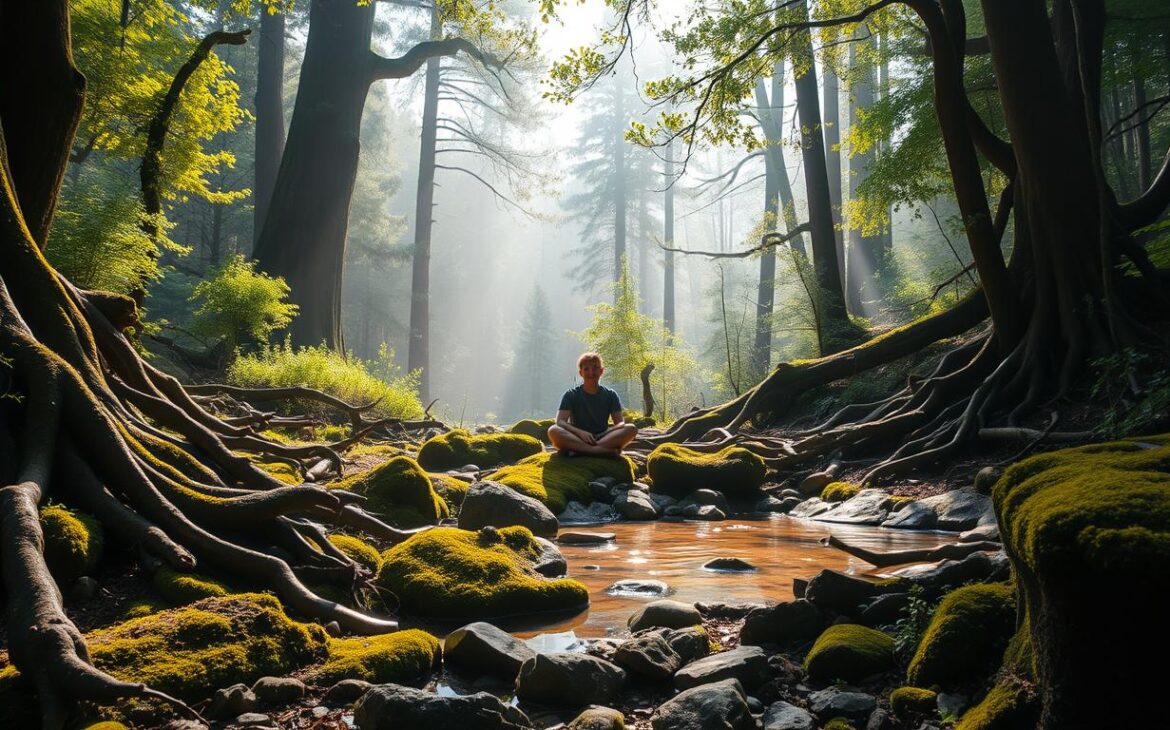
Walking in forests or tending gardens lets your mind wander. This free mental space is where new ideas often come. As author Richard Louv said in Last Child in the Woods, “Nature doesn’t need humans, but humans need nature to reach their full creative capacity.”
Small changes can make a big difference. Try replacing screen time with 20-minute outdoor breaks. Use natural light instead of artificial light during brainstorming. Even having houseplants on your desk can help you focus. The key is to stay connected to nature regularly—the average person sees a 30% increase in creative problem-solving after just one week of daily nature exposure.
Nature’s calming sounds and sights can reset an overstimulated brain. The sounds of birds, rustling leaves, and flowing water can anchor your senses. These elements lower cortisol levels, helping you think more clearly. Next time you need inspiration, try walking in nature. Let nature’s quiet power spark your next big idea.
Setting Creative Goals
Starting with goal setting in creativity means writing down specific objectives. Use a journal to outline your vision. Then, break big ideas into smaller steps.
Vision boards and checklists help make progress visible. They turn inspiration into action.
Pair goals with daily habits like mindful moments or brainstorming. Adjust plans as needed. Use tools like apps or planners to organize tasks.
Small steps, like a daily doodle or weekly project, build habits. These habits fuel your creativity.
Celebrate every milestone to stay encouraged. Clear goals create a roadmap for growth. Ready to start? Your first step is the hardest—what will you tackle today?