




























Art communication often begins with a simple idea: the work itself holds power. Whether in a gallery or a workplace, creations can convey meaning without words. Yet, as Amit Gaur and Thomas Ryan note, relying solely on quality sometimes falls short.
Gaur’s insights highlight how strong art or work may struggle to gain notice without context. Ryan’s views show balancing self-promotion with letting the work shine isn’t easy.
This tension shapes how we value art and achievements. The pieces that resonate deeply often do so through their own voice—yet society sometimes demands explanations. This section explores that space where silence meets speech, and intrinsic worth meets public understanding.
Understanding Art’s Intrinsic Value
Art’s true worth often goes beyond labels or histories. A painting’s power can hit you instantly, even without knowing the artist’s name. This intrinsic value makes visual art timeless.
As Amit Gaur and Thomas Ryan’s stories show, great art resonates first through feeling—not facts.
Consider a sculpture in a gallery. Its curves and shadows might stir curiosity or calm, even if you’ve never heard of the creator. Visual art expression works like a silent dialogue: colors, shapes, and textures speak directly to the senses.
This language needs no translation. “The best art,” said sculptor Barbara Hepworth, “should feel like a discovery waiting to happen.”
Think of how a sunset moves you without explanation. Art’s value isn’t a secret code only experts can crack. It’s in the way a painting makes your breath catch or a photograph stops time.
Visual art expression connects us to emotions that words alone can’t capture. Next time you stand before a piece, notice how it makes you feel—not what it’s “supposed” to mean.
The Subjectivity of Interpretation
Art connects us on a personal level. Each viewer brings their own story, shaping subjective art interpretation through life experiences and emotions. A painting’s meaning isn’t fixed—it’s a dialogue between the piece and the observer.
“Art is a mirror reflecting the viewer’s soul.”
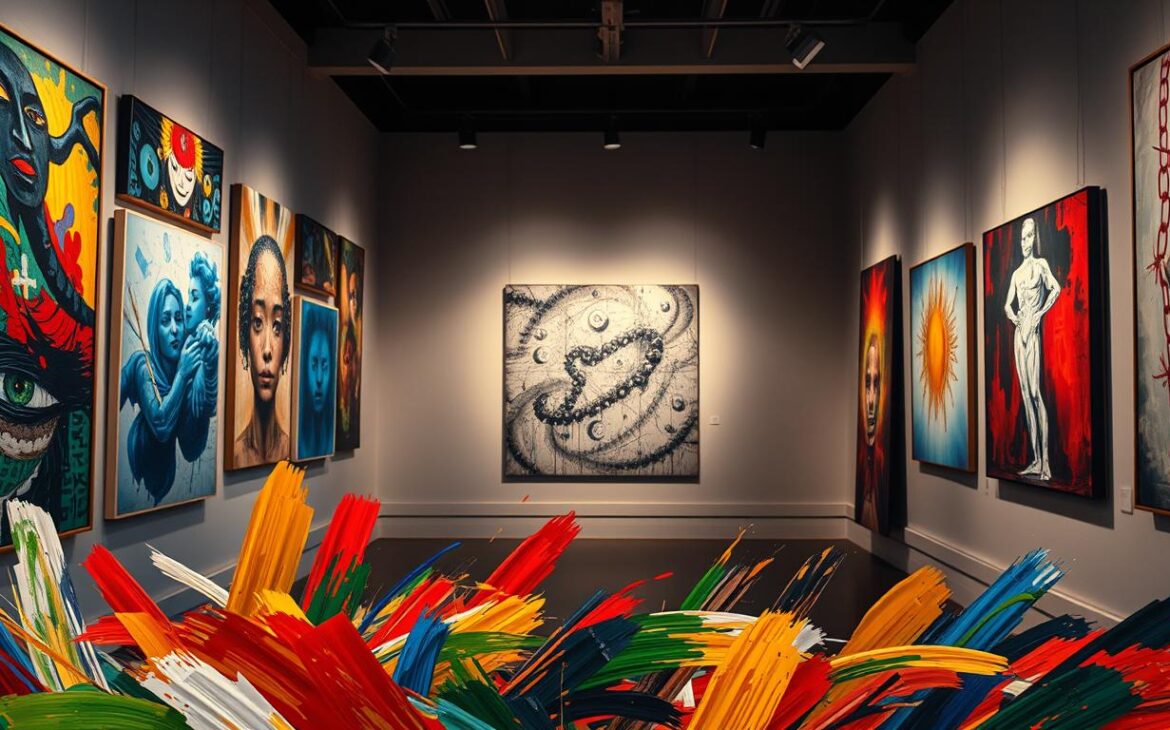
Think about a landscape painting. To one person, it might remind them of childhood camping trips. Another might see it as a symbol of environmental concerns. These differing perspectives are valid.
Curators like Sarah Green say, “no single meaning defines art—it adapts to who stands before it.”
Personal biases and cultural background also matter. A sculpture’s abstract form might feel chaotic to someone raised in structured environments. But it could feel liberating to another. This variety enriches art’s impact.
Museums are now hosting workshops where visitors share their interpretations. This shows there’s no “right” way to engage with art.
Next time you view art, let your thoughts flow freely. Your subjective art interpretation is part of its living story—a unique chapter in a timeless conversation.
The Power of Visual Language
Nonverbal art language speaks volumes without a single word. Visual elements like color, shape, and texture create stories that words can’t always capture. For example, a stark black-and-white painting can evoke grief, while swirling brushstrokes can convey chaos. These choices are part of an artist’s silent vocabulary.
“Color is the keyboard, the eyes are the hammers, the soul is the piano with many strings.” – Wassily Kandinsky
Take Picasso’s Guernica. Shattered forms and monochrome tones scream horror without labels. Van Gogh’s starry skies use thick, vibrant strokes to mirror emotion. Nonverbal art language relies on instinct—not captions—to connect with viewers.
A red triangle might signal danger, while soft curves feel gentle. These cues tap into shared human experiences.
Artists translate feelings into visuals because some truths defy explanation. A viewer’s gut reaction matters more than technical analysis. This silent dialogue proves why art transcends language barriers. When you stand before a powerful piece, you’re not just seeing—it’s speaking directly to your senses.
The Artist’s Intent vs. Audience Interpretation
Art often raises questions about who’s voice is more important: the artist’s or the viewer’s. An artist audience dialogue forms when interpretations clash or align. Artists share their visions, while audiences bring their own stories to each piece.
Consider Guernica by Picasso—a painting born from anti-war sentiment. Years later, viewers might see it as a metaphor for any conflict. This shows how time and context change meaning. The dialogue between creator and viewer is a living exchange, not a fixed conversation.

Some say the artist’s intent fades once the work is shared. Others believe ignoring that intent limits understanding. A viewer in 1937 Spain saw Guernica as a cry against fascism. Today, it’s a symbol for broader struggles. This evolution shows interpretation is a reflection of who we are now.
“The moment the piece leaves the studio, it belongs to the world.” — Art historian Linda Nochlin
Cultural differences highlight this divide. A sculpture’s religious symbolism in one region might seem abstract elsewhere. Yet, this gap fuels deeper exploration. When artists and audiences engage, art stays relevant. The dialogue between creator and viewer keeps art alive, even when intentions shift.
Art as a Reflection of Society
Art shows the heart of communities through creativity. Murals in cities like Detroit or Los Angeles tell stories of resilience and change. These works are more than decorations; they reflect struggles and victories.
Art holds the mirror up to nature. – William Shakespeare
Dorothea Lange’s 1930s photos showed the hard times of the Depression, making society face inequality. Today, art from the Black Lives Matter movement has a similar impact. Graffiti, sculptures, and digital art give a voice to those who are often ignored.
Art also shapes culture. Murals in rural towns celebrate farming, while urban installations highlight climate issues. Each piece makes us think about society’s values and challenges them.
Protests use banners and sculptures as silent messages. Art doesn’t just react; it challenges us. A mural about workers’ rights asks us: What do we value? What needs to change?
From Civil Rights-era posters to TikTok digital art, the conversation never ends. Art and society reflection tell us: every brushstroke, pixel, or sculpture has a story about who we are and who we might become.
The Importance of Experience Over Explanation
Have you ever stood in front of a painting and felt something you couldn’t explain? That moment captures the experiential art value. It’s the special connection between you and the art. Critics can talk about brushstrokes or themes, but they can’t match the feeling a sculpture’s texture gives you.
Think about Yayoi Kusama’s infinity rooms. Reading about them is nothing compared to being inside. Surrounded by mirrors and lights, you lose yourself. That feeling is experiential art value at work. It’s why galleries have interactive pieces and artists perform live—art needs you to be there.
“Art is a conversation between the creator and the observer—without the viewer, it’s half a dialogue.”

Words can guide, but they can’t give you the chills from a dance or the awe of a big sculpture. Museums now have “no labels” nights. They want you to feel without thinking. This shift from thinking to feeling is where true understanding starts.
Next time at a gallery, try this: Look at a piece for a full minute without reading the plaque. Let your eyes wander and your body react. That moment is when art speaks the loudest—not through words, but through your own feelings.
Critique and Its Limitations
Critique is key in understanding art, but its critique limitations in art are often overlooked. Experts like Jerry Saltz point out that strict rules can miss the artwork’s true spirit. Too much focus on technical details can ignore the viewer’s feelings, turning complex art into lists of techniques.
“Critique should guide, not dictate,” says renowned curator Maria Acosta, highlighting how formulas like “this brushstroke is flawed” can overshadow the artist’s message.
Artists often face critiques that miss their point. For example, a sculptor’s abstract piece might be called out for lacking “balance” when that was the artist’s intention. Such critiques can limit creativity, ignoring the critique limitations in art that stifle discovery.
True engagement with art happens when critique supports personal connection, not controls it. Galleries like MoMA suggest experiencing a piece first before interpreting it. This approach ensures that critique limitations in art don’t take away the joy of discovering something new.
The Role of the Art Market
The art market plays a big role in how art is seen and valued. Auctions, galleries, and collectors set trends, often focusing on what’s popular. For example, Mike Winkelmann’s digital art sold for $69 million at Christie’s in 2021. This shows how trends can make unknown works famous worldwide.
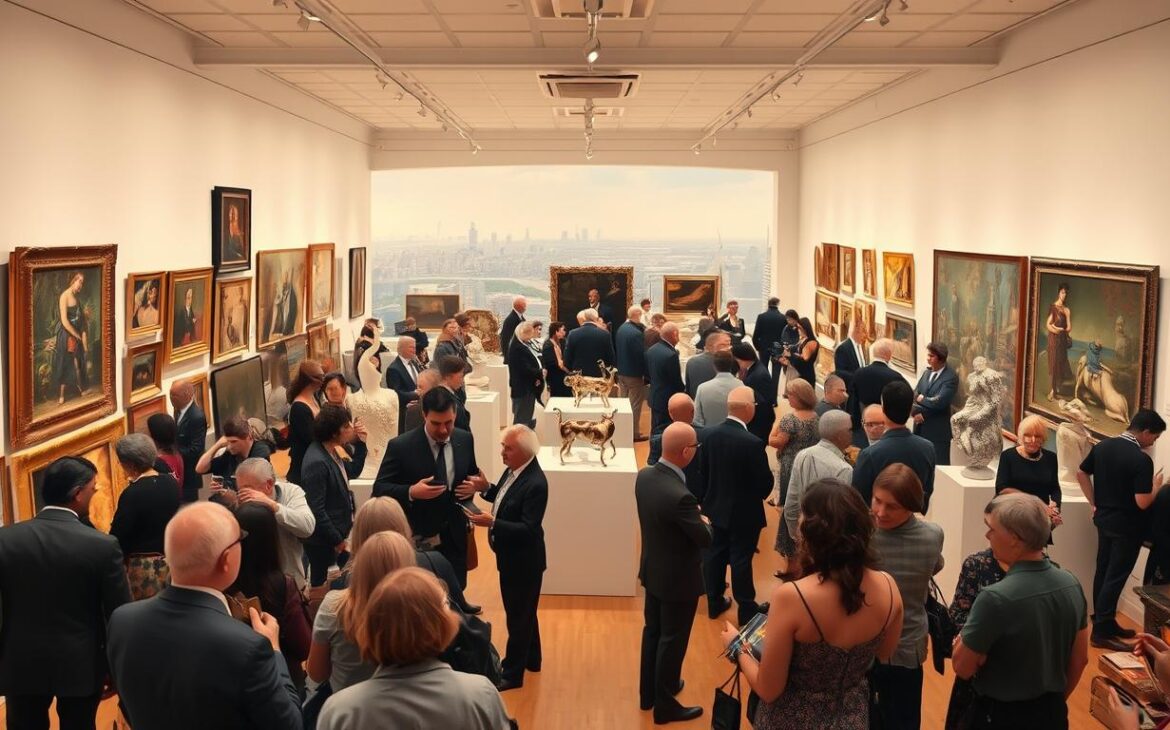
What art gets seen is also shaped by the market. Galleries mainly show artists with a track record of sales, leaving out new talent. Art advisors now look at art as investments, focusing on making money over its meaning. This changes how we value art.
“The market’s focus on scarcity and ROI can drown out an artist’s voice,” notes economist Clare Hurley in Art Basel’s 2023 Report.
The art market’s influence can sometimes go against what art truly means. A painting’s price might be more about hype than its emotional impact. But this doesn’t mean art has lost its power. It shows how economics and creativity are connected. Finding a balance between market demands and authenticity keeps art a meaningful conversation, not just a product.
Growing Trends in Art Appreciation
Today, technology is changing how we see art. Sites like Instagram and TikTok let artists share their work quickly. These platforms turn feeds into global galleries, reaching millions with hashtags like #ArtNow or #DigitalBrushstrokes.
“A painting isn’t just in a museum anymore—it’s in our pockets,” says digital artist Lena Torres. Her TikTok series on color theory got 500k followers. “Audiences now judge art by how it feels, not just its backstory.”
NFTs and virtual galleries are becoming popular. Online places like Artsy host live auctions for digital art. This change doesn’t mean old ways are gone. Viewers are looking for emotion and meaning in art.
A 2023 study by the Center for Contemporary Art found something interesting. It said 68% of younger collectors value how a piece makes them feel over its price or history.
Even as trends evolve, the essence of art stays the same. Artists and viewers agree: the best art speaks directly, without needing explanation. New art trends show us tools, but the core of art is connecting through sight, sound, and feeling.
Conclusion: Trusting Your Own Interpretation
Art speaks to you in a way that’s all your own. Experts like Amit Gaur say your personal view is what matters most. Claire Babineaux-Fontenot points out that our experiences give us unique insights.
Trust your gut when you’re looking at art. It connects you to the work’s true meaning, even without explanations. This way, you can understand it on your own terms.
Even with trends and market influences, your view is just as good. Thomas Ryan’s story shows that being true to yourself is key. Don’t overthink it—your reaction is as valid as any critic’s.
Art’s language is visual and emotional, and it’s deeply personal. You don’t need a guide to get it. It’s meant to be felt and understood by you.
Embrace your own way of seeing art. It’s through our unique voices that art truly comes alive. Let your thoughts guide you and find what speaks to you. Remember, the most meaningful connections start when you listen to your own voice.