




























Finishing isn’t just an action—it’s a mindset. Michael Bungay Stanier in *Start Finishing* says the real value is in finishing projects, not just starting them. Whether it’s launching a business or improving a workflow, finishing turns ideas into results. It’s important because it builds trust and has real-world impact.
Healthcare project managers understand this well. They face challenges like rolling out electronic health records and patient care initiatives. If projects aren’t finished, it risks patient safety and trust. Finishing projects is not just efficient—it’s essential for saving lives and keeping credibility in critical areas.
Seth Godin says finishing is the ultimate act of courage. James Clear points out that small daily steps, like focusing on the next task, build habits that lead to completion. Both show how persistence turns vague ideas into achievements. Finishing starts with believing every project deserves closure.
This journey from idea to completion isn’t easy, but it’s where true progress begins. Let’s explore how to turn intentions into results, one step at a time.
The Importance of Finishing What You Start
Starting a project is easy. But finishing it? That’s where the real work begins. Think about all those half-done tasks piling up. Only through project completion do ideas become real results.
Whether it’s a work project or a personal goal, the final steps are key. Without finishing, all your effort goes unnoticed.
“Completion is the silent hero of progress.” — Project Management Experts
Business teams understand this well. A company that finishes projects on time earns client trust. Hospitals see better patient care when healthcare projects are fully implemented.
Every finished task boosts credibility. For instance, a startup that launches its first product can attract investors. But half-finished work doesn’t get recognition or rewards.
Finishing isn’t just about checking off a to-do list. It’s about showing you’re reliable. When you complete projects, you prove you can deliver. This builds momentum for future goals.
The joy of finishing a project is unmatched by endless starts. Start small: finish one task today, then build from there. Your next big achievement starts with finishing what you’ve already begun.
Common Obstacles to Finishing
Starting big or small projects often meets obstacles. Distractions like endless emails or social media can pull focus away from goals. Others delay starting because they wait for the “perfect moment,” a habit that freezes progress.
Even when work begins, unclear plans or unclear steps can make tasks feel overwhelming. Procrastination and perfectionism are two major hurdles. For instance, healthcare teams sometimes stall when aiming for flawless patient care protocols instead of starting with achievable steps.
The same applies to personal goals—waiting for ideal conditions rarely leads to action. Overcoming obstacles starts with naming these barriers.

“Perfectionism is the voice of the coward,” said Samuel Johnson. This rings true when over-planning or fearing mistakes halts progress. Busywork—like organizing files instead of writing a report—also eats time meant for real work.
Lack of clear goals or support systems adds to the struggle. Without milestones, it’s hard to track progress. Teams or individuals might also isolate themselves, missing out on feedback that could turn setbacks into steps forward.
Recognizing these patterns helps turn challenges into chances to adjust strategies and keep moving forward.
Setting Clear Goals
Clarity is key to making progress. Without clear goals, even simple tasks can seem daunting. Effective goal setting techniques help turn vague ideas into concrete steps. Start by using the SMART framework—Specific, Measurable, Achievable, Relevant, Time-bound.
This method keeps goals focused and easy to track. It’s a common practice in healthcare project management.
Hospitals set clear goals for improving patient care. Instead of vague targets like “improve health outcomes,” they set specific goals. For example, “reduce readmission rates by 15% in six months.”
These specific goals create measurable benchmarks. They guide daily actions and encourage accountability.
Align your goals with the bigger picture. For instance, a medical research team might set weekly milestones for a year-long study. Each small goal reinforces progress, making the big goal less overwhelming.
Healthcare systems use this method to keep momentum in long-term projects.
Remember, clarity isn’t about being perfect—it’s about direction. By using proven goal setting techniques, you create a roadmap from abstract ideas. This structure boosts confidence, making challenges feel achievable.
Developing a Plan
Effective planning strategies break big goals into smaller steps. Start by dividing tasks into smaller actions. For example, healthcare teams use this method to organize patient care plans, ensuring nothing gets overlooked. Ask: What’s the first step? When should it happen? Who’s involved?
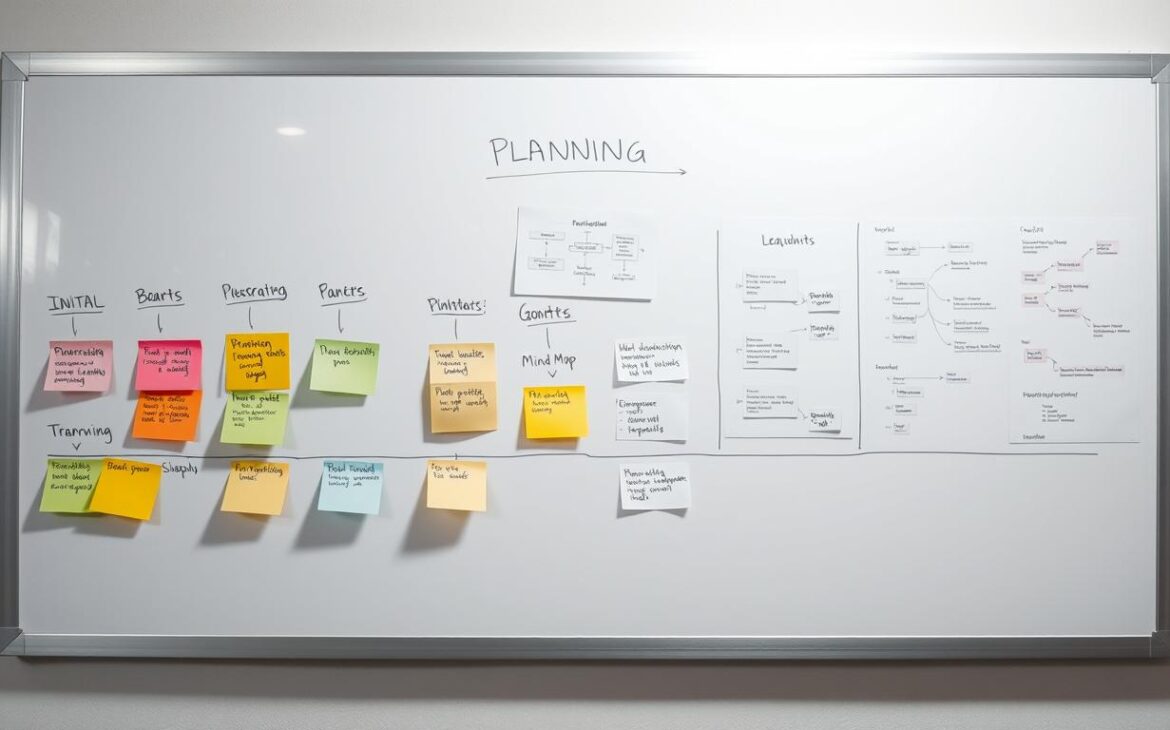
Set clear deadlines and track progress. Use tools like Gantt charts or simple checklists to map out milestones. A project management study shows teams with detailed plans finish 30% faster. Write down resources needed—time, tools, or support—and adjust as needed. Flexibility is key; even the best plans adapt.
“A goal without a plan is just a wish.”
Healthcare projects often use phased approaches. First, outline your “why”—keeping your purpose top of mind. Then assign deadlines to each phase. Review weekly to stay on track. Planning strategies like this prevent last-minute stress and keep focus sharp.
Remember, a plan isn’t set in stone. Update it when life changes. The goal is progress, not perfection. Small steps forward keep momentum alive.
Building a Support System
A strong support system turns challenges into opportunities. Whether you’re running a startup or managing a hospital project, having people who understand your goals makes all the difference. Mentors, peers, or even professional teams like a hospital’s PMO (Project Management Office) can guide decisions and keep you focused.
Healthcare systems like Johns Hopkins use centralized PMOs to align teams and solve complex issues. Their approach shows how structured support systems foster innovation under pressure. Even small businesses can build similar networks—online communities or local advisors offer fresh perspectives when deadlines loom.
Choose supporters who challenge assumptions but celebrate progress. A mentor might highlight overlooked risks, while a peer’s encouragement keeps momentum high. This mix prevents burnout and sharpens problem-solving. Remember: work amplifies stress, but collaboration builds resilience. Your support system isn’t just a safety net—it’s your toolkit for turning plans into reality.
Staying Motivated
Keeping the momentum going is essential to see your ideas come to life. Motivation tips often miss the mark by focusing too much on big actions. But, celebrating small wins can really boost your focus and energy.
When progress seems slow, take a moment to remember why you started. This can help you regain your passion for the goal.

This quote from the “Start Finishing” method shows the power of routine in keeping projects alive. It’s not just about being inspired. A 2023 study in the Journal of Applied Psychology found that checking in weekly can increase persistence by 34%.
Here are some motivation tips: Break down big tasks into 15-minute chunks to avoid feeling overwhelmed. Share your progress with your support system to stay accountable. Look at how others have succeeded, like how authors use writing sprints to finish books.
Remember, dips in motivation are normal. When they happen, remind yourself of your original goal. Adjust your plans if needed, but keep moving forward. Every small step you take adds to your momentum.
Let these strategies help you turn motivation into a reliable tool, not just a fleeting feeling.
Time Management Techniques
Learning to manage your time can make big plans come true. Begin by making a list of daily tasks and sorting them by how urgent they are. The Eisenhower Matrix helps by separating important tasks from things that distract you, so you can focus on what’s really important.
Divide big projects into smaller steps with deadlines. The Pomodoro Technique is a great way to stay on track. It involves working for 25 minutes, then taking a 5-minute break. Healthcare teams use digital calendars like Google Workspace to keep everyone in sync. You can do the same.
Use apps like Trello or Asana to track your progress. They make it easy to see how you’re doing and help you stay motivated. Review your schedule every week. Ask yourself if each task brings you closer to your goals. Cut out things that waste your time.
Even small changes, like checking emails in batches, can save you hours each week. These tips aren’t just for work. They can help with hobbies, fitness, and spending time with family too.
Being consistent is key. By practicing these strategies, you’ll build habits that change how you tackle every project. Remember, your time is limited. Use it wisely.
Overcoming Perfectionism
Perfectionism can really hold you back. Many people hesitate to finish because they’re afraid of mistakes. But waiting for the “perfect” moment can mean never starting.
Successful leaders, like those in Start Finishing, show how letting go of perfection boosts productivity.
“Done is better than perfect,” a mantra repeated by innovators in tech and business. Perfectionism isn’t about quality—it’s a mindset that halts action.
Focus on making progress, not being perfect. Set achievable deadlines and break tasks into smaller steps. Celebrate each step, even if it’s not perfect.
Tools like to-do lists and accountability partners help you move past perfection. They encourage you to take action.
Learn to accept imperfection as part of growth. Small mistakes can be fixed later. Share your work with trusted peers for honest feedback instead of endless editing.
Remember, most people value results over perfection. Just start, and then keep going.
Creating a Productive Environment
A productive environment is more than a clean desk. It’s where focus starts. Think of hospitals with clean, organized spaces saving lives. The same goes for any workspace.
Start by clearing out physical clutter. Keep important items like notebooks or keyboards close. Digital spaces are important too. Tools like Trello or Notion help organize tasks and ease mental stress.
Lighting and seating are key. Ergonomic chairs and natural light boost energy. Turn off notifications during important work times.
Even small changes, like a desk plant, can change your mindset. Use color-coded systems for projects, like healthcare teams do. Aim for spaces that feel welcoming, not too much.
Try out different setups. Maybe a standing desk or a quiet library corner works best. Track what helps you complete tasks faster. Small changes can greatly improve focus.
When your environment supports focus, projects progress smoothly.
Embracing the Process
Finishing a project is more than just the end result. Every step, from the start to the setbacks, shapes your journey. Embracing the process means valuing the lessons in each phase. Studies show teams focusing on progress over perfection often do better in the long run.

Healthcare teams using this mindset reported more creativity. When a hospital redesigned patient care, early drafts had flaws. But each try taught staff to adapt.
Small wins, like making forms simpler or testing new tools, boosted confidence. Setbacks were seen as data points, not failures.
Learning to embrace the process changes how you see things. It’s about curiosity, not just finishing. Celebrate your progress, ask questions, and let challenges guide you.
This mindset turns projects into chances to grow. The “Start Finishing” model shows teams that focus on the journey adapt and innovate faster. Every step is important, even if the outcome isn’t perfect. Let curiosity lead your next steps—your next project’s success begins with how you view the path ahead.
Reviewing and Reflecting
Reflecting on progress is key to turning effort into lasting knowledge. After finishing a project, take time to review what happened. Businesses and healthcare teams do this to see what worked and what didn’t.
Start by asking simple questions: What went smoothly? Where did challenges arise? Writing down your answers helps clarify things. Tools like Trello or Asana can track these insights over time.
Even small projects gain value from this process. A five-minute review can reveal patterns that improve next efforts.
Reflecting on progress isn’t just about fixing errors—it highlights strengths to repeat. Teams might find a strategy that saved time or a miscommunication that slowed work. Sharing these findings in team meetings turns lessons into actionable steps.
Over time, this mindset becomes automatic, guiding decisions without extra effort.
Every project holds a lesson—if you pause to look. Making reflection a routine builds a cycle of improvement. Whether managing a startup or a hospital initiative, this practice keeps goals sharp and progress steady.
Moving Forward with Future Projects
Every project you finish is a step towards bigger goals. Use what you’ve learned to improve your future project planning. Think about your past successes and challenges. What worked well? What caused delays?
These insights will guide you to make better decisions. Tools like the “Start Finishing” framework help. They show how clear goals and flexible plans lead to success.
When starting new tasks, break them into small steps. Track your progress and adjust as needed. Tools like Trello or Asana can help organize tasks. Feedback loops keep you on track.
With each project you finish, you become more confident. Use this confidence to tackle more complex ideas. Start small, test approaches, and scale up gradually.
Whether it’s launching a business idea or managing a community initiative, your skills will help. Share your lessons with others. Collaboration sparks innovation and accountability.