



























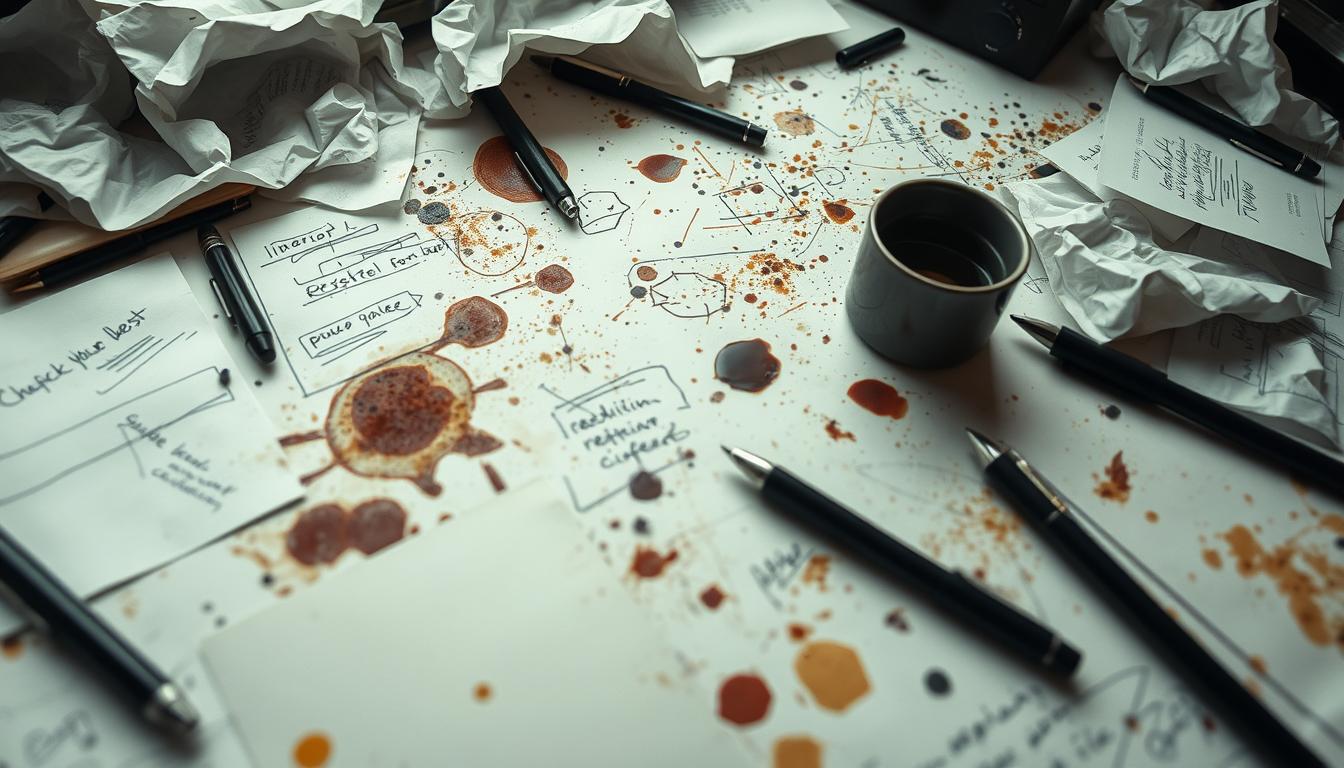
Writing is a journey, not a finished painting. The messy first draft isn’t a mistake—it’s where ideas start to form. Many feel they must get it right the first time. But, perfectionism can hold you back.
Why the first draft is never final? It’s just the start. Think of it as a rough sketch, not the final artwork. Great writers like J.K. Rowling and Stephen King say their early drafts are full of errors.
That’s normal. The real magic happens during the editing process, not the first try.
Cultural expectations often push us toward neatness. But, creativity blooms in disorder. By allowing yourself to be messy, you open up to true expression.
The first draft is a tool, not a test. Let every idea flow freely—editing comes later.
Understanding the Creative Process
The creative process is a mix of chaos and clarity. It’s normal to feel lost at first. Even experienced writers say their best ideas come when they’re unsure.
“A blank page is a place of possibilities, not perfection.” — Sylvia Plath
Emotions play a big role in this process. Fear, curiosity, or frustration can spark creativity. Journalists, poets, and artists often go back to their raw experiences to shape their work.
Letting go of control is key. It means trusting the flow of ideas, not trying to control them too much.
Stories from creators show that breakthroughs happen when we stop fighting perfection. The creative process isn’t about getting it right the first time. It’s about staying open to change. This way, obstacles become stepping stones, not dead ends.
The Purpose of the First Draft
The first draft is not about making it perfect. It’s about capturing your raw ideas. Think of it as a canvas for your thoughts. Writers often worry their first work won’t be polished, but that’s okay.
The goal is to write freely, jotting down every idea without judgment. Editing can wait; creation comes first.
“All first drafts are crap. But you start with the crap and you gradually make it better.” — Stephen King
Authors like J.K. Rowling and J.D. Salinger used early drafts to explore possibilities. Their messy beginnings became foundations for later refinements. The first draft purpose is to map out your story, essay, or message.
Grammar, structure, and flow can be fixed later. Focus on getting words down, not making them perfect.
Imagine building a house. You wouldn’t paint walls before laying the foundation. The first draft is the base. It’s where you experiment with angles, characters, or arguments.
Later edits shape those ideas into something stronger. Embrace the chaos—it’s part of the process.
Overcoming Writer’s Block
Beating writer’s block is easy when you start small. Try free writing to get past the block. Set a timer for 10 minutes and write whatever comes to mind. This helps you let go of the need for perfection.
“The blank page is just a space waiting for ideas,” says author Anne Lamott, urging writers to “write messy, then refine later.”
Setting small goals can make a big difference. Instead of aiming for a perfect chapter, write just one paragraph. Break down big tasks into tiny ones to avoid feeling overwhelmed. Even famous authors use this approach.
Take a 10-minute break when you get stuck. A short walk or some fresh air can help clear your mind.
Use tools like journal apps or sticky notes to keep your ideas flowing. Remember, overcoming writer’s block is about moving forward, not avoiding obstacles. Let your first draft be messy. You can refine it later. Start small, stay consistent, and trust the process.
The Benefits of Revising
Revising is more than just fixing typos. It’s where your ideas really grow. Every time you go back to your work, you find new ways to make it stronger. The benefits of revising include sharper focus, clearer messages, and stronger connections with readers.
Think of your first draft as a rough sculpture. Editing is like the chisel that brings out its true form.
“Revision is where the magic happens. You don’t write a book. You rewrite it.” — Stephen King

Authors like J.K. Rowling rewrote Harry Potter chapters many times. Each edit made the story tighter, characters deeper, and fixed plot holes. When you revise, you’re not just fixing mistakes—you’re finding hidden gems.
Clutter disappears, and your main message shines through. Readers can tell the difference between a rushed draft and a refined one. The benefits of revising also mean finding new angles you missed before. A line that seemed okay might become a powerful theme after a second look.
Great writing often waits to be discovered through revision. Let your drafts evolve. Every edit brings you closer to a piece that feels intentional, impactful, and true to your vision.
What Makes a Draft “First”?
Every draft writing process begins with a messy start. A first draft is not polished; it’s raw ideas on paper. It’s like a rough sketch, not a finished painting. Writers often forget this: the goal is to explore, not to achieve perfection.
Professional authors agree.
“All first drafts are ugly, but some are uglier,”
Author Anne Lamott jokes inBird by Bird. She calls first drafts “shitty first drafts,” saying they’re not meant to impress. The key is to let thoughts flow freely without self-editing.
A first draft lacks structure, grammar checks, and coherence. That’s okay. Its value is in capturing initial inspiration without doubt. Later edits can refine, but the first step is about draft writing process authenticity. Next drafts can tidy up, but the first must stay wild.
Remember, the draft writing process isn’t a race to finish. It’s about being messy, asking questions, and getting words down. Without that raw start, there’s nothing to shape into brilliance later.
Embracing a Messy Writing Style
Writing doesn’t need to start perfect to become powerful. A messy writing style lets ideas flow freely. It’s like brainstorming on paper, with jumbled thoughts and raw emotion.
“A first draft is just you telling yourself the story. Don’t censor it.” — Anne Lamott, *Bird by Bird*
Many authors, past and present, started with chaotic drafts. J.K. Rowling, for example, revised *Harry Potter* chapters many times. But her initial drafts were wild and unstructured.
This raw energy is what readers feel in the final work. A messy writing style keeps that spark alive. It’s okay to write sentences that stumble or paragraphs that loop back—they’ll guide you toward clarity later.
Perfectionism can stop progress. When you stop editing as you write, you free your mind to explore. Let ideas spill out without judgment. That’s where unique perspectives emerge.
The goal isn’t to avoid messiness but to use it as a stepping stone toward authenticity. Embrace the chaos; the best stories often grow from there.
Time Management in Writing
Effective time management writing turns chaotic ideas into structured progress. Start by dedicating focused blocks of time daily, even short sessions. Consistency matters more than perfection.
Set small goals like writing 300 words before stopping. Use tools like calendars or apps to track sessions. Taking breaks prevents burnout and keeps creativity fresh.
Realistic goals like 20 minutes daily build habits. Reward yourself after meeting targets to stay motivated. Avoid perfectionism—focus on progress over polished drafts.
Time management writing bridges creativity and discipline. By balancing writing time with rest, you create space for both messy first drafts and polished revisions. Small steps add up, turning scattered thoughts into a finished piece.
Tools and Strategies for Writers
Every writer needs the right writing tools and strategies to turn ideas into finished work. Apps and action plans help make creativity less scary.
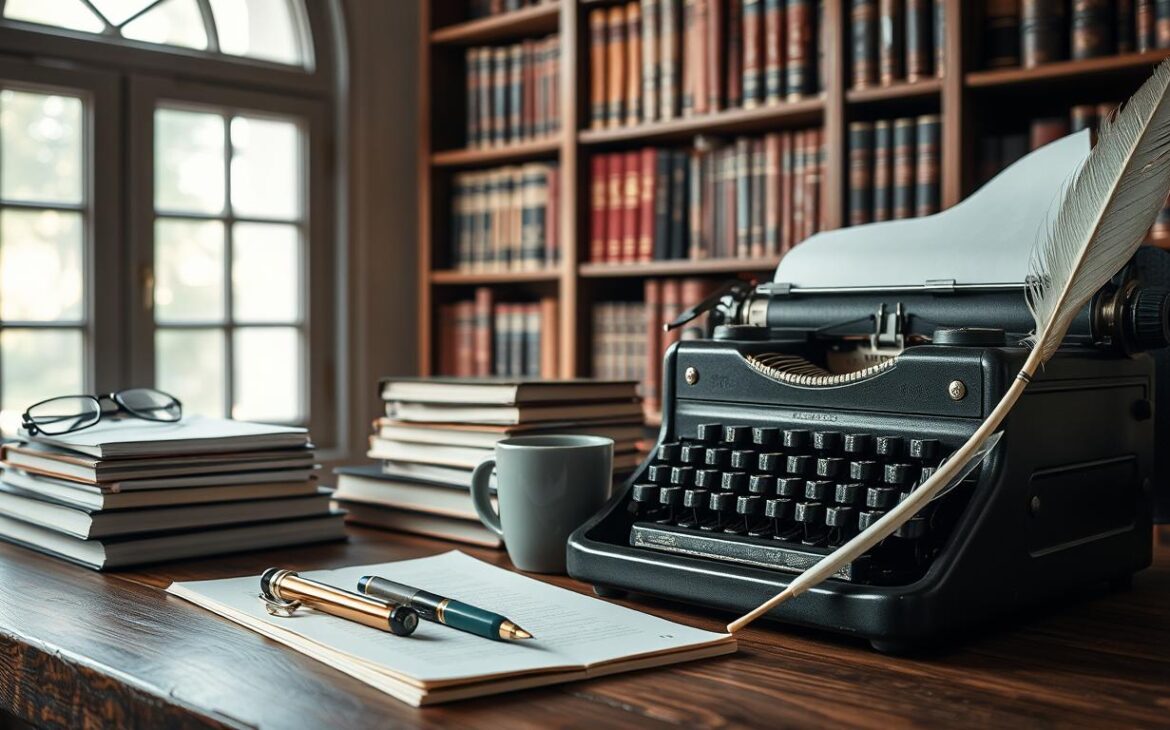
Digital tools like Scrivener or Trello help organize your research and deadlines. Google Docs lets you share drafts instantly. Apps like Grammarly catch errors quickly. These writing tools make chaos clear.
Actionable strategies include setting daily word goals and using content conversion templates. Budgeting sheets help track time spent on drafting versus revising. Podcast experts suggest combining tools with routines to stay on track.
“Writing is rewriting.” – E.B. White
Using the right writing tools with consistent strategies builds habits. Try a new app or outline template today. Your next masterpiece is just a step away.
Success Stories from Famous Writers
Many famous writer success stories start with drafts full of mistakes. J.K. Rowling’s early Harry Potter manuscripts were full of errors. Yet, these drafts turned into a global hit. Writers like Hemingway and Rowling show that mistakes are part of the journey.
Stephen King’s Carrington began as a massive 1,200-page draft. He trimmed it down to a 300-page thriller. His notes show he rewrote scenes many times. He famously said, “Writing is rewriting,” showing even famous authors refine their work a lot.
“The first draft is just telling yourself the story,” wrote Margaret Atwood. “The second draft is telling someone else.”
Ernest Hemingway’s handwritten edits for A Farewell to Arms show his many revisions. His messy pages are a guide for modern storytelling. These examples remind us that every bestseller started as a draft full of mistakes.
These stories teach us that embracing imperfection is key. Famous writers didn’t wait for perfection to start. They wrote, revised, and trusted the process. Their journeys show that even the messiest starts can lead to legendary success.
Concluding Thoughts on the Drafting Process
First drafts are just the beginning. They are the first steps in creating something great. Think of them as rough sketches that will eventually become masterpieces. Every rewrite brings clarity and makes your work better.
Authors like Hemingway rewrote their endings many times. Their success came from trusting the process and not fearing mistakes. This shows that even the best writers start with a messy idea.
Tools like Scrivener or Google Docs can help organize your ideas. But the main lesson is to keep revising and refining. Letting go of perfection allows creativity to flow. Share your drafts, listen to feedback, and keep moving forward.
Each edit brings you closer to your vision. Growth happens in the rewrite. Celebrate every step, not just the final product. Your next draft is a step towards something even better.
Start writing, accept the chaos, and let the process guide you. The best stories begin with a single messy idea.