

























Every artist, writer, or creator knows the value of daily practice. Creating every day teaches you more than just skills. It builds habits that shape your life. Daily creativity inspiration isn’t just for professionals. It’s a mindset anyone can adopt.
History shows discipline transforms people. The Bible’s 2 Corinthians 5:17 talks about renewal. This concept is seen in modern stories of writers, painters, and innovators.
Consistency turns small actions into big changes. Daily creation teaches patience. It pushes you past fear to grow.
Artists like Leonardo da Vinci or J.K. Rowling built careers through routine. Their journeys show that showing up every day matters more than talent alone. This is the first step toward unlocking what creating every day teaches you about resilience and self-discovery.
The Power of Daily Creativity
Building ideas one day at a time changes how you see the world. Daily creativity is more than just art—it’s a way of thinking. It turns small steps into big breakthroughs.
When you create every day, your brain stays open to new possibilities. It’s like a muscle that gets stronger with use.
History’s greatest minds knew the power of daily creativity. Leonardo da Vinci filled notebooks with sketches and ideas every day. Maya Angelou wrote poetry every morning.
They didn’t aim for perfection. They just showed up. Even on tough days, creating keeps your mind flexible.
Routines spark innovation. By setting aside time each day, you learn to see connections others miss. A study in the *Journal of Creative Behavior* shows daily creators solve problems 30% faster.
Small habits add up. Sketching at lunch, journaling at night, or trying new recipes primes your brain for big ideas.
Don’t wait for inspiration. Daily creativity is a choice you can make. Start small, and watch your ideas grow over time.
Discipline Over Motivation
Many think creativity comes from sudden bursts of inspiration. But creative discipline turns short ideas into lasting habits. Think about writing every morning, even when you don’t feel like it. That’s what Bryan Green talks about in his work on systems.
Maya Angelou’s 7 AM writing routine is a great example. She wrote in hotel rooms every day at the same time. Motivation changes, but habits stay the same. “Discipline equals freedom,” says Green. It’s about showing up, not just feeling excited.
“The only way to achieve great things is to stick to a system that works.”
When you stick to creative discipline, you’ll see progress. A painter might sketch every day, even if it’s not perfect at first. Over time, they get better. Discipline isn’t about strict rules. It’s about giving creativity a steady place to grow.
Begin with small steps: 20 minutes of writing, drawing, or brainstorming. As time goes on, this habit opens doors to new ideas. You won’t wait for the perfect mood to start.
Freedom Through Structure
Structured creativity isn’t about limits—it’s about unlocking your full capacity. Imagine a painter starting with a blank canvas. Without a plan, they face endless choices. But with a framework, like color palettes or themes, they can focus on their work.
This idea isn’t new. Aristotle said that art thrives within form, turning chaos into clarity.
Think of a writer who sets aside 30 minutes each day to write. This routine becomes a habit, freeing their mind to brainstorm.
“We are what we repeatedly do,”
Aristotle also said. Small, consistent actions build momentum. A musician practicing scales daily isn’t confined—they’re mastering tools to express emotion. The same goes for photographers, coders, or chefs. Structure becomes the foundation for innovation.
Look at successful creators: Maya Angelou wrote in hotel rooms, sticking to a rigid schedule. Her structure let her channel raw emotion into poetry. Structure isn’t a cage—it’s a launchpad. By choosing when and how to create, you reclaim mental energy.
The mind, unburdened by “what if,” dives deeper into ideas. That’s the paradox: constraints breed freedom. When routines handle logistics, creativity flows uninhibited.
Overcoming Creative Blocks
Creative blocks can feel like roadblocks, but they’re not the end. Many artists and writers hit a wall where ideas stop flowing. The trick is to act, not wait. Overcome creative blocks by changing how you approach things. Try moving to a new spot or rearranging your space. Getting up and moving can open up new ideas.

Don’t judge your ideas too harshly. Write down every thought, even the ones you think are bad. J.K. Rowling used random plot twists to get past her blocks. Also, limiting your options can spark creativity. Set a timer for 10 minutes and create without worrying about perfection. Sometimes, less freedom leads to more creativity.
“Empty the cup so that it may be filled. Empty your mind so that it may be filled with creativity.”
Structure is also key. Break down big projects into smaller steps. Focus on one thing at a time. Painter Chuck Close, who became paraplegic, used a ladder to paint in tiny steps. Small steps can help you regain momentum. Talking about your struggles with others can turn isolation into teamwork. Remember, blocks are just a pause, not a sign of lack of talent. Keep trying, and you’ll find ways to overcome creative blocks.
The Importance of Consistency
Creative consistency isn’t about being perfect. It’s about showing up every day. Even small, regular efforts can build momentum. Studies show that consistent creators improve faster.
J.K. Rowling wrote Harry Potter chapters every day, even when tired. Her discipline was key to her success. Every session, no matter how short, adds to growth.
“Consistency is the last refuge of the unevenly talented.” — Stephen King, On Writing
Even 15 minutes daily can fuel progress. Over weeks, these steps turn into skill. Artist Chuck Close said, “Inspiration is for amateurs; the rest of us just show up.”
Consistent effort builds resilience. When blocks arise, returning to the routine breaks through barriers. Over time, this habit becomes a superpower, turning creativity into a reliable force. The key? Start small, stay steady, and let time do the rest.
Exploring Different Mediums
Expanding your creative horizons means embracing diverse creative mediums. Whether you sketch, write poetry, or play music, trying new things keeps your inspiration alive. Daily practice builds discipline, which helps when you try something new.
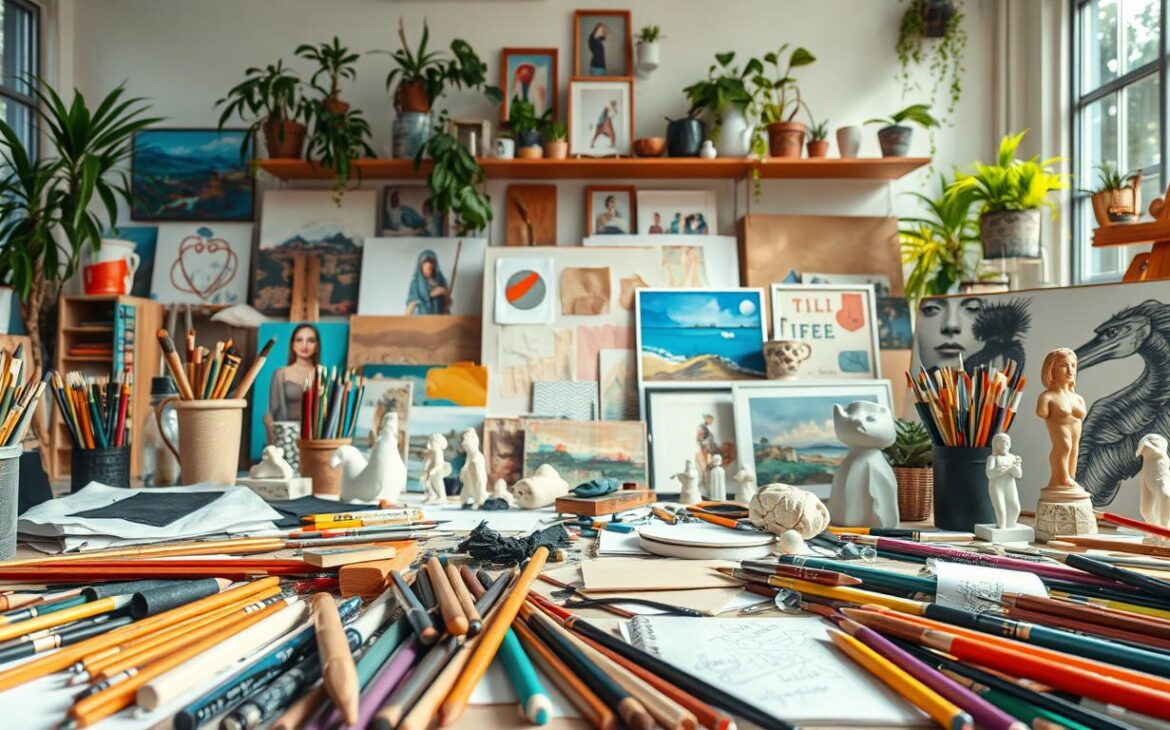
Artists like Picasso worked in painting, sculpture, and ceramics. Musicians like Beyoncé write songs, produce albums, and choreograph. Their success shows how skills in one area can improve others. For example, writing can make your visual art better, and painting can help your photography.
“The same curiosity that drives you to create in one form will guide you in another.”
Begin with small steps. Doodle while listening to a podcast. Write a short story inspired by a song. Tools like Canva or GarageBand make it easy to try new things. Even short experiments can help you think creatively.
Studies show that trying different things can make you better at solving problems. Musicians who paint find rhythm in their strokes. Writers who dance see how movement changes their stories. Each medium has its own way to express your creativity.
Don’t worry about making mistakes. A novelist trying pottery might struggle at first. But the patience you learn can help with editing. Every medium teaches you something useful. So, explore and see how your creativity grows in new ways.
Embracing Imperfection
Creativity grows when we drop the need for perfection. Every mistake or surprise has value. Perfectionism can stop us, but embracing imperfection turns errors into steps forward. Art and writing get richer with human mistakes.
Consider pottery: a broken glaze can make a bowl special. In art, a painting’s stains might inspire new ideas. Imperfections show us the beauty in the unfinished. Embracing imperfection means letting go of control. It’s fine if a draft is raw or a sketch uneven. These moments often lead to discoveries we can’t plan.
Artists like Yayoi Kusama and writers such as Maya Angelou found success by being true to themselves, not perfect. Their flaws were their unique voice. When we stop fearing mistakes, creativity bursts forth. A first draft, a crooked line, or an incorrect color can lead to new ideas. Celebrate the journey, not just the end result. Let imperfection lead your next project.
The Community Aspect of Creation
Creative work can feel lonely, but a creative community turns that into connection. Sharing ideas with others opens doors to growth. Groups like Behance or local art collectives let creators swap feedback and celebrate progress. Being part of a creative community means no idea stays hidden—every voice matters.

Workshops or online forums become labs for experimentation. A painter might refine their style after peer reviews. Writers find courage to finish drafts through group prompts. Platforms like Skillshare host classes where members share tips. These spaces are labs where talent grows through shared knowledge.
“Alone we can do so little; together we can do so much.” – Helen Keller
Joining a creative community means more than advice—it’s belonging. Artists in local groups host exhibitions, while online forums host daily challenges. Feedback loops push boundaries. Celebrating wins together builds resilience. When struggles arise, a community offers solutions and empathy. This support cycle keeps creativity alive.
Measuring Progress Creatively
Tracking your creative journey doesn’t have to feel clinical. Creative progress measurement is about noticing small wins without pressure. Tools like journals and portfolios help spot growth patterns over time.
Data shows top athletes and businesses track goals to improve. Creatives can do the same. Reviewing past work monthly reveals how skills evolve—like comparing sketches from last year to today’s. Progress appears clearer with this focus.
Start simple: keep a 2-minute daily log of what you made. Scan old projects quarterly to see shifts in style or confidence. Set goals like “finish 10 paintings this month” instead of vague targets. These steps turn abstract progress into something tangible.
Measurement isn’t about competition. It’s a mirror showing your unique path. Celebrate when a color choice improves or a story flows better. Creative progress measurement becomes a friendly guide, not a judge.
Reflecting on Your Journey
Reflecting is key in any reflective creative journey. It shows your growth and teaches from past work. Ask yourself: What patterns do you see? Which habits boost your creativity? Honest reflection turns failures into lessons.

Many artists keep journals to track their progress. Writing down breakthroughs and challenges brings clarity. For example, noticing moments of inspiration can guide future projects. Reviewing old work shows how far you’ve come—even small wins are important.
“The only way to discover the limits of the possible is to go beyond them into the impossible.” — Arthur C. Clarke
Use reflection to adjust your path. Did a past project feel rushed? Plan more time next time. Did a technique surprise you? Explore it further. This process isn’t about perfection—it’s about noticing what truly fuels your passion.
Your journey is unique. Celebrate how far you’ve come. Sharing insights with others can inspire their own creative growth too. Keep reflecting, adapting, and growing—your next breakthrough starts with looking back.
The Ripple Effect of Daily Creation
Every creative act, no matter how small, has the power to spread. Like a stone tossed into water, the ripple effect of creativity starts with you but reaches far beyond. When you create daily, your actions spark change in unexpected ways.
“A single creative habit can inspire a thousand others,” says artist and educator Jen Stark. “The ripples start quietly but grow into waves.”
Imagine a writer who journals daily. Their posts online might encourage a reader to start their own blog. A musician sharing songs could inspire a listener to pick up an instrument. These tiny acts build communities.
Platforms like Behance or TikTok show how one person’s routine creativity can motivate millions. The ripple effect of creativity turns individual passion into collective inspiration.
History shows this pattern. The open-source coding movement began with programmers sharing small projects. Today, those ripples power tech innovations worldwide. Your daily art, writing, or design isn’t isolated—it’s part of a larger wave. Every sketch, every post, every shared idea adds to the flow.
Start today. Share your work. The ripple effect of creativity begins with one step. Your actions today might be the spark that ignites someone else’s journey tomorrow.
Conclusion: Commit to Your Creative Journey
Starting today, making time for creativity is more than a hobby—it’s a promise to yourself. Every brushstroke, word, or idea adds momentum to your growth. Daily practices build habits that turn passion into purpose.
Remember, discipline isn’t about being perfect. It’s about showing up, even when inspiration fades.
Sharing your work with others amplifies its impact. Communities like Behance or local art groups turn solitude into connection. Progress isn’t measured by flawless outcomes but by the effort to keep going.
Embrace each step as proof of your commitment to creativity.
Invest in small starts. Choose a medium—journaling, coding, or dance—and schedule it like any priority. The freedom to create isn’t found in talent alone. It’s earned through persistence.
Commit to your creative journey today. Your future self, and the world around you, will notice the difference.