





















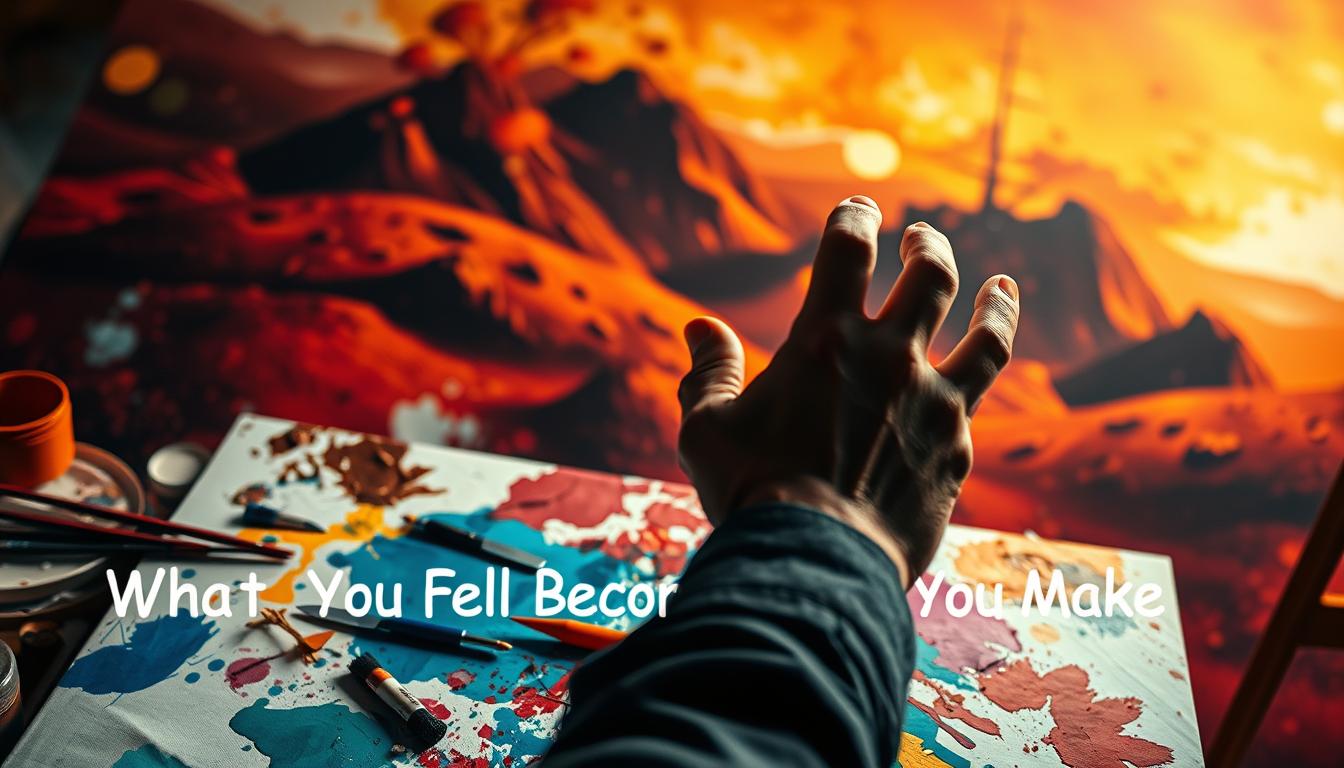
Art begins with a spark inside us. Buddha once said, “What you think, you become. What you feel, you attract. What you imagine, you create.” These words capture the heart of emotion art creation. Every brushstroke, melody, or written word starts as an emotion waiting to take shape.
Your feelings are the raw material of creativity. Whether joy, sorrow, or curiosity, they guide how you what you make. This is the intersection of emotion and art. Artists like Frida Kahlo turned pain into masterpieces. Musicians like Beyoncé channel passion into songs. Your emotions are the tools and the blueprint.
Understanding the Emotional Power of Art
Art is more than just colors or sounds. It’s a mirror that shows our feelings. As Buddha once said,
“All that we are arises with our thoughts.”
This idea shows how art and emotions are connected. Every brush stroke or lyric carries feelings that touch both the creator and the viewer.
Expressive creativity makes our feelings real. A painter’s stormy sky or a writer’s love poem shares their story. This turns personal feelings into stories we all can relate to.
Think about how a song can calm you or make you happy. That’s the power of art. It connects us, making complex feelings simple. Through dance, sculpture, or film, art speaks to everyone.
Artists share their joys, fears, and hopes through their work. When we see it, we feel those emotions too. This shows that art is more than beauty—it’s a way for hearts and minds to talk to each other.
Historical Perspectives on Emotion and Art
Art history shows that emotions have always driven creativity. From ancient sculptures to Renaissance masterpieces, artists used color and form to express feelings. These early works of historical emotion in art show how feelings shaped art long before modern psychology.
The Baroque era used dramatic lighting, while Romanticism featured stormy landscapes. Both aimed to evoke strong reactions. Philosopher Aristotle said in Poetics that art’s goal was to bring about catharsis. This idea continues to shape evolution of creative expression today.
Even medieval religious art, with its solemn tones, aimed to inspire devotion through emotional depth.
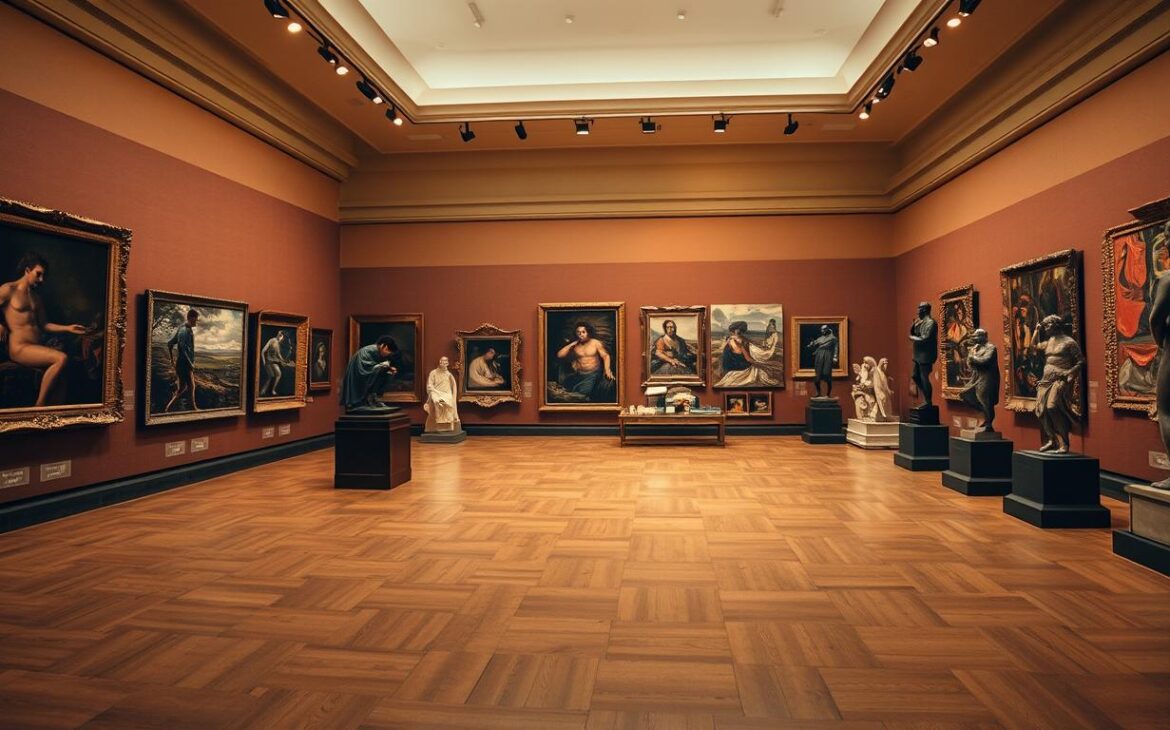
Modern artists continue this tradition. Expressionist paintings and abstract art show the emotional depth of centuries of art history. By looking at past movements, we see patterns. Every era’s struggles and triumphs are reflected in art.
This legacy shows that emotion is not just a modern trend. It’s the heart of creativity through time.
The Role of Emotion in Different Art Forms
Emotion guides every brush stroke, musical note, and poem. In music, literature, painting, and sculpture, artists express their feelings. A painter’s colors or a composer’s melody speaks to our hearts, evoking emotions.
Visual arts tell stories through images. Van Gogh’s Starry Night shows turmoil in the sky, reflecting inner turmoil. Rodin’s The Thinker conveys deep thought through its form. Colors, textures, and lines in art convey emotions, opening a window to the soul.
Writers use metaphors and pacing to connect with us. Shakespeare’s Macbeth turns ambition into tragedy. Maya Angelou’s poetry turns personal pain into shared truths. Each art form, from novels to sculptures, uses its own way to connect with us.
“Art is the highest form of feeling,” said Leo Tolstoy, showing how emotion ties all art together. Whether through colors or words, art makes the unseen real.
Dance and haikus show how art and emotion are forever linked. They let us feel things words can’t say. Every art form reflects our shared human experiences.
How Personal Experiences Shape Artistic Expression
Every brush stroke or melody starts with a personal story. Personal experience in art guides creators to be true to themselves. Moments of loss, joy, or identity exploration become creative inspiration for art.
Frida Kahlo’s paintings show her pain and strength. Jean-Michel Basquiat’s work reflects his Haitian-American roots through street art. Their art and personal narrative show that being open can lead to universal art.
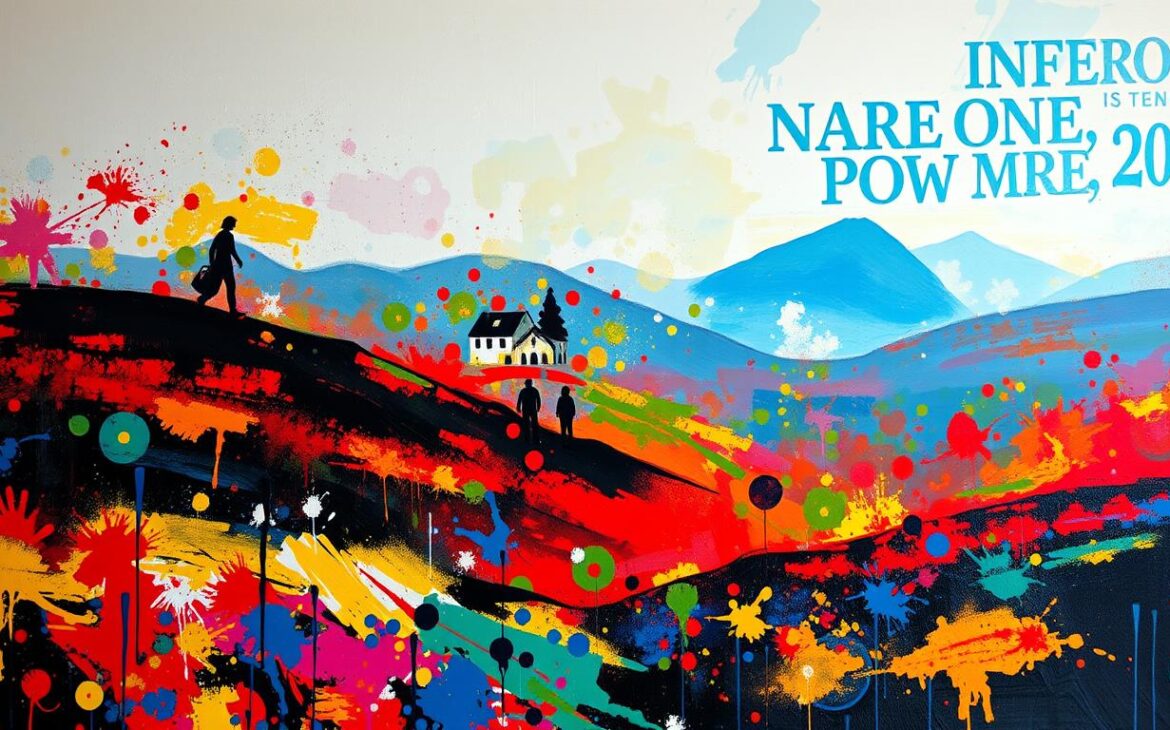
Today, artists follow this path. A dancer might create a piece about migration. A poet might write about childhood memories. A sculptor might express emotions from a breakup. These works show skill and invite viewers to see life through another’s eyes.
Every artist’s story is unique. What memories or moments define your story? Exploring them could spark new creativity. The most memorable art often comes from asking, “What does it mean to feel deeply and make it visible?”
The Connection Between Mood and Color
Artists have always seen colors as more than just choices—they’re emotional languages. A sunset painting with warm reds and oranges doesn’t just show light. It evokes feelings of warmth or nostalgia. This connection between mood and color comes from color psychology, which studies how colors affect our emotions.
“Color is the place where mind and heart meet.” — Wassily Kandinsky
Red is often seen as energetic, while blues can calm or make us sad. Van Gogh’s “Starry Night” mixes blues and yellows, creating a mix of chaos and hope. Brands like McDonald’s use red to make us hungry, showing color’s power beyond art.
Artists choose colors carefully: cool tones for sadness, bright colors for happiness. Color psychology research finds green lowers stress, and black brings mystery or seriousness. These effects change how we feel when we see a painting.
In film, ads, or art, the right colors make scenes unforgettable. Knowing this lets us understand art better and helps artists create stronger messages.
Emotionally Charged Artworks Across Cultures
Artists around the world use their feelings to tell stories that everyone can relate to. A Japanese woodblock print might show calmness, while a West African mask might show deep ancestral power. Both show that feelings like love or sadness are understood by all.
Mexican Día de los Muertos altars mix happiness and sadness. Nigerian artist Twins Seven-Seven uses bright colors to show community strength. These works show how art can connect people across cultures.
“Emotions are the compass guiding my brush,” says contemporary artist Artem Beliaikin. His mixed-media pieces merge Russian iconography with modern symbols, inviting viewers to see pain and hope through a shared lens.
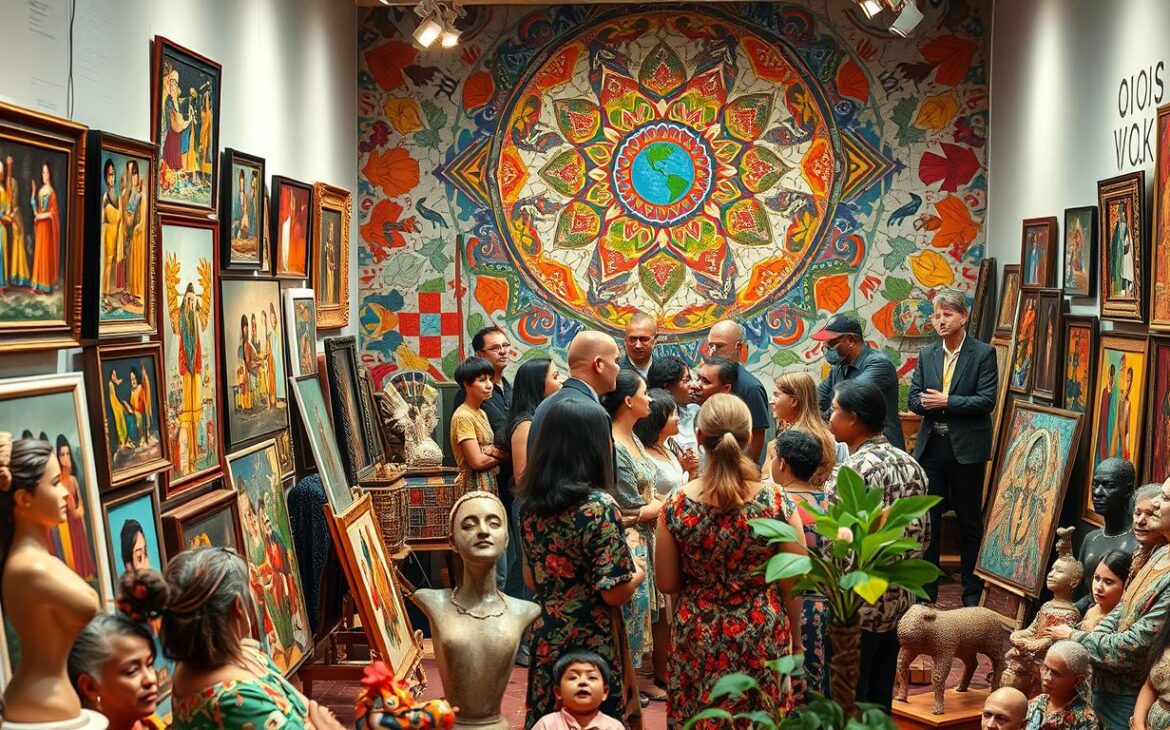
Art from Aboriginal Australia to Dutch Renaissance portraits all touch on the same emotional core. A grieving mother in a Greek statue feels the same as one in a Korean scroll. This shows that our emotional experiences are universal, expressed in many ways.
Seeing these artworks online or in galleries lets us connect with others. It shows that, despite cultural differences, we all share common emotions. This makes galleries places where we can find unity in our feelings.
The Influence of Art on Emotion
Art doesn’t just reflect emotions; it shapes them. Vibrant murals can uplift urban communities, while abstract paintings can calm stressed minds. Art influencing emotion is a daily experience for many. Studies reveal that art can stabilize moods, with colors and music tempo affecting brain chemistry.
Communities around the world use art for healing. A 2023 Harvard study showed patients in hospitals with art programs felt 30% less anxious. Local clinics now offer art workshops to help people express feelings that words can’t.
“When I paint, my worries fade,” says Maria Chen, a muralist in Chicago. Her public works focus on art’s impact on mood.
“Art isn’t a luxury—it’s a lifeline for mental health.” – Dr. Elena Torres, founder of Mindful Canvas Therapy
Therapists are now using art and music as therapy tools. Schools in Los Angeles saw stress levels drop after art-based mindfulness exercises. The cycle is clear: art heals, and healing inspires more art. By engaging with creativity, we don’t just observe emotion—we transform it.
Social and Political Commentary in Art
Art and politics have always been connected. Artists use their work to challenge norms and start conversations. From protest posters to powerful murals, art shapes our views on power and society.
Painters like Diego Rivera used bold images to speak out against inequality. This shows how art can give a voice to those who are often ignored.
Today, movements like Black Lives Matter have artists creating murals and installations demanding justice. Graffiti, street art, and digital campaigns keep this tradition alive. They turn public spaces into places for change.
These works don’t just show feelings—they make us think about the world differently.
“Art is a weapon of the people.”
Even in quieter forms, like poetry or sculpture, artists share social messages. The #MeToo movement used performance art to expose systemic abuse. This shows how art can turn personal stories into actions that affect us all.
Museums and galleries now highlight these works. They encourage us to see art as a reflection of society’s challenges.
Every brushstroke or pixel choice is a statement. By engaging with these pieces, we join a conversation that connects creativity and activism. This proves that art is a strong force for change.
The Role of Technology in Art Creation
Technology changes how artists make and share their work. Digital tools like tablets and software let them mix code with color. This turns ideas into stunning visuals.
Apps like Adobe Photoshop or Procreate make it easy to sketch and edit. Artists can paint without brushes, sculpt in virtual spaces, and animate with code. This isn’t just about gadgets—it’s about new ways to create.
Online platforms like ArtStation and Instagram let artists share their work worldwide. They form communities, inspiring collaborations and feedback instantly. A digital artist might say:
“With the right tools, I can create anything I imagine.”
NFTs, or non-fungible tokens, are a big step in art innovation. They let creators sell digital art as unique pieces, proving ownership online. This tech changes how art is bought, sold, and valued.
Technology doesn’t just change how art is made—it opens doors for everyone. Schools teach coding alongside painting; apps let kids design games and animations. The line between artist and tech user blurs, creating a space where digital art thrives.
As tools evolve, so does creativity. Virtual reality, AI, and generative design will keep pushing limits. The future of art isn’t just about pixels—it’s about imagination meeting innovation, one click at a time.
Engaging with Art: The Viewer’s Emotional Journey
Every visit to a gallery or online exhibit starts a unique viewer experience. Art appreciation isn’t just about looking—it’s about feeling. Studies show 70% of visitors feel a personal connection, sparking emotional engagement in art that lingers long after the visit ends.
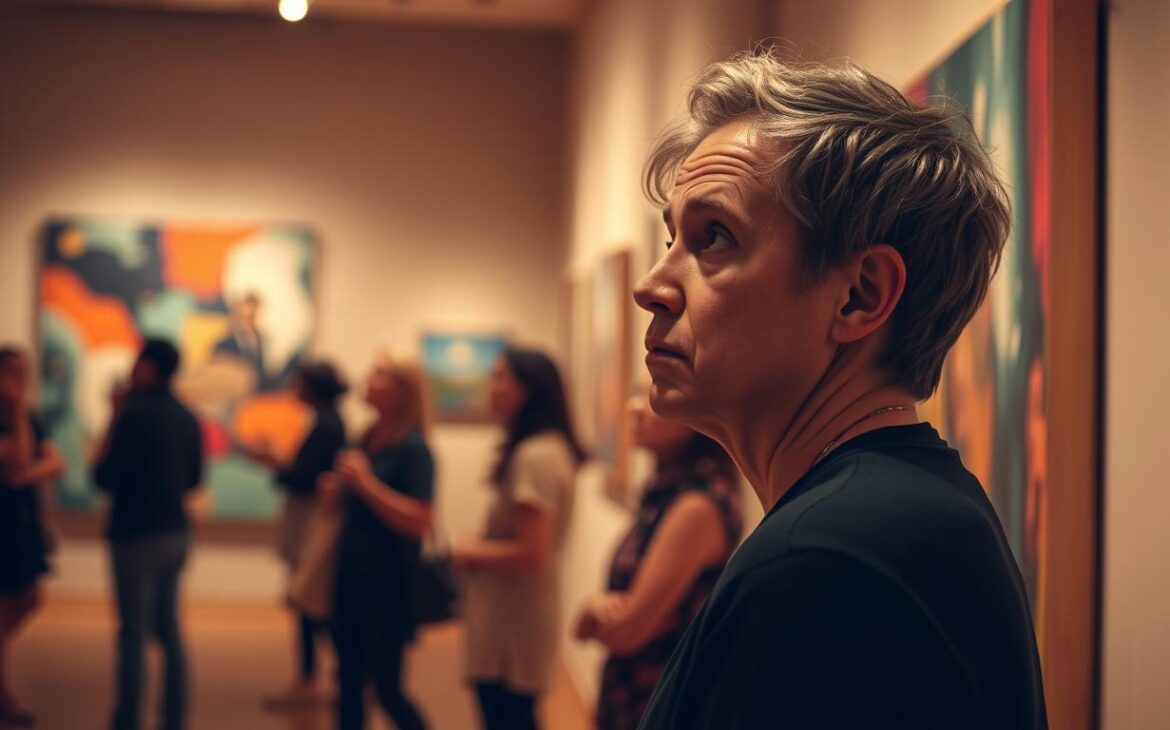
Digital tools now transform how we interact. Virtual reality tours or AR apps deepen immersion. An exhibit in Chicago let visitors “paint” alongside Van Gogh’s Starry Night, blending creativity and viewer experience. These tools turn passive observation into active participation.
Emotional engagement in art varies widely. A painting’s impact depends on personal history. Museums like MoMA use guided tours to help visitors explore their feelings. Art appreciation becomes a shared dialogue between creator and audience, shaped by individual perspectives.
Your reaction matters. Pause and let emotions guide you. Art’s power lies in how it connects with your heart.
“Art is a mirror held up to the soul.”
Every piece tells a story, and every viewer becomes part of it. Share your thoughts—how has art moved you?
Future Trends: Emotion and Art in the Digital Age
The future of art is already taking shape with innovations like virtual reality (VR) and AI. Imagine walking through a digital gallery where paintings change as you move. This is part of today’s digital art trends. Tools like NVIDIA’s GauGAN let artists turn sketches into lifelike scenes, blending human creativity with machine learning.
These tools amplify emotion in digital creativity, making art more immersive than ever.
Interactive installations are becoming central to modern exhibits. Museums like the Museum of Modern Art (MoMA) now feature touchscreens that let viewers alter digital works in real time. AI collaborations, such as Refik Anadol’s data sculptures, show how technology can mirror human emotions on a massive scale.
The line between creator and audience is blurring, inviting everyone to participate.
Accessibility is key. Apps like Instagram and TikTok let artists share emotional stories globally. Brands like Adobe are updating software to include AI-driven color palettes that respond to user moods. As tech evolves, art will keep adapting—capturing feelings in ways we’re only beginning to explore.
The next chapter of art promises more connection, more interaction, and boundless creative possibilities.