



















Creativity and fear often go together. Every artist, writer, or inventor feels doubt when they create something new. This is where “when fear meets creativity” becomes a turning point.
Sonia McDonald’s daughter once felt scared to share her paintings. But through brave choices, those paintings inspired a whole community. Stories like hers show how “creative bravery” turns hesitation into art.
Legendary creators like Vincent van Gogh and J.K. Rowling faced rejection but turned fear into fuel. Their journeys prove that creativity thrives when we acknowledge fear instead of running from it.
This article invites you to explore how facing fear can unlock your own creative power. Let’s rethink fear not as an enemy but as a partner in the act of making something real.
Understanding the Intersection of Fear and Creativity
Art agent Lilla Rogers says fear is not a barrier, but a sign. When starting a new project, many feel unsure. But what if that unease could spark new ideas instead of holding them back?
By facing fear, creators move from fear to action. They turn anxiety into curiosity. This change helps them see their work in a new light.
Studies show fear makes us more alert and focused. Rogers’ clients use their nerves to try new things. A racing heart before starting becomes a source of energy, not a problem.
Every creative journey has its unknowns. Writers get stuck on blank pages. Musicians worry about their next note. But fear shows that something important is at stake.
By naming their fears, creators take away its power. Fear then becomes a source of inspiration, pushing them to explore new territories. The aim is not to get rid of fear, but to use it as a guide.
Think of painters who let fear guide their strokes or poets who turn worries into metaphors. Fear marks the start of true creativity. Embracing fear means welcoming it, making room for vulnerability to spark new ideas.
The Benefits of Embracing Fear in Creative Processes
Artists and writers who face fear often unlock hidden talent. Embracing innovative courage turns anxiety into a spark for new ideas. Frida Kahlo, for example, used her pain to create stunning self-portraits that changed Mexican art.
“Fear is a natural part of the creative process. It’s also a sign you’re alive.”
This mindset change turns challenges into chances. Vincent van Gogh’s mental battles led to his bold brushstrokes, shaping art history. His letters show how fear of failure drove him to explore colors and textures.
Artists who use innovative courage make work that feels real and bold. It’s not about ignoring fear but using it as inspiration. This approach creates art that resonates with people because it shows true human feelings. Creativity grows when we welcome discomfort as part of the journey.
Overcoming Creative Blocks
Starting to overcome creative blocks is simple. Just take small steps every day. It’s easy to think inspiration has left, but progress is made by accepting setbacks. Remember, blocks are just pauses, not permanent walls.
Being committed helps you move forward. Try setting a timer for 10 minutes each day to create. Even when ideas seem stuck, keep going. Consistency builds confidence.
Mistakes are not failures; they’re just experiments. Artists like Vincent van Gogh kept trying, seeing each attempt as a step towards clarity.
“Creativity requires courage to embrace imperfection,” said painter Georgia O’Keeffe. To beat creative blocks, redefine what perfection means. Try new things like walking, sketching with your non-dominant hand, or working with others. New views can bring new ideas.
Sharing your struggles with mentors or online groups can turn loneliness into support. Every success begins with one bold move: starting again. Small steps today can lead to big breakthroughs tomorrow.
The Role of Community in Creative Bravery
Creative courage often blooms in communities that nurture it. Community creativity grows when people share ideas and support each other. For example, Sonia McDonald’s workshops show how shared spaces boost boldness.
“Being part of a group turns fear into fuel,” says McDonald. She guides artists to embrace risks through collaborative projects.
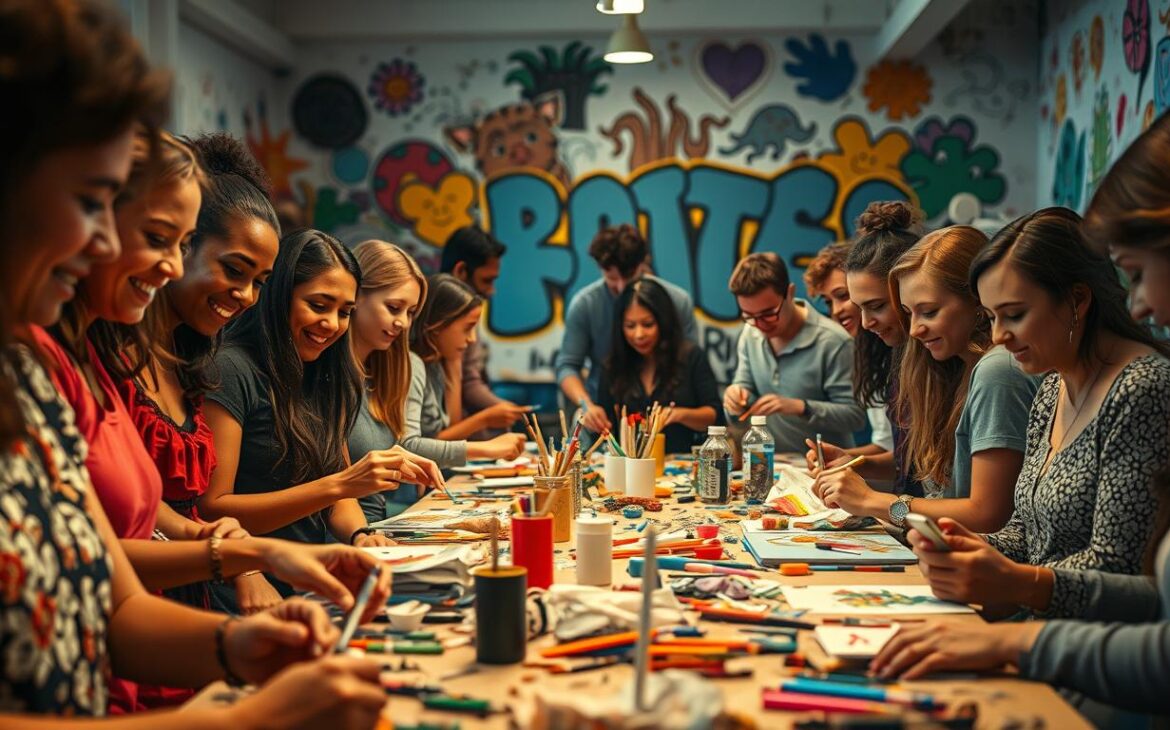
Collaborative efforts reduce isolation, a common barrier to creativity. Platforms where creators exchange feedback or collaborate on art amplify innovation. For instance, online collectives like Behance or local art co-ops let members test ideas without judgment.
These networks turn uncertainty into curiosity.
“Alone, fear whispers louder. With others, it’s just background noise.”
Leaders like McDonald emphasize that community creativity isn’t just about sharing—it’s about building trust. When groups celebrate attempts over perfection, individuals feel safer experimenting. This trust transforms how people approach challenges, making creativity a shared adventure.
Communities also model resilience. Seeing peers navigate setbacks encourages others to persist. This cycle of support fosters environments where fear fades, replaced by the excitement of collective growth.
Personal Stories of Fear and Creativity
Artists and creators worldwide share personal creativity stories that show how facing fear sparks new ideas. Take Sonia McDonald, a sculptor who once worried her abstract style wouldn’t connect. “My first exhibition felt like stepping into the unknown,” she remembers. “But sharing my raw ideas led to deeper conversations about art’s purpose.”
“Fear isn’t the enemy—it’s the spark that pushes me to try new techniques.”
Writers also face fear. Novelist Marcus Lee almost gave up on his first book because of self-doubt. But joining a writers’ group changed everything. He turned his doubts into a story about courage. “Sharing my fears on the page made the work honest,” he says. These stories show that being vulnerable can be a strength.

Painters, musicians, and designers all agree. Their personal creativity stories show that fear can be a good thing. By facing the unknown, they find new discoveries. These true stories remind us: every masterpiece started with someone saying, “What if I try?”
Practical Exercises to Embrace Fear in Creativity
Starting to be creative doesn’t need a perfect moment. Begin with practical creativity exercises to turn hesitation into action. Write down your thoughts first thing in the morning without worrying about mistakes. This habit boosts your confidence by focusing on creating, not being perfect.
“The moment one gives close attention to anything, even a stone, it becomes a mirror.” —Rumi
Try new tools or mediums every week. Paint with sponges or your fingers. Take photos upside down. These changes break the patterns fear loves. Each new try moves you closer to accepting uncertainty.
Another way is to turn fears into chances. Write down “I’m afraid to…” and change it to “I will try…”. For instance, “I’m afraid to share my art” becomes “I will post one piece every month.” Taking action helps overcome fear.
Collage-making lets you be free. Use old magazines, glue, and paper. Mix cut-out words and images to create new stories. There’s no right or wrong way to do it, just like in creativity.
These practical creativity exercises help you keep going. Fear goes away when you act. Remember, every great work starts with a blank page. Your next creative step is just one small, brave move away.
Strategies for Cultivating a Fearless Creative Habit
Starting a fearless creative habit is all about small steps. Creative director Lilla Rogers says to see creativity as a daily routine, not a perfect show. “Routine turns uncertainty into routine courage,” she notes, suggesting starting with just 10 minutes of sketching or writing each day.
Set goals that feel easy to reach—a blog post a week, one dance routine a month. It’s important to celebrate every step forward, not just the big wins. Writing down your past successes can help you see how facing fear has led to growth.
“Fearless creation isn’t the absence of fear, but the choice to create despite it,” Rogers says.
Link your creativity to familiar habits: make tea before painting, or walk before you write. These habits make the creative process feel normal. Sharing your achievements with friends or online groups can turn loneliness into support. Over time, these actions build your courage, turning hesitation into a habit. The fearless creative habit grows slowly, through small, consistent choices that show creativity can bloom in fear’s shadow.
The Impact of Fear on Various Creative Fields
Creative fields affect artists in different ways. A painter might worry about blank canvases, while a writer fears empty pages. Fear takes on various forms in each field.
Sculptor Sonia McDonald used fear to mix clay with metal, creating new textures. In theater, directors like Lilla Rogers use fear to make bold casting choices.
In music, producers feel pressure to innovate. Grammy nominee Alex Chen blended genres to avoid repetition, earning praise. Tech startup founders like Elena Torres see fear as a push to improve through testing.
Artists in advertising face client demands, while novelists deal with market trends. Yet, fear prompts them to adapt. Rogers says, “It’s not about avoiding fear, but using it to ask better questions.”
From coding apps to composing music, understanding fear’s impact helps creators. Strategies for graphic design might not work in filmmaking. But knowing this diversity helps find the right solutions.
In galleries or boardrooms, how fear is used matters. Recognizing its patterns across industries builds resilience. As McDonald says, “My worst anxieties became my most daring exhibitions.” This insight empowers professionals to turn fear into innovation’s fuel.
Celebrating Bravery in the Act of Making
Creative bravery turns uncertainty into art. Every sketch, story, or song born from fear shows courage. The saying “A ship in harbor is safe, but that is not what a ship was designed for” reminds us to embrace risk. Celebrating creative bravery means honoring the journey, not just the end result.
Legendary creators like J.K. Rowling and Vincent van Gogh faced rejection but kept going. Their stories show that bravery drives innovation. Even small acts, like sharing a draft or picking up a paintbrush, are important. Leadership experts say courage grows with each try.
Brands like Nike inspire with “Just Do It,” a message for artists everywhere. Celebrating creative bravery means recognizing your efforts. Whether it’s writing a poem or designing a website, every step counts. Share your work, learn from feedback, and keep creating. Creativity is about showing up, not being perfect.
So, what’s your next brave step? A sketch, a blog post, or a shared idea? Celebrate your journey. The world needs your unique voice. Let your creativity sail beyond the safe harbor—it’s where true art starts.