




























Creative mistakes aren’t always the end. They can lead to big breakthroughs. Think of inventors, artists, and innovators who found success by accident. A wrong move in the lab or a misplaced brush stroke might create something amazing.
Keith Sawyer’s Zig Zag shows how creativity zigzags through trial and error. His research shows that major innovations often start with mistakes. For example, Post-it Notes came from a failed adhesive. These stories show how mistakes can open new doors.
Forget about straight paths. The journey to innovation is full of twists and turns. By accepting mistakes, creators turn “what went wrong?” into “what if?” This sets the stage for understanding how mistakes lead to groundbreaking ideas.
Embracing Mistakes: A Fresh Perspective
Artistic errors often hide breakthroughs waiting to be found. Many creatives now see unexpected marks and spills as chances for innovation. A painter might leave a “flawed” brushstroke to add texture, making the piece unique.
“Mistakes are the cracks where the light gets in.” — This line from poet Leonard Cohen shows how creatives view artistic errors. When a sculptor chips too much stone, they might reshape the form entirely, leading to a more striking design.
Studies show over 70% of artists keep “flaws” in their work to evoke emotion. A musician might layer off-key notes into a melody, creating an unconventional rhythm. These choices challenge traditional norms, proving that imperfection fuels originality.
Designers often talk about how “happy accidents” sparked iconic projects. A typo in a logo sketch might inspire a bold new font style. The key is staying open to possibilities hidden in what once seemed like failures. This approach doesn’t just apply to art—it reshapes how we tackle challenges in everyday problem-solving.
Famous Examples of Mistakes Leading to Success
History’s biggest breakthroughs often started with mistakes. For example, 3M’s Post-it Notes came from a failed attempt by chemist Spencer Silver in the 1960s. He was trying to make a strong adhesive but ended up with something weak. Years later, Art Fry used this weak glue as a bookmark for church hymnals. This innovation from failure turned into a $1 billion product line, showing how mistakes can lead to genius.
Alexander Fleming made a groundbreaking discovery in 1928 by accident. He left a bacteria culture uncovered, and mold killed the germs. Instead of throwing it away, he studied it. This innovation from failure led to the creation of modern antibiotics, saving countless lives.
Even failed pharmaceutical trials can lead to breakthroughs. Pfizer’s trial for a blood pressure drug failed, but it hinted at a new use. The drug was repurposed and became Viagra, changing healthcare and how drugs are developed. These stories show how curiosity can turn errors into opportunities.
Mistakes are the portals of discovery.
These examples show a pattern: taking risks and being adaptable leads to progress. From sticky notes to life-saving drugs, history’s biggest achievements came from embracing mistakes. As Sawyer’s research shows, creativity blooms where failure meets persistence, turning mistakes into chances for reinvention.
The Science Behind Creativity and Errors
Science shows that mistakes can lead to new ideas. Psychologist Robert Sawyer found that the creative process has four stages: preparation, incubation, illumination, and verification. In these stages, mistakes are not obstacles but stepping stones.
When we make a mistake, our brain’s anterior cingulate cortex lights up. This signals a need to rethink our approach. It sparks new ideas.
Studies show that trying new things helps us grow. Artists and inventors often say that mistakes led to their successes. For example, the Post-it Note was created from a failed adhesive.
Neuroscience says that analyzing mistakes helps us solve problems better. Each mistake makes our brain’s pathways stronger. This is like how kids learn to walk by falling and getting back up.
Redefining Failure in the Creative Process
Creative progress often starts where others see dead ends. Mistakes aren’t roadblocks; they’re detours to new ideas. Psychologist R. Keith Sawyer says innovation grows when creators see errors as clues, not dead ends.
“Failure is the core of creativity. Every mistake holds a hidden lesson waiting to be uncovered.”
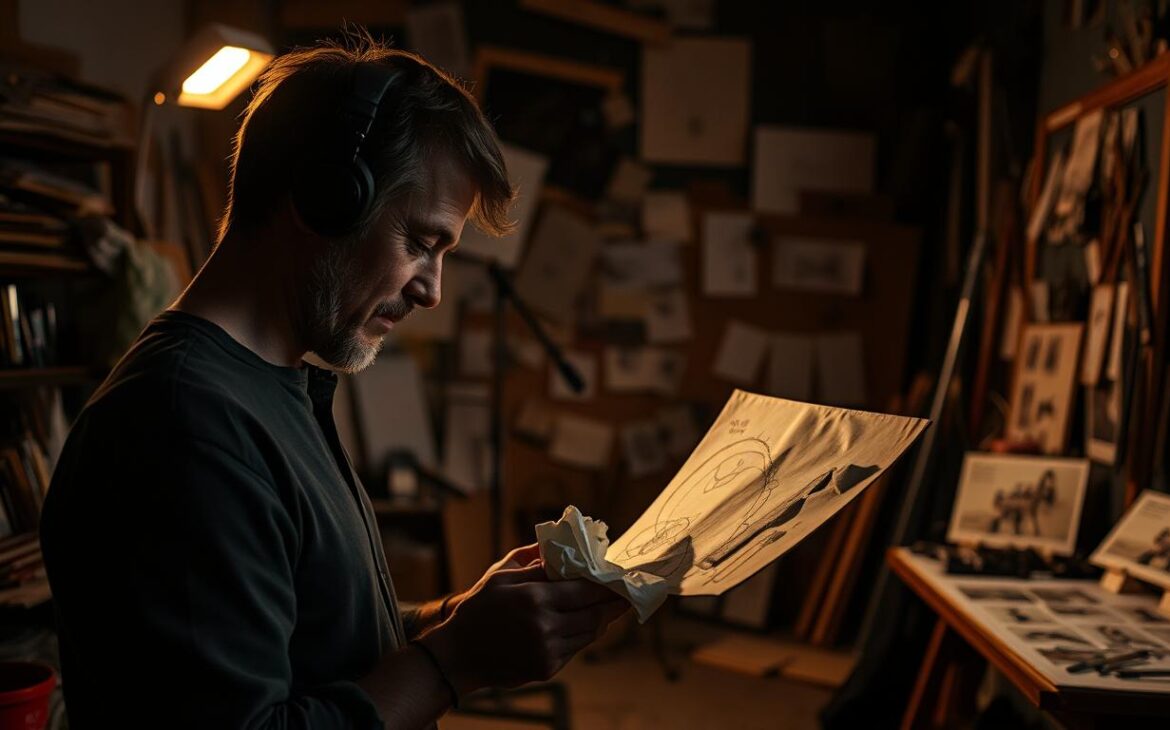
The story of Post-it Notes is a great example. Their adhesive’s “failure” to stick strongly became its key feature. This shows how turning setbacks into opportunities can lead to success. Artists, inventors, and writers often improve their work through trial and error. Each mistake helps refine their vision, not end it.
Think about your next project. When a plan doesn’t work, ask what it can teach you. A wrong brush stroke might lead to a new style. A failed experiment could lead to a breakthrough. Creativity isn’t about avoiding mistakes; it’s about using them to find a better path.
Techniques for Cultivating Creativity from Errors
Turning mistakes into creative fuel starts with simple steps. Embracing failure means seeing errors as clues, not dead ends. Keep a notebook handy to jot down ideas as they come.
This simple act captures raw thoughts before self-doubt edits them away.
“Creativity is allowing yourself to make mistakes. Design is correcting them.” —
Experiment without fear of “wrong” outcomes. Set aside time for unstructured play with materials. Whether painting, coding, or writing, it’s all good.
Professionals like , a product designer at IDEO, say “failing fast” leads to new solutions. Each attempt builds a mental map of what works and what sparks new paths.
Adopt iterative cycles: tackle a project in small steps, reviewing each phase to refine. Pixar animators revise storyboards repeatedly, turning rough drafts into Oscar-winning films. Even , author of Explorers Guide to Creativity, says: “Celebrate the messy first draft—it’s where innovation hides.”
Build a “failure journal” to track lessons from missteps. Note what went wrong and what you’d change. Over time, patterns emerge, guiding smarter risks. The key? Stay curious. Every error shrinks the gap between “what went wrong” and “what’s possible.”
Mistakes in Art: From Canvas to Gallery
Art history is full of stories where accidents turned into triumphs. Artists like Jackson Pollock spilled paint by accident. Yet, those spills became the heart of his drip paintings. These creative risks turned what could have been mistakes into new styles. Now, galleries celebrate these works, showing that mistakes can spark innovation.
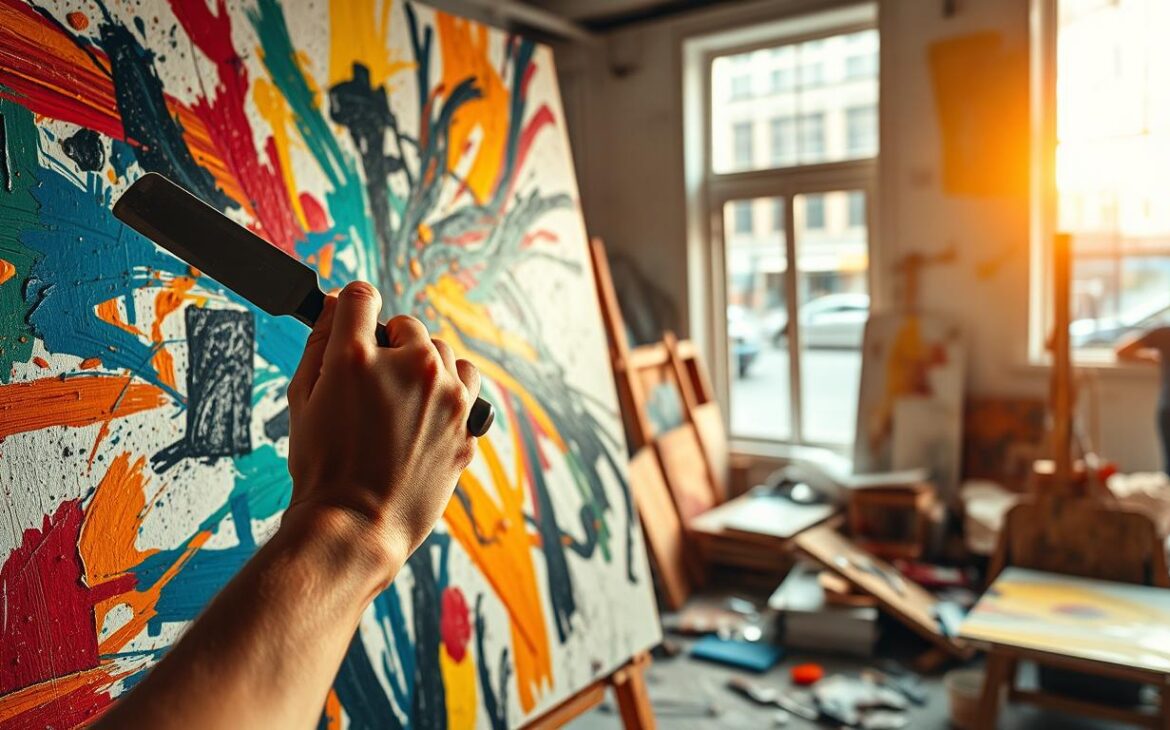
Vincent van Gogh’s thick brushstrokes were once seen as messy. But they defined his iconic style. Tracey Emin’s My Bed started as a personal reaction to heartbreak. But it became a key piece in contemporary art.
These examples show how embracing imperfection can change how we see beauty. Galleries now look for works born from creative risks. They value authenticity over perfection. A “flawed” stroke or unexpected texture might become the next masterpiece.
Modern artists like Yayoi Kusama use repetition and chance in her work. She turns planned chaos into art known worldwide. Museums share these stories, showing that mistakes are chances to redefine beauty. Whether it’s accidental splatters or deliberate surprises, creative risks show art thrives where control meets chance.
Embracing Mistakes in Business
Business creativity often comes from unexpected setbacks. Companies that see mistakes as learning chances build strong strategies. Take 3M’s Post-it Notes: a failed adhesive experiment in the 1960s became a global hit. Such stories show how business creativity grows when errors are seen as stepping stones.
Startups like Netflix turned near-failures into success. When they switched from DVDs to streaming, it paid off. Toyota’s kaizen philosophy focuses on constant improvement through small tests and learning from failures.
“Innovation comes from learning what doesn’t work.” – Thomas A. Edison
Business creativity thrives in cultures where teams feel safe to try new things. Google’s “20% time” policy led to Gmail and other big hits. This approach turns risks into assets, helping companies stay ahead in the market.
Adopting this mindset sparks innovation. When errors are met with curiosity, not blame, businesses find new solutions. This shift is key for leaders to build brands that adapt and lead.
Navigating Mistakes in Personal Growth
Personal growth starts when we see mistakes as guides, not failures. Each mistake shows us what we’re good at and what we need to work on. By learning from these moments, we become stronger and more aware of ourselves.

“The only real mistake is the one from which we learn nothing.” — David M. Burns
J.K. Rowling’s story is a great example. Her early rejections made her a stronger writer. She turned her weaknesses into strengths. Research from Stanford University backs this up, showing that those who learn from failures adapt faster.
Begin by noticing one small mistake each day. Ask yourself, “What did I learn from this?” instead of dwelling on failure. This change in thinking turns regret into curiosity. Over time, it helps you develop problem-solving skills and emotional agility.
Even small mistakes, like a bad presentation or missing a deadline, can lead to clarity. Thomas Edison’s 10,000 failed attempts at the lightbulb show that failure is just a step towards success. Seeing mistakes as part of our growth journey helps us move forward.
Overcoming Fear of Making Mistakes
Many people fear making mistakes and let it stop them from trying new things. But, overcoming fear of mistakes starts with knowing it’s okay to feel unsure. Creativity grows when we stop letting perfectionism control us.
“Permission to fail is the key to creativity.” — Elizabeth Gilbert, author of Big Magic
Gilbert’s advice tells us mistakes are part of the journey, not the end. Psychologists say fear of failure often comes from thinking mistakes show our worth. But, changing this mindset turns hesitation into curiosity. Start small, like sketching an idea or writing a draft. Each try builds your courage.
When doubt hits, name it. Say, “This fear is temporary.” Then ask: What’s the worst that could happen? Most mistakes don’t ruin goals; they show us the way. Celebrate every attempt, not just the successes. Sharing unfinished work with trusted friends can ease your worries. Their feedback often highlights strengths you missed.
Be patient. Overcoming fear takes time. Celebrate small victories, like finishing a draft or trying a new skill. Every effort is a step forward. Remember, every artist, inventor, or innovator faced doubt. Their breakthroughs started with the courage to act, despite uncertainty.
The Role of Mentorship in Learning from Mistakes
Mentorship in creativity is key to turning mistakes into growth. Experienced mentors share their own mistakes and how they turned them into successes. This helps creatives see errors as steps towards innovation, not failures.

A great mentor doesn’t just correct mistakes—they show how those errors can spark new ideas.
Places like Pixar’s workshops show the power of mentorship. Senior artists guide newcomers, talking about how mistakes led to hits. This approach makes trying and failing okay, boosting confidence to try new things.
Startups also use mentorship to help founders learn from mistakes. This speeds up solving problems.
Universities and design schools pair students with industry experts. These experts share lessons from their careers. This creates a safe space to talk about failures, encouraging curiosity.
Mentorship in creativity is more than advice. It’s a connection between past lessons and future innovation.
Through shared experiences, mentors and mentees build a culture where mistakes drive progress. This partnership makes sure every error is a lesson, not a setback.
Celebrating Mistakes as Part of the Journey
Post-it Notes, penicillin, and the Sistine Chapel’s frescoes all started with mistakes. These stories show us that celebrating failures is key to success. Companies like 3M reward experiments, even if they fail at first.
NASA’s “Falling Up” video turned rocket failures into learning moments. This shows that setbacks can lead to future wins.
Artists like Michelangelo and inventors like Alexander Fleming didn’t shy away from mistakes. They turned them into masterpieces. This approach is for everyone who sees value in every try.
Mistakes become stepping stones when we see them as part of the journey. Don’t be afraid to share your failures with others. Write them down or use them in new projects.
Platforms like Behance and Dribbble show off unfinished designs. They prove that raw ideas are important. Celebrating failures means valuing the journey, not just the end result. Every mistake could lead to a breakthrough.
Keep creating and trying. Let every misstep guide you towards innovation.