




























Growth mindset is a journey where every step shapes who we become. Whether through challenges or successes, growth turns experiences into lasting wisdom. The Bible’s promise in Isaiah 60:22 reminds us, “When the time is right, I, the Lord, will make it happen”—showing faith in growth’s purpose.
Rumi once said, “Everyone carries a piece of the puzzle. Growth helps us see the bigger picture.” Every effort to learn, adapt, or try again builds resilience. Even small changes add up, creating foundations for future opportunities.
Life’s ups and downs are not setbacks but steps toward clarity. By embracing a growth mindset, we transform doubts into curiosity and obstacles into lessons. This mindset turns moments of uncertainty into tools for lasting personal evolution.
Understanding Growth in Personal Development
Personal development happens through every moment in life. It’s in the brief chats or the big challenges we face. These moments teach us about patience, empathy, and knowing ourselves better.
“Growth begins at the end of your comfort zone.”
Every success and setback helps us grow. A missed chance might teach us to adapt. A tough relationship shows us how to communicate better. Each moment is a chance to learn and grow.
Even short interactions, like advice from a coworker or a stranger’s kindness, can change us. They make us think differently and learn new things. Disagreements can also teach us about our limits and values.
Seeing growth in personal development means being open to change. It’s about knowing that growth is not always straight but is always moving forward. Every person we meet, every choice we make, and every challenge we face helps us grow.
The Role of Continuous Learning
Continuous learning is more than just classes or degrees. It’s a way of thinking. Rumi once said, “The wound is the place where the light enters you.” This shows how curiosity can open our minds to growth. Every skill we learn or book we read changes how we see challenges. 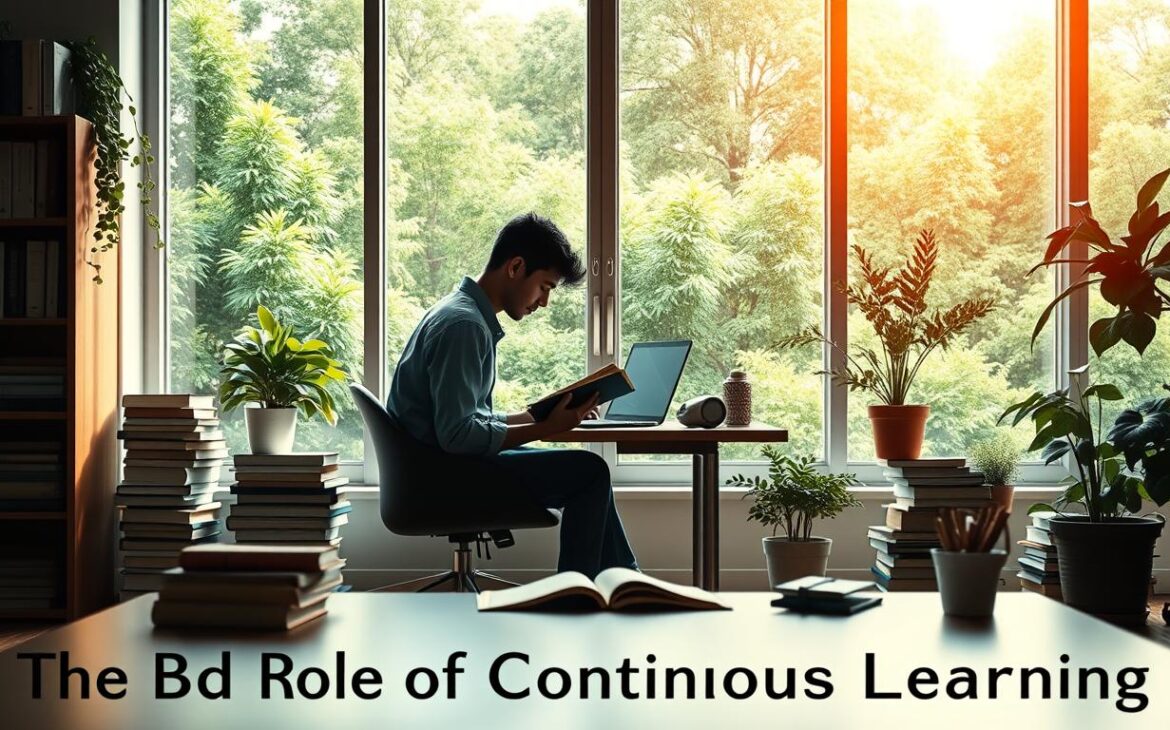
Thomas Edison, for example, failed thousands of times before inventing the lightbulb. His never-ending curiosity is a perfect example of continuous learning. Today, leaders like Elon Musk also believe in lifelong learning as a key to innovation. It’s the action, not just studying, that leads to progress.
It’s the small daily habits that count the most. Reading, taking online courses, or trying new hobbies makes us adaptable. Studies show that those who learn every day solve problems quicker and welcome change more easily.
Learning is a journey, not a finish line. By making learning a regular part of our lives, we can turn everyday moments into chances for growth. The aim isn’t to be perfect, but to keep moving forward.
Growth Through Experiences
Every challenge, from a missed opportunity to a career shift, shapes who we become. Experiential growth happens when we process these moments, turning uncertainty into understanding. A job loss might lead to discovering a new passion, or a failed project could spark creativity. Life’s unpredictability is a classroom—sometimes loud, often messy, but always instructive.
“Growth begins at the end of your comfort zone.”
Travel can change how we see the world. Navigating a foreign city without a map teaches problem-solving. A study by the Harvard Business Review found that employees who embraced unfamiliar tasks at work improved decision-making skills by 40%. Such experiential growth isn’t just about survival—it’s about evolving beyond old patterns.
Setbacks like relationship failures or financial struggles often mask hidden lessons. A CEO once shared how a business collapse taught them resilience, later fueling their next venture’s success. Every experience, good or bad, becomes data for future choices. The key is to ask: What’s the lesson here? How can this inform my next step?
Seeking diverse experiences—volunteering, learning a skill, or even disagreeable tasks—builds adaptability. Growth isn’t waiting for you; it’s happening in the moments you engage, question, and adapt. Let life’s events be your guide.
Reflecting on Past Experiences
Reflective practice is more than just remembering the past. It’s about learning from it. Take time to think about moments that shaped you, whether they were good or tough. Ask yourself: What did I learn from that project? How did that disagreement change my teamwork approach?
Think of a failed project that led to a great idea. Reflective practice helps find those hidden gems. For example, after a tough breakup, someone might learn to set healthier boundaries. Tools like Evernote or journals can help track these insights, making growth clear.
“The past is a teacher, but only if we listen.”
Reflective practice is most effective when done regularly. Spend 10 minutes each week writing down what worked and what didn’t. A manager might review quarterly goals to spot patterns in missed deadlines. A student could analyze study habits after exams. This habit turns regrets into clarity and uncertainty into action plans.
Every story has a lesson. By practicing reflection, you create a roadmap for future decisions. It turns “what if” into “what’s next.”
The Connection Between Growth and Resilience
Every setback teaches us something valuable. Building resilience isn’t about avoiding pain. It’s about learning to get back up after falling.
When life throws obstacles, those who adapt and keep going often find their strongest selves.
“Resilience is accepting that some doors never open for a reason, so you build your own.”
Many stories of triumph show a common thread: adversity leads to growth. J.K. Rowling, for example, was rejected by publishers before writing Harry Potter. She turned those rejections into motivation.
Her story is like many others where resilience building helped bridge failure and success. Resilience isn’t something you’re born with. It’s something you build by facing challenges head-on.
Practical steps can make resilience real. Think about past struggles to find your strengths. Look for support from mentors, peers, or communities.
Small actions like journaling or mindfulness exercises can also build mental toughness. Every time you rebuild after a fall, you get stronger for the next challenge.
Growth without resilience is short-lived. View challenges as part of your journey. Every step forward, even after a stumble, is progress.
Your ability to rebuild is not just about survival. It’s the base of lasting change.
How to Cultivate a Growth-Oriented Environment
A growth environment grows from small, steady steps. Start by making spaces that spark curiosity. At home or work, clear goals and flexible plans help. Think of daily tasks like school lesson plans.

Set measurable goals to see how you’re doing. Break big dreams into weekly tasks. This way, you can track your progress and stay focused.
“A growth mindset isn’t just personal—it’s shaped by the systems around us.”
Be around people who love to learn. Join online groups or local clubs for feedback. Companies like Google encourage trying new things over being perfect. Share your struggles to learn together.
Reflect regularly to keep growing. Meet with friends or mentors weekly to share what’s working. Change habits that hold you back and celebrate small victories. These habits will last over time.
Measuring Personal Growth
Measuring personal growth makes vague goals clear. Tools like journals or apps like Trello help track progress. Writing down achievements weekly shows small steps often missed.
Apps like Notion or Google Sheets help log skills, habits, or career goals. Regular reviews show where to focus next. For example, a fitness tracker might show steady progress in workouts, guiding future plans.
“Growth without reflection is just motion.”
Self-assessments compare current skills to past efforts. Did public speaking fears decrease? Did productivity rise? Honest answers guide adjustments. Tools like monthly checklists or mood journals make this simple.
Numbers and notes turn abstract ideas into actionable insights. They help avoid guesswork, ensuring efforts align with long-term objectives. Over time, this clarity builds confidence and fuels motivation to keep evolving.
The Impact of Growth on Career Advancement
Personal growth is more than just self-improvement. It’s a key to professional success. Companies like Google and LinkedIn value employees who love to learn. They see career advancement as linked to being adaptable and developing new skills.
Leaders who invest in learning through courses, certifications, or mentorship are more likely to get promoted. According to LinkedIn’s 2023 Workplace Learning Report, employees who update their skills are 30% more likely to get raises.

Resilience from facing challenges helps solve problems, which employers love. For example, a manager who learns new project management tools after a setback might lead important teams the next year. Growth-oriented people ask for feedback, take on new roles, and network actively. These steps turn personal growth into real career advancement chances.
“Growth mindset isn’t just theory—it’s the engine of leadership.”
With tools like Coursera or Udemy, updating skills is easy. Even small steps, like mastering a software tool, can open new doors. Employers appreciate employees who grow beyond their job descriptions.
This mindset isn’t just about climbing the career ladder. It’s about staying relevant in a fast-changing job market. By focusing on growth today, you’ll be ready for tomorrow’s chances.
Sharing Growth with Others
Sharing growth with others makes personal achievements bigger. Teachers and bloggers talk about their challenges and wins. This inspires others. On LinkedIn, professionals share their learning journeys, showing how failures lead to successes.
When we share our growth stories, we inspire many. Teachers share their classroom experiments, and students post study tips. This helps build support networks. Research shows that teaching others helps us learn better.
Communities grow when people share their progress. A study in the Journal of Positive Psychology found that sharing struggles builds empathy. By being open, we create spaces where everyone learns together. Start by sharing a lesson, a book that inspired you, or a challenge you overcame. Sharing growth helps us all grow.
Growth Beyond the Individual
Growth isn’t just about personal gains. It’s about how each person’s journey contributes to collective success. When individuals embrace learning, they inspire others to do the same. Schools redesigning curricula to emphasize problem-solving skills help students tackle real-world challenges. This mindset shift ripples through communities, fostering collaboration over competition.

Companies like Google invest in employee development, creating cultures where innovation thrives. These environments turn individual growth into team achievements. In education, programs like Khan Academy’s free resources empower learners worldwide, proving that shared knowledge builds stronger societies. A teacher’s dedication to lifelong learning can uplift an entire school. A leader’s commitment to teamwork improves organizational outcomes. Every small step toward growth adds to the bigger picture.
Collective success happens when we value progress for everyone, not just ourselves. Whether through community projects or mentorship, your growth becomes a tool to lift others. Imagine classrooms where students learn to collaborate, or neighborhoods where neighbors solve problems together. Growth’s true power lies in its ability to multiply impact—turning personal victories into shared opportunities. Start small, but dream big: your journey matters far beyond your own path.
Final Thoughts on Growth and Its Value
Growth is a lifelong journey that shapes who we are and how we contribute to the world. Every step we take, whether through learning, overcoming challenges, or sharing knowledge, adds value to life. These lessons aren’t just personal; they also influence our careers, relationships, and communities.
Embracing growth means seeing setbacks as chances to adapt and succeed. The habits of lifelong learning and resilience help turn struggles into stepping stones. By staying curious and open, we build skills that last, driving both personal and collective progress.
The ultimate growth insights also show that growth isn’t a solo path. When we mentor others or collaborate, we multiply its impact. Sharing experiences creates networks of support where everyone thrives. This mindset transforms challenges into opportunities, making growth a shared adventure.
Take these insights forward with purpose. Whether tackling a new skill or supporting someone else’s journey, every effort counts. Growth isn’t about perfection—it’s about moving forward, one meaningful step at a time. Let curiosity guide you, and remember: each lesson learned is a foundation for the next chapter.