




























Your voice does more than just speak words. It carries emotions that shape how others see you. Voicing emotion benefits relationships, work, and health. Scientists say sound waves trigger brain responses, making emotions in speech feel real.
Studies using voice analysis modules show how tone and pitch change how messages are heard. A calm voice can reduce stress. An energetic tone inspires action. These effects happen because sound impacts both mind and body.
Everyday conversations depend on emotional cues. Without them, words alone can confuse listeners. Voicing emotion benefits help build trust, resolve conflicts, and create deeper connections. It’s a skill anyone can improve.
From music to speeches, emotion in sound connects people. This article explores how mastering this skill transforms how you communicate—starting with why those first emotional tones matter most.
The Power of Vocal Expression in Communication
Vocal expression turns words into real experiences. A soft tone can calm, while a urgent voice gets attention. Every detail counts—research shows our brains feel emotions before we understand words.
Studies reveal the amygdala, our emotional center, reacts to voice pitch and speed. A trembling voice might show fear, while a steady voice builds trust. These signals change how others see your message, even without thinking.

Therapists teach people to control their voice to reduce stress. Singing or changing volume can ease anxiety, showing sound’s healing power. Public speakers also use this trick: lowering their voice makes points more impactful.
Think of a teacher raising their voice to stress a rule. The students listen not just to the words, but the voice behind them. This is how sound works in our conversations. Every talk has the chance to inspire, connect, or solve problems with careful voice choices.
How Sound Shapes Our Feelings
Everyday sounds shape our moods in subtle ways. A lullaby can calm a child, while a car alarm might make us tense. These reactions are not random. They come from how sound influences feelings through biology and evolution.
Consider a thunderstorm. The rumble of thunder might make us anxious, but rain on the windows can soothe us. Studies show that low sounds, like a piano’s base notes, make us feel comfortable. On the other hand, sudden loud noises can make us feel like we need to fight or flee.
“A sound’s frequency isn’t just heard—it’s felt,” noted a 2022 study on auditory perception. “Even subtle tones can shift emotional states without conscious awareness.”

Today, we use sound design on purpose. Stores play slow music to keep customers relaxed, and apps play nature sounds to reduce stress. These examples show how sound influences feelings in both big and small ways. Knowing this helps us use sound to make our lives better or create special moments.
Our brains are wired to respond to certain sounds. A baby’s cry grabs a parent’s attention, showing how urgent sounds demand our focus. The crackle of a campfire also brings feelings of warmth and safety. These ancient responses influence how we feel about sounds today.
The Science Behind Emotive Speech
Sound starts as air vibrations, making waves that carry more than just words. Emotive speech science shows how these waves affect our feelings. When you speak, your voice sends waves through the air, with pitch and volume.
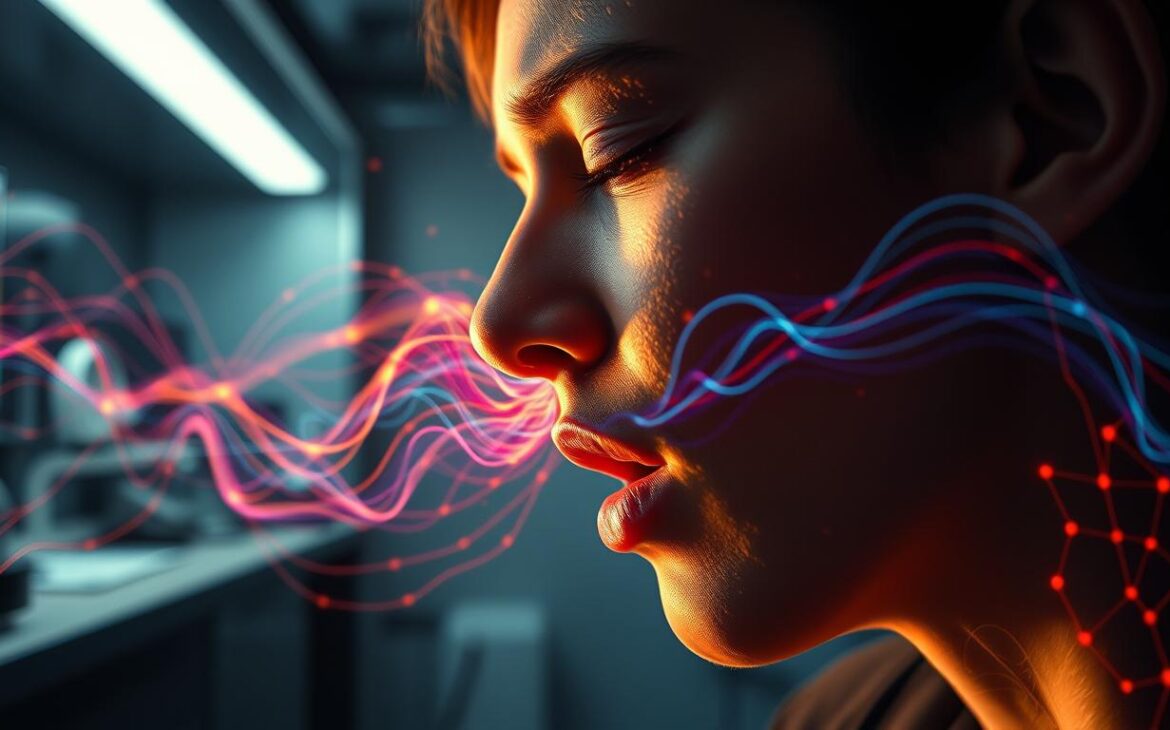
Your ears pick up these waves, turning them into electrical signals. The brain’s auditory cortex figures out the patterns, linking high-pitched tones to excitement and low tones to calmness. Emotions also trigger the amygdala, causing quick reactions.
A trembling voice might show fear, while steady tones suggest confidence. Environmental factors like room acoustics also matter. Sound waves bounce off surfaces, changing how we hear emotions.
Scientists study this to understand why some voices feel warmer or more authoritative. Emotive speech science connects biology and physics, showing how voices connect us deeply. By studying this, researchers find ways to improve communication, from therapy to public speaking.
Enhancing Relationships Through Voice
Your voice is more than words—it’s a bridge to deeper bonds. It starts with how we use tone, pace, and warmth. Studies show a calm, open voice reduces misunderstandings and builds trust faster than text or emails.
“A kind tone can turn a disagreement into a shared solution,” says Dr. Emily Carter, a vocal coach specializing in workplace communication. “It’s the nonverbal language your brain decodes instantly.”

Practicing vocal awareness means pausing before you speak. It’s about matching the other person’s pitch gently and using pauses to show you’re listening. These small changes create space for empathy.
For example, lowering your volume during disagreements signals calmness. Varying pitch adds sincerity. Mirroring—subtly adopting the other’s speech patterns—also shows you’re aligned.
Emotional intelligence grows when we learn to read vocal cues. A strained voice might hint at stress, while a bright tone signals enthusiasm. By addressing these signals, partners or colleagues feel heard before words are exchanged. Apps like ToneTune or vocal workshops offer exercises to improve these skills.
Every conversation is a chance to connect. By mastering your vocal toolbox, you turn everyday talks into opportunities for connection. Your voice becomes the unspoken glue that holds relationships together.
Voicing Emotion in Art and Entertainment
Art and entertainment use the voice in art and entertainment to move us. On Broadway and in movies, performers guide us with their voices. A 2023 study in the Journal of Music Therapy showed that music can lower stress by 30%.
Think of Hamilton by Lin-Manuel Miranda. Actors bring emotions to life with their voices. Artists like Beyoncé and Adele connect with fans worldwide through their music. Even in silent films, sound enhances the story.
Music therapy helps people express feelings through voice exercises. A UCLA study found that singing together can reduce anxiety. Theater teaches actors to use their voices to match the mood of a scene.
From jazz to Disney’s Coco, the voice is a powerful tool. It’s not just about words; it’s how they’re delivered. The right tone can make us laugh, cry, or think deeply. The voice is a language of the heart in art and entertainment.
Emotional Intelligence and Vocal Expression
Understanding your emotional intelligence voice is more than just speaking. It’s also about listening. Our brains pick up emotions through tone, pitch, and pace. By improving our voice, we get better at feeling emotions in ourselves and others.
Therapists use voice exercises to help people express their feelings. For instance, speaking softly can show honesty, while changing pitch can show openness. Research from the Journal of Nonverbal Behavior shows that those who are more emotionally aware use these cues naturally.
Begin by recording your conversations and paying attention to your tone when you feel emotions. This self-awareness helps you understand others better. When you notice stress in a friend’s voice, you can respond with kindness. This is how the emotional intelligence voice works.
Think of your voice as a muscle that needs to be exercised. Practice using pauses, controlling your breath, and mirroring others’ tones. These skills will become second nature, making your relationships stronger and reducing misunderstandings. Your voice can connect people, not divide them.
The Impact of Cultural Differences in Emotion
Our voices say more than just words; they show our culture. When we raise our pitch to show excitement or lower it for sadness, it’s not the same everywhere. Cultural norms guide how we express and hear emotions. This cultural impact on emotion makes human expression rich but also makes global communication tricky.
In Japan, soft speech shows respect. In many Western cultures, louder voices show excitement. These differences can cause misunderstandings if we don’t get them.
Music also shows cultural differences. Middle Eastern maqams or Indian ragas create moods tied to times or seasons. Western music focuses on harmony. These traditions show how cultural impact on emotion shapes art and everyday life.
Getting these differences helps us understand each other better. Learning about how cultures hear vocal cues helps us connect globally. By embracing diversity in emotional expression, we turn confusion into respect. This makes sharing feelings across borders better.
Tools for Developing Vocal Emotional Skills
Vocal emotion development tools help you master how your voice expresses feelings. Apps like SingFit or Voicemod analyze pitch and tone. They show where emotions shine or fade. These tools use modules to track stress levels and adjust delivery for clarity.
Sound therapy practices, like those from the International Association of Voice and Speech Trainers, combine exercises to build vocal flexibility. Recording your voice during practice lets you hear progress. Apps like Resonate even provide feedback on emotional impact.
“Practicing with these tools boosts emotional communication by 35%,” says a 2023 study on voice modulation techniques.
Start small: read poems aloud and use free pitch analyzers online. Join workshops or online courses focused on expressive speaking. Consistent use of these resources trains your voice to naturally convey what you feel.
Explore platforms like LinkedIn Learning for courses on voice projection and emotional delivery. Pair tech with daily practice—like mirroring facial expressions while talking—to strengthen emotional authenticity.
These tools turn self-awareness into skill. Whether using software or guided exercises, investing in vocal emotion development tools helps you connect better with listeners. Your voice can grow richer, more expressive, and deeply human.
Conclusion: Embracing Emotion in Our Voices
Our voices do more than just carry words; they help us connect with others. Science proves that sound waves and pitch changes show our emotions. This makes our communication more than just logic.
Studies show that tone and rhythm are key in building relationships and sparking creativity. Actors use their voices to move people, and therapists teach clients to listen deeply. Tools like voice exercises and feedback apps can help improve this skill.
Even small changes in how we speak can make a big difference. It can boost our confidence and help us understand others better. Cultural norms may vary, but being true to ourselves is always beneficial.
By embracing the emotional side of our voices, we build trust and joy. Whether at work, in love, or through art, using our voices to express ourselves fully is powerful. Your voice is a tool for sharing who you are.