



























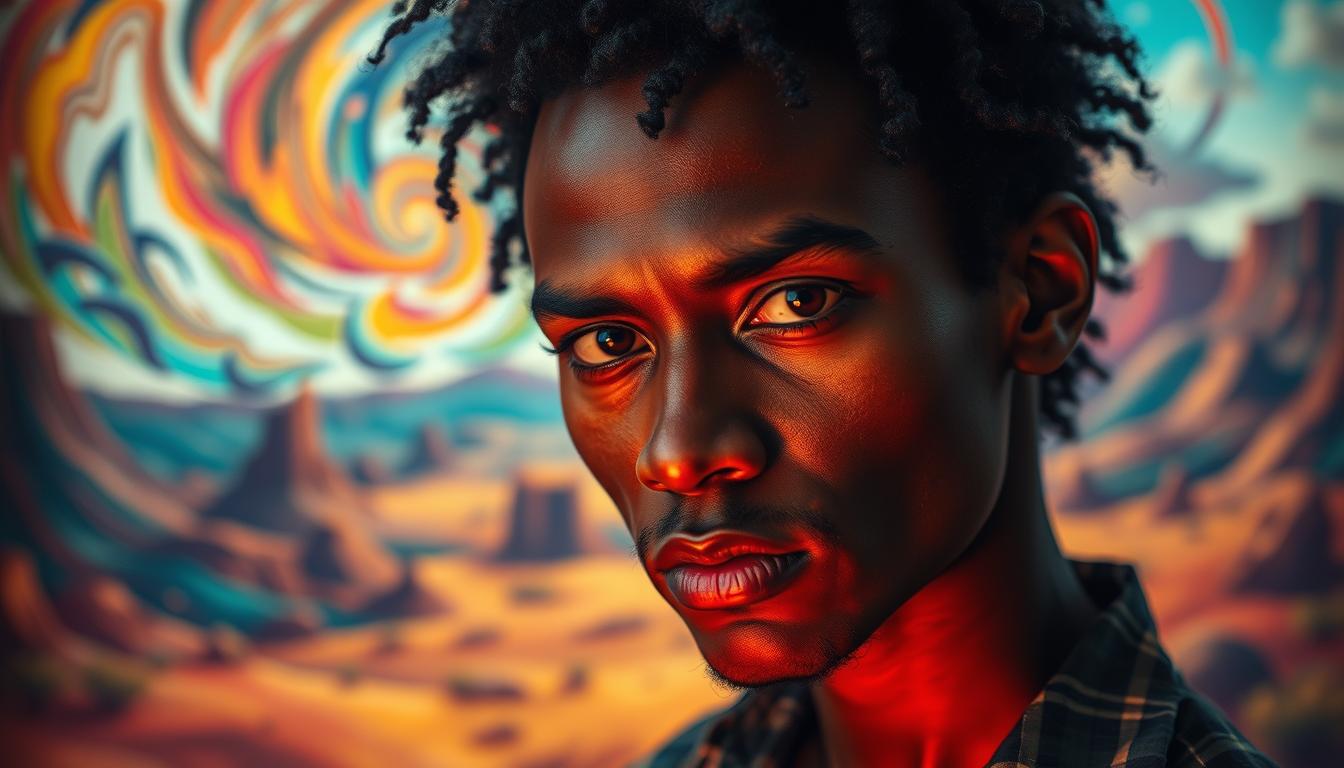
Your unique voice is like a fingerprint for your creativity. It shapes how we see and hear ideas. Think of The Platters’ hit “Only You (And You Alone)” from the 1950s. Ringo Starr remade it years later, yet it remains timeless.
Each version shows the artist’s creative expression. It proves that being true to oneself never goes out of style.
Today, artists like Croquet Club and Steve Monite are doing the same. They give old ideas a fresh spin. Your view is not just different; it’s vital.
Whether you create art, write, or design, your perspective enriches the world. Begin with small steps. Every original idea counts.
The Power of Individual Perspective
Every artist sees the world in their own special way. This individual perspective shapes their stories and art. For example, “Only You” by The Platters was covered by Ringo Starr years later. His version was softer and more introspective, showing his unique personal storytelling style.
Artists show us that creativity is about being unique. A painter’s brushstroke, a writer’s metaphor, or a musician’s rhythm come from their life. When you share your individual perspective, you add depth that others can’t.
Think of your creative voice as a fingerprint. No two are alike. When you share your stories, you connect with people on a deeper level. This is the essence of personal storytelling: it’s not just the message, but who shares it.
Whether you’re writing, designing, or composing, your view matters. It’s what makes art connect across cultures and ages. Let your perspective shine—it’s your greatest creative tool.
Defining Your Creative Identity
Your creative identity is like a unique fingerprint of your art. It’s what makes you stand out, whether through painting or music. It begins with self-expression, sharing your story in a way that feels true to you.
The 1950s doo-wop group The Platters showed how voices can blend into something unforgettable. Today, artists like Croquet Club and Steve Monite are pushing boundaries in music. They mix old traditions with new ideas, creating something unique.
Your journey starts with honesty. What inspires you? What do you want to say? Exploring your self-expression is key. Let your experiences shape your work, whether through words, images, or sounds. Authenticity is about being real, not perfect. When you find your unique voice, you create something truly special.
The Influence of Diverse Voices
Diverse voices make art a reflection of our shared and unique lives. Think of “Only You,” a 1960s doo-wop hit. It has been reimagined in Swedish pop and Nigerian boogie, showing how music grows when traditions mix.
These new versions are more than covers. They are conversations between cultures.
Working together across cultures brings new ideas. When artists share their stories, we see the world in new ways. This exchange builds understanding and breaks down stereotypes.
A jazz musician in Paris or a poet in Lagos can turn a familiar tune into something new. This shows that creativity grows when different voices come together.
Today, we have more ways to connect. Social media lets artists from everywhere join global conversations. By celebrating diverse voices, we enrich art and build bridges. Every voice adds depth, showing creativity’s true strength is in bringing us together while respecting our differences.
Overcoming Creative Self-Doubt
Every artist faces creative self-doubt at some point. The fear of failure or judgment can feel overwhelming. But history shows even timeless works started as uncertain ideas.
Take “Only You,” a song written in 1955 by Buck Ram. The Platters’ original version was rejected by radio stations. Yet, decades later, its message of love’s uniqueness became a global anthem. This story reminds us: doubt doesn’t define the end.
Many creatives, like Vincent van Gogh, struggled with self-doubt their entire lives. In letters, he wrote of questioning his work’s value—even as he painted masterpieces. Today, his art inspires millions. Their journeys prove overcoming fear starts with small steps.
Share unfinished ideas with trusted peers. Celebrate progress, not just perfection.

When uncertainty strikes, revisit why you began creating. Write daily, sketch freely, or experiment with new tools. Each attempt builds resilience. Remember: every “no” brings you closer to the right audience. Trust your voice—it’s shaped by your unique experiences.
Self-doubt fades when action replaces hesitation. Share your work. Revise boldly. The world needs your perspective, even when it feels imperfect. As you move forward, let persistence turn doubt into discovery.
The Role of Feedback in Creative Growth
Feedback is not a barrier; it’s a bridge to better work. Think of iconic songs like The Platters’ “Only You,” which evolved through feedback during recording sessions. Early drafts of the lyrics were tweaked based on producer notes, proving even timeless hits benefit from outside input. Constructive criticism helps spot blind spots you might miss while creating.
Artists like Taylor Swift rewrite lyrics after listening to fan feedback, turning raw ideas into polished masterpieces. When receiving feedback, focus on how it can shape—not replace—your vision. A music producer once said,
“Criticism is a mirror. It shows what others see, even when you can’t.”
Use it to refine, not redefine your goals.
Constructive criticism often highlights what works best. For example, Pixar animators review daily sketches in group critiques, a process called “plussing.” This mindset transforms feedback into fuel for growth. Whether in music, art, or writing, feedback becomes a tool for clarity and impact.
Making Connections Through Your Voice
Building connections through networking can make your creative voice louder. Joining an artistic community helps you share ideas and grow faster. Think of your voice as a thread in a tapestry—each connection adds color and strength.

Ringo Starr’s networking with artists like Paul McCartney and Elton John led to legendary albums. These collaborations show how shared visions create something bigger. When you connect with others, you gain new perspectives and opportunities.
“The magic happens when you play with other people.” — Ringo Starr
Events like SXSW or local art collectives are hubs for artistic communities. These spaces let you pitch ideas, get feedback, and find partners. Even small steps—like attending a workshop or joining an online group—can spark big changes. Your voice matters more when it’s part of a shared dialogue.
Start by reaching out. Share your work at open mic nights or online forums. Listen to others’ stories and offer help. Every interaction is a chance to learn and inspire. The right networking can turn your passion into a movement.
How Technology Amplifies Your Voice
Technology changes how artists share their work. Tools like streaming services make local talent global. Platforms like Spotify and SoundCloud let artists upload music for worldwide listeners.
Croquet Club’s electronica project shows the power of tech. Their music got radio airplay after going viral online. This shows how tech connects artists with fans across the globe.
Apps like GarageBand and social media help artists create, share, and connect with fans. Analytics show how fans react, helping artists improve. Digital amplification is more than just reaching more people. It’s about building connections and turning passion into action.
Voice in Different Creative Disciplines
Your voice isn’t just for one thing. Like “Only You” in doo-wop, electronica, or Nigerian boogie, it shines in creative disciplines from music to digital art. A writer’s view shapes novels and screenplays. A painter’s strokes tell stories, just like a filmmaker’s frames.
Multigenre artistry lets you mix poetry with video, or sculpture with social media. Your voice changes, but it’s always yours.
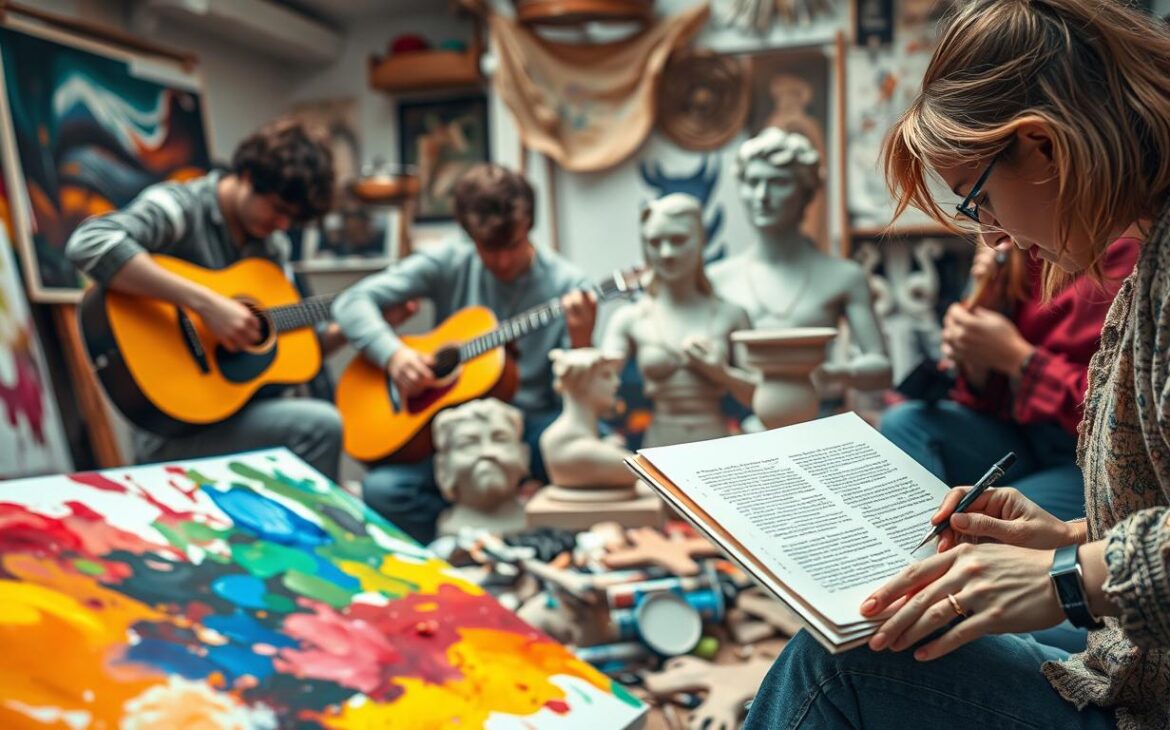
Visual artists blend street art with digital tools, making murals that speak through color and code. Writers mix essays with song lyrics, turning words into rhythms. Even coders add design flair to apps, showing creative disciplines as bridges, not barriers.
Multi-genre artistry isn’t just about mixing styles. It’s your voice finding new ways to connect.
Imagine a filmmaker who codes interactive installations, or a dancer who designs costumes. Your voice grows but stays your signature. Whether painting murals, writing novels, or coding games, your voice ties every project together. It’s your compass in every creative discipline, helping you thrive in any medium.
Staying True to Your Vision
Authenticity is more than just a trend—it’s what makes creative work stand out. When you focus on staying true to your vision, your work gets a unique mark that people remember. Think of artists like Beyoncé or Kendrick Lamar, who grow but never lose their essence. Their music changes over time but always reflects who they are.
“The only thing you owe the world is authenticity,” said Banksy, showing the power of staying real. Successful creators let their values lead every choice. A song that feels like “them” after many tries will connect more than a fleeting trend.
Knowing your “why” is key to staying consistent in your vision. When Taylor Swift moved from country to pop, her stories stayed real. Listeners saw her growth but also recognized her unique voice. This balance is essential—grow but stay true to yourself.
Pressure to fit in can shake even the most experienced creators. But sticking to your core principles builds trust. Audiences can tell when work feels forced. Stay curious but never forget your original spark. Your voice’s strength comes from its authenticity.
Inspiring Others Through Your Voice
Your creative voice is more than just for you—it’s a source of inspiration. Artists like Nina Simone used music to spark change, showing how art can inspire communities. Today, creators like Lin-Manuel Miranda turn history into stories that inspire new generations. Every unique perspective has the power to move others.
Platforms like TikTok give voices to everyday people, turning small ideas into big movements. When you share your story, you open doors for others to follow. Amanda Gorman’s poetry at the presidential inauguration brought hope to millions. Your creativity can do the same.
Technology lets your message reach more people than ever. Whether through social media, film, or music, your voice can motivate others to embrace their own. Brands like Nike and Apple use storytelling to connect with audiences, showing how authenticity builds inspiration. Your journey matters, no matter the scale.
Sharing your voice isn’t about being perfect—it’s about being honest. When you create, you join a legacy of artists who shaped culture through passion. Keep building your craft, and let it shine. The world needs your perspective to inspire and motivate those around you.